

Skoda Fabia 130 vs Mazda MX-5 vs Mini Cooper C: Britain's Last £30k Fun Cars Tested
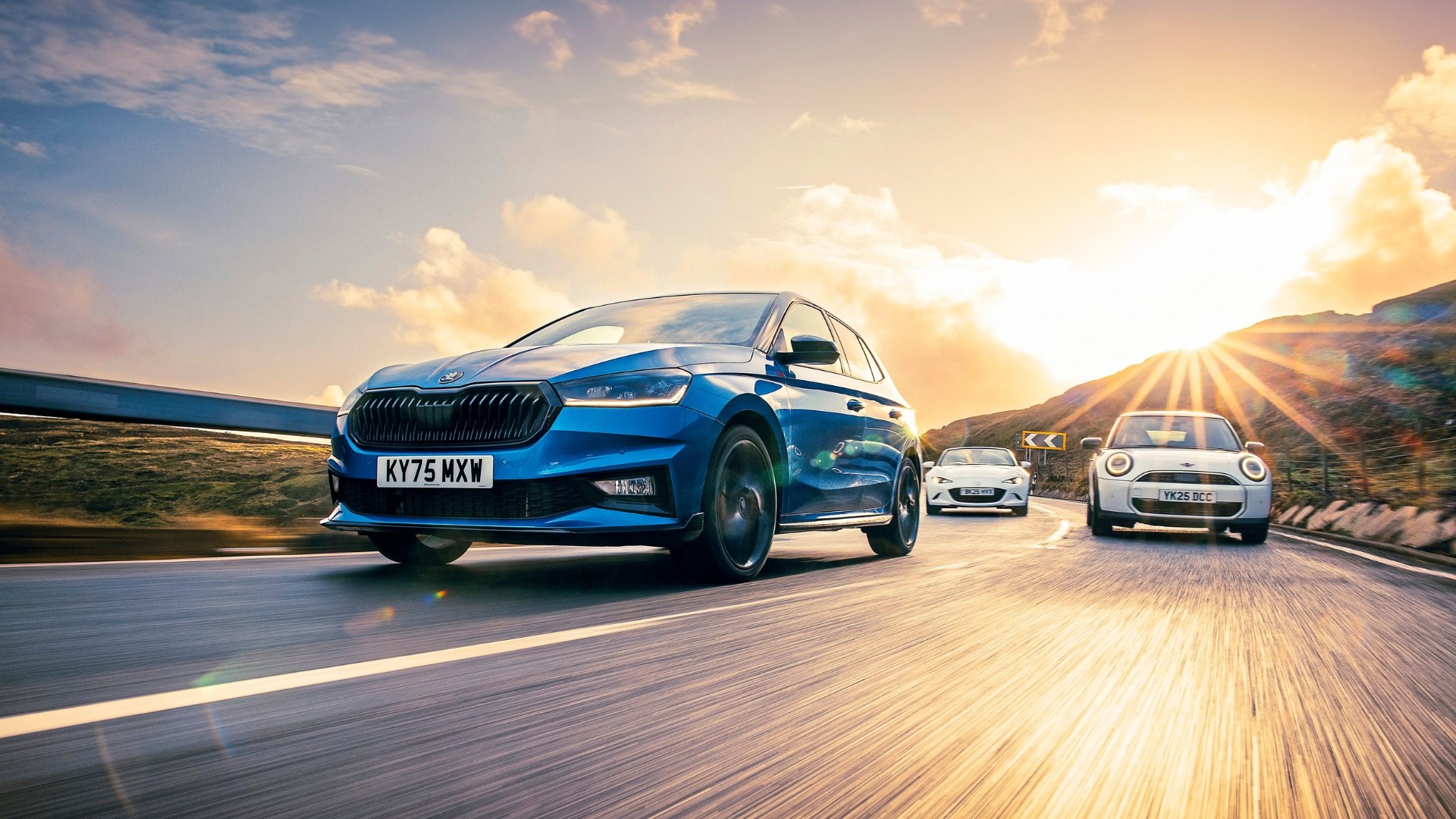
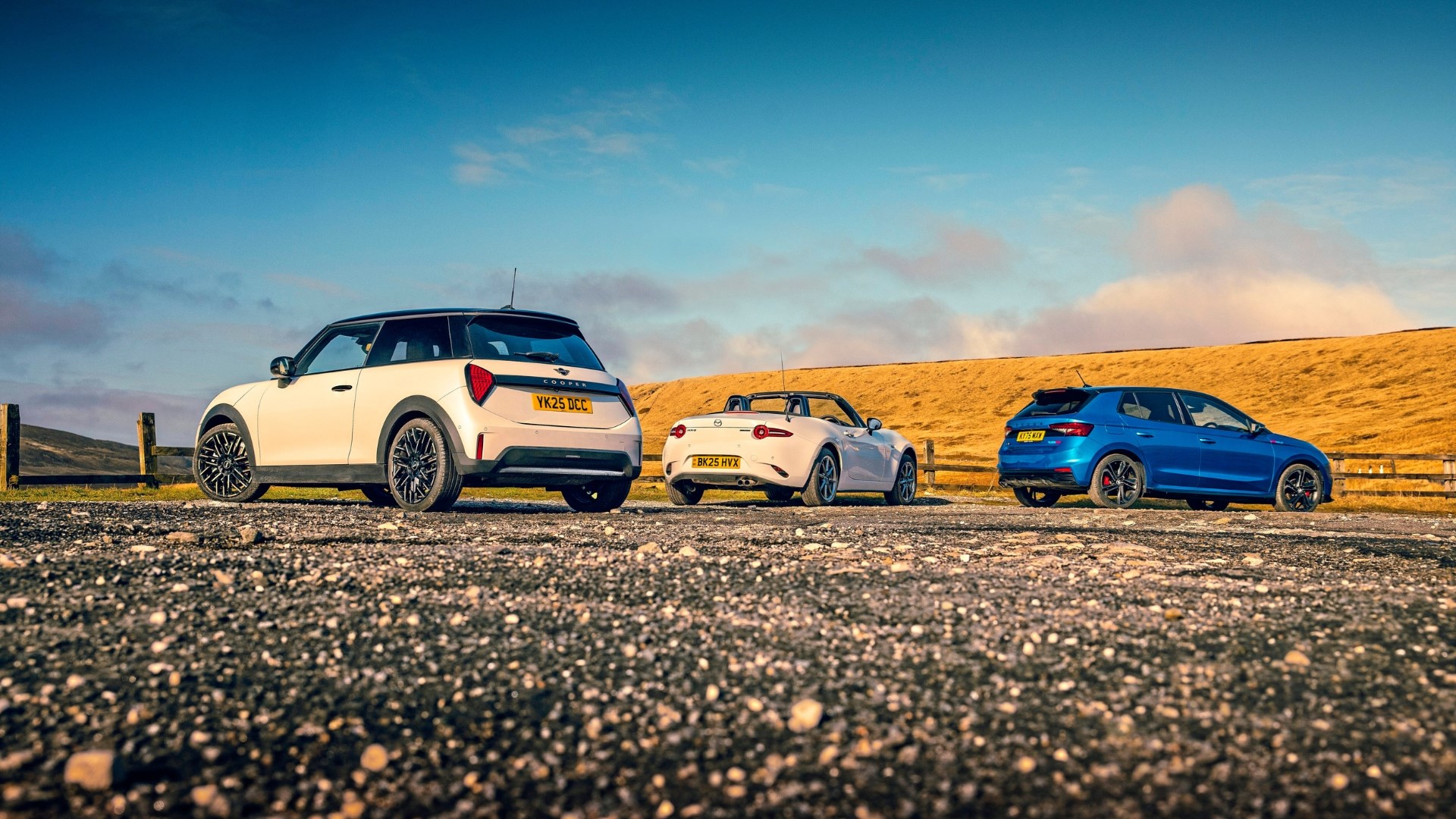
They were supposed to be extinct. Yet here are three brand new, genuinely fun petrol cars you can still buy in 2026 for around £30,000: the new Skoda Fabia 130 warm hatch, the evergreen Mazda MX-5 roadster and the cheeky Mini Cooper C. Triple test, Peak District roads, one winner.
Key takeaways: the 30-second verdict
- Winner: Mazda MX-5. Light, manual, rear-wheel drive and still the most fun you can have on a budget. Four stars.
- Runner-up: Mini Cooper C. Rapid steering, huge character and the best interior of any small car. Four stars.
- Third: Skoda Fabia 130. The quickest car here and by far the most practical, but short on sparkle. Four stars.
- All three cost comfortably under £33,000, all three are petrol powered, and only the Mazda keeps the manual gearbox alive.
- Fun fact from the test: the MX-5 was also the most efficient car on real roads, returning 48.7mpg.
Why this triple test matters in 2026
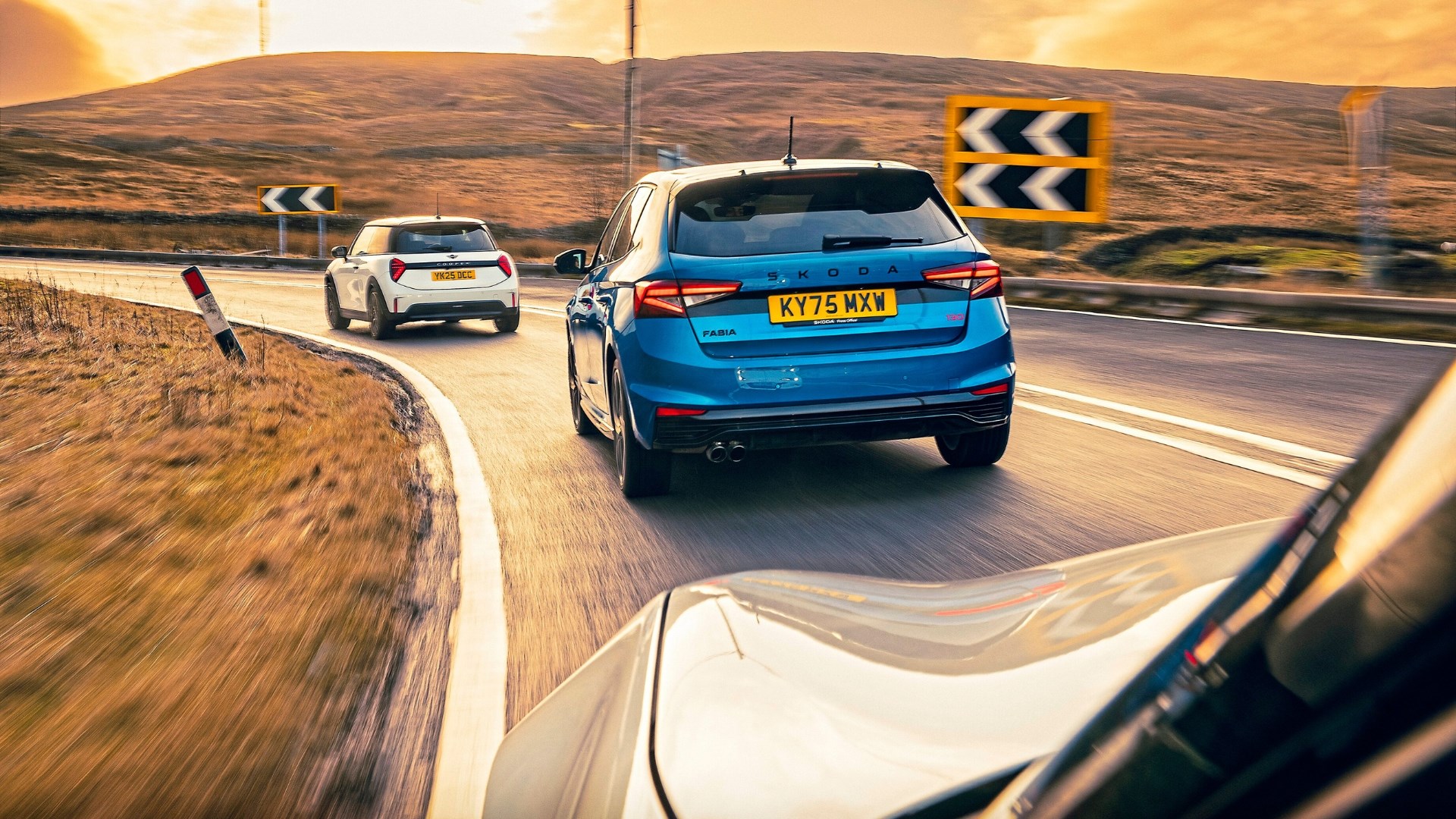
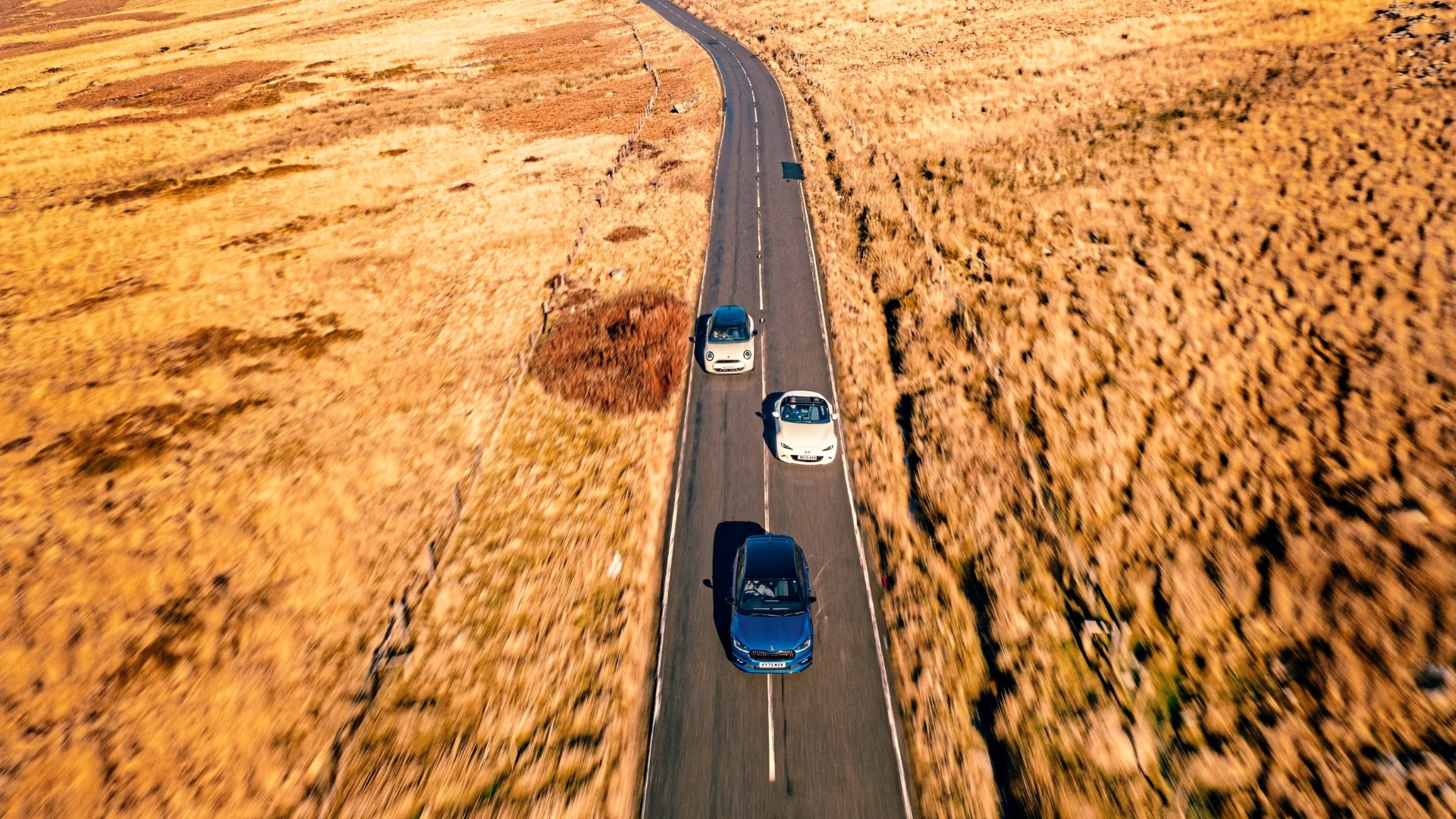
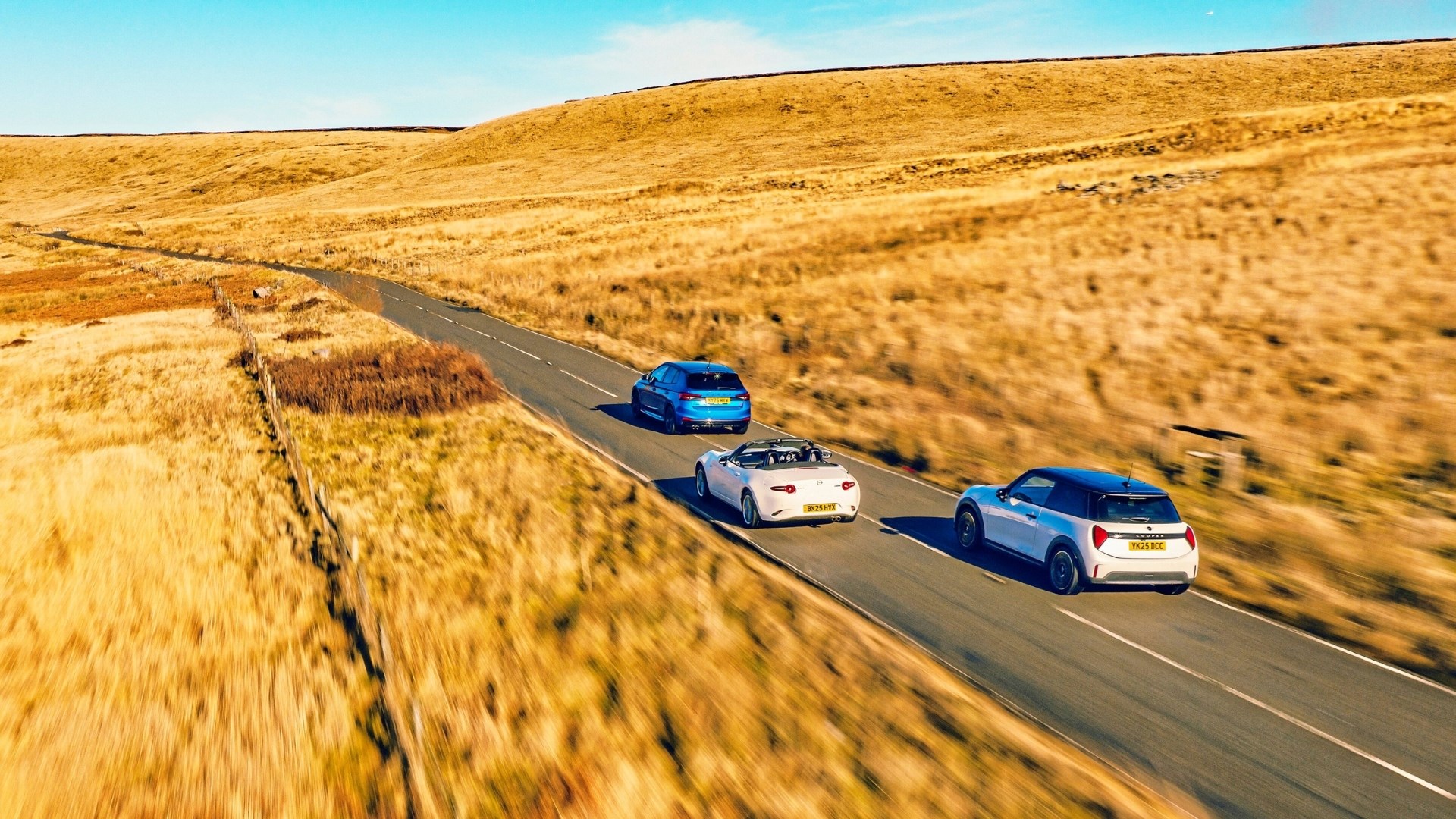
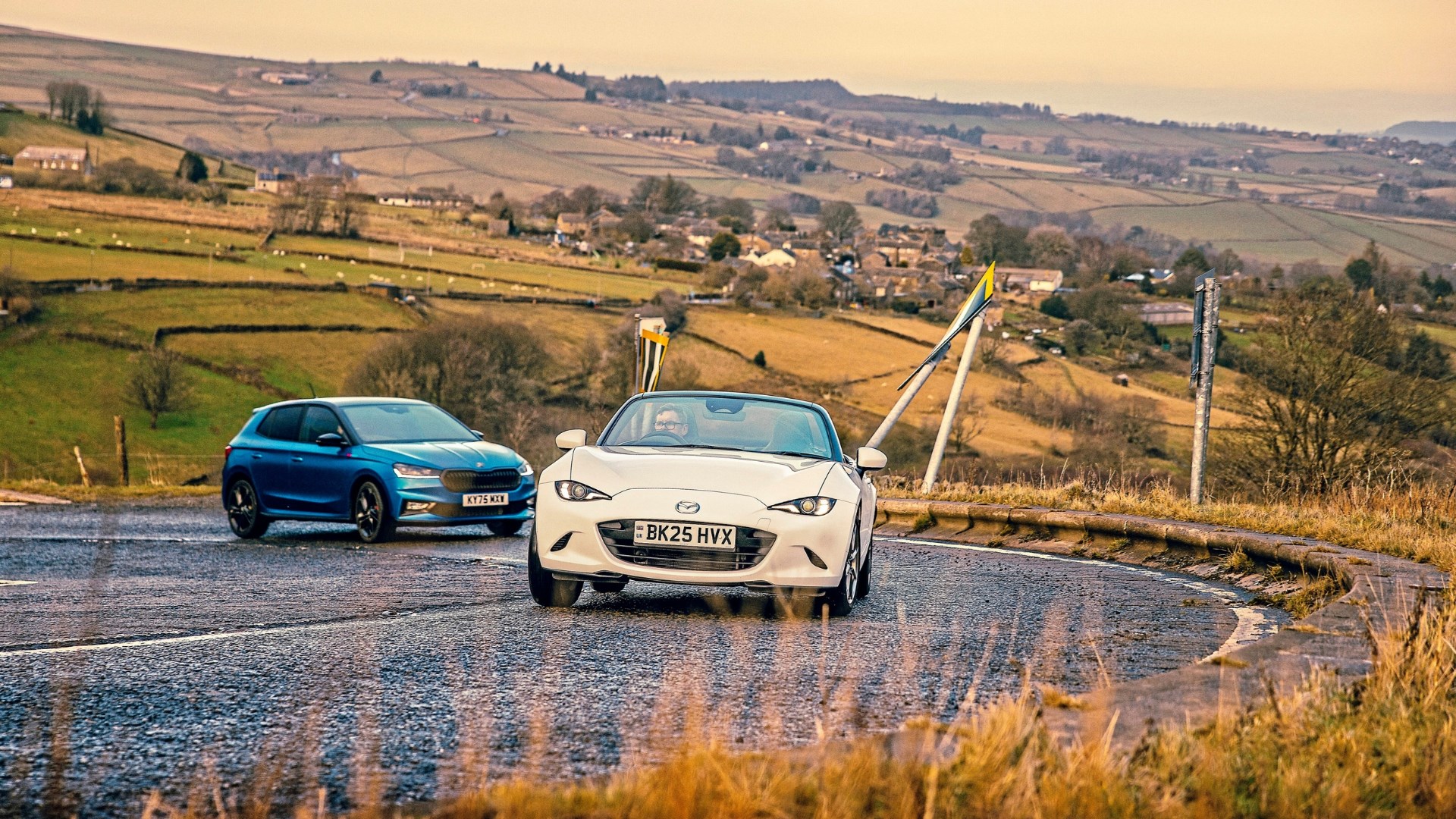
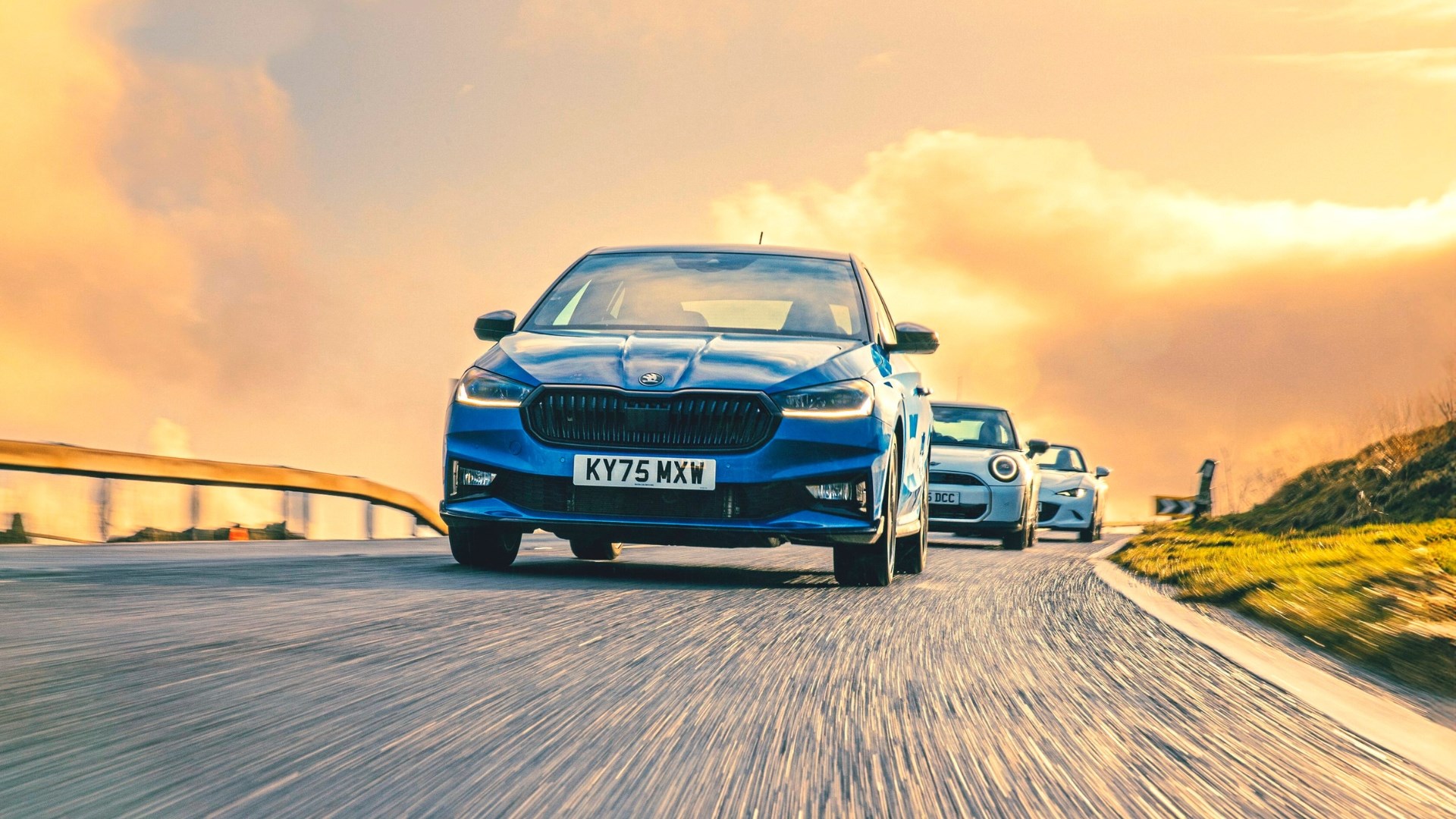
High on the climb towards Holme Moss Summit in the Peak District, with a manual gearbox to work and wet tarmac glinting under a low sun, it is hard to shake the feeling that moments like this are becoming automotive endangered species. Cheap, cheerful and genuinely entertaining new cars are vanishing, squeezed by rising manufacturing costs, mandatory safety technology and fleet CO2 targets that punish anything thirsty.
Cast your mind back only a few years and a test of affordable fun cars would have starred the Ford Fiesta ST, Hyundai i20 N, Suzuki Swift Sport and even the Abarth 595. Every single one of them is dead. The wider pattern is unmistakable: analyses of the market keep concluding that driving pleasure increasingly belongs to a shrinking cast of ICE heroes, and the same theme echoes abroad, where even beloved driver's machines such as the Alfa Romeo Giulia sports sedan appear to be approaching their swansong.
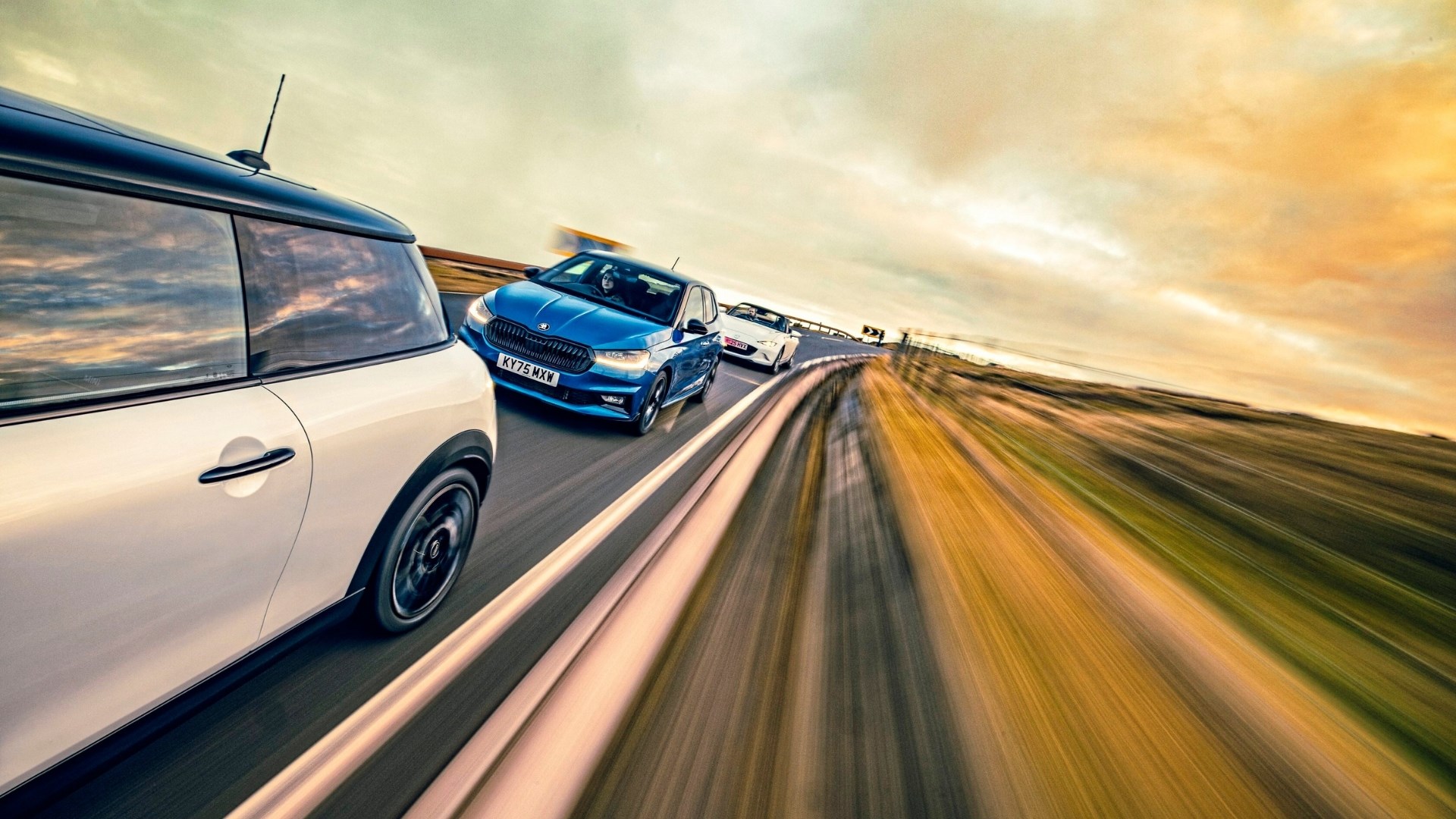
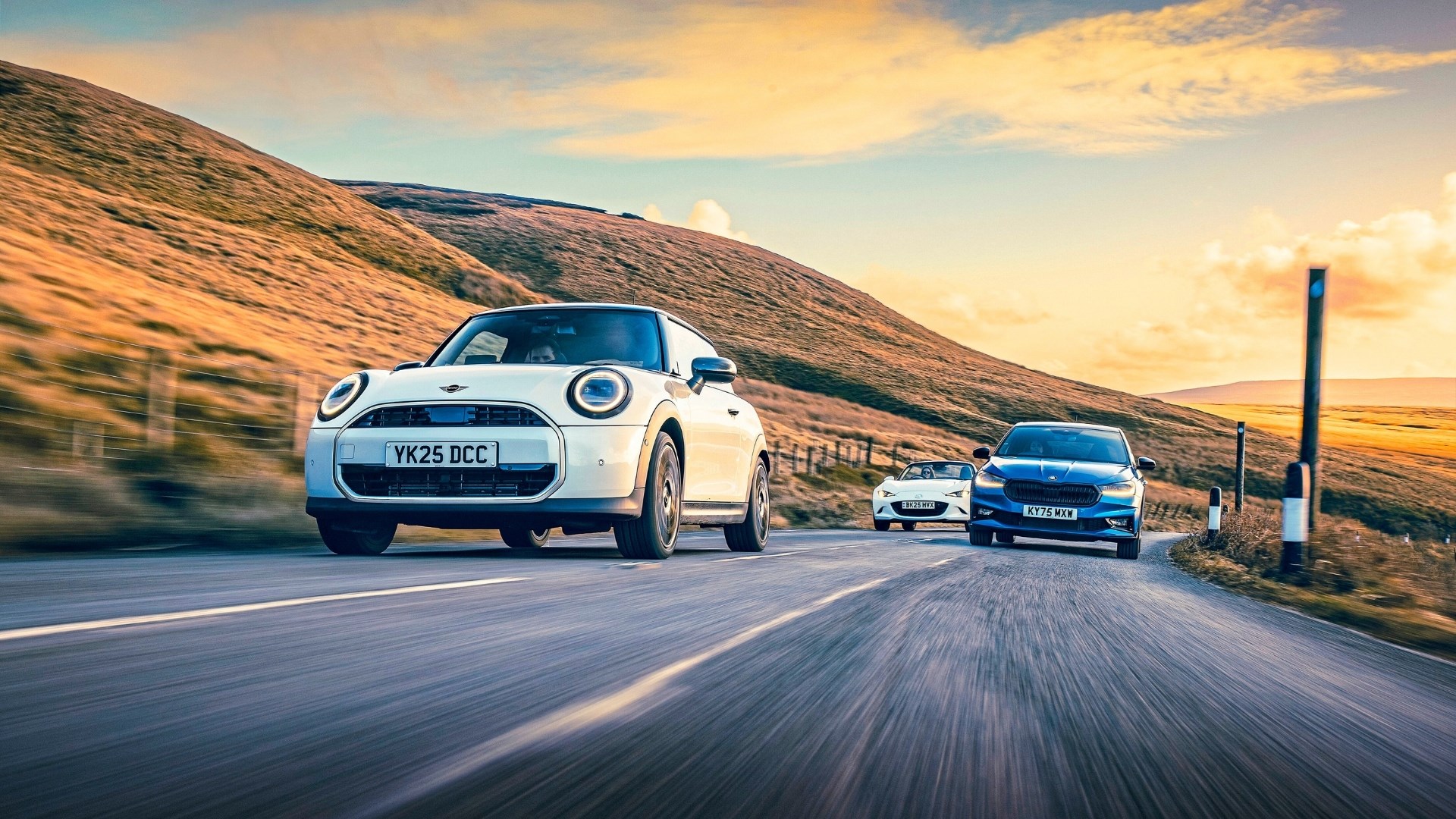
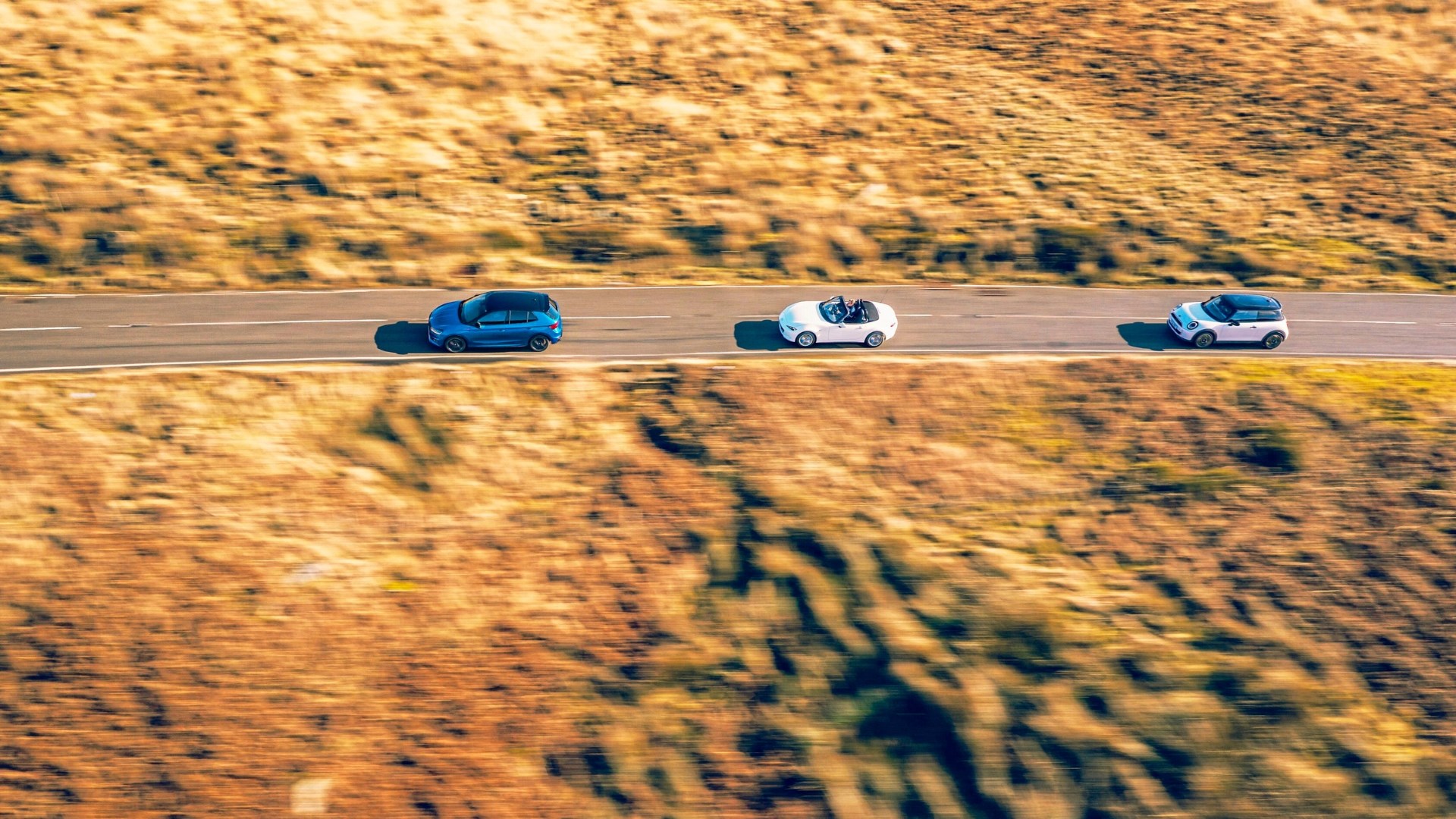
But not today. The premise here is simple: fun, sporty brand new cars for £30,000. Skoda has just launched its first hot Fabia since the vRS disappeared in 2014. Mazda stubbornly continues to build Britain's favourite little roadster. And Mini's latest petrol Cooper still promises go-kart handling. The original road test, carried out by CAR magazine on the battered moorland roads around Holme Moss, the Woodhead Pass and the A6024 out of Holmfirth, set out to discover which one delivers the most smiles per pound.
The contenders at a glance: Fabia 130 vs MX-5 vs Cooper C
Before the driving impressions, here is how the three cars compare on paper. Every figure below is taken directly from CAR's published test data, including real world fuel economy measured during the triple test itself.
| Specification | Skoda Fabia 130 | Mazda MX-5 1.5 | Mini Cooper C |
|---|---|---|---|
| Price from | £29,995 | £28,585 | £25,465 |
| As tested | £30,715 | £30,585 (Exclusive-Line) | £32,765 (Exclusive + Level 2 pack) |
| Engine | 1,498cc 16v turbo four-cylinder | 1,496cc 16v naturally aspirated four-cylinder | 1,499cc 12v turbo three-cylinder |
| Power | 175bhp @ 5,750-6,000rpm | 129bhp @ 7,000rpm | 154bhp @ 4,900-6,500rpm |
| Torque | 184lb ft @ 1,500rpm | 112lb ft @ 4,500rpm | 170lb ft @ 1,500rpm |
| Gearbox / drive | 7-speed DSG auto, front-wheel drive | 6-speed manual, rear-wheel drive | 7-speed automatic, front-wheel drive |
| 0-62mph | 7.2 seconds | 8.3 seconds | 7.7 seconds |
| Top speed | 141mph | 127mph | 140mph |
| Weight | 1,271kg | 1,106kg | 1,335kg |
| Official mpg | 50.3mpg | 45.6mpg | 46.3mpg |
| Tested mpg | 46.3mpg | 48.7mpg | 44.7mpg |
| CO2 | 126g/km | Not quoted in the source test | 137g/km |
| Boot capacity | 380 litres | 130 litres | 210 litres |
| Dimensions (L/W/H mm) | 4,137 / 1,924 / 1,458 | 3,915 / 1,918 / 1,225 | 3,876 / 1,970 / 1,452 |
Skoda Fabia 130 review: the warm hatch wildcard
What exactly is the Fabia 130?
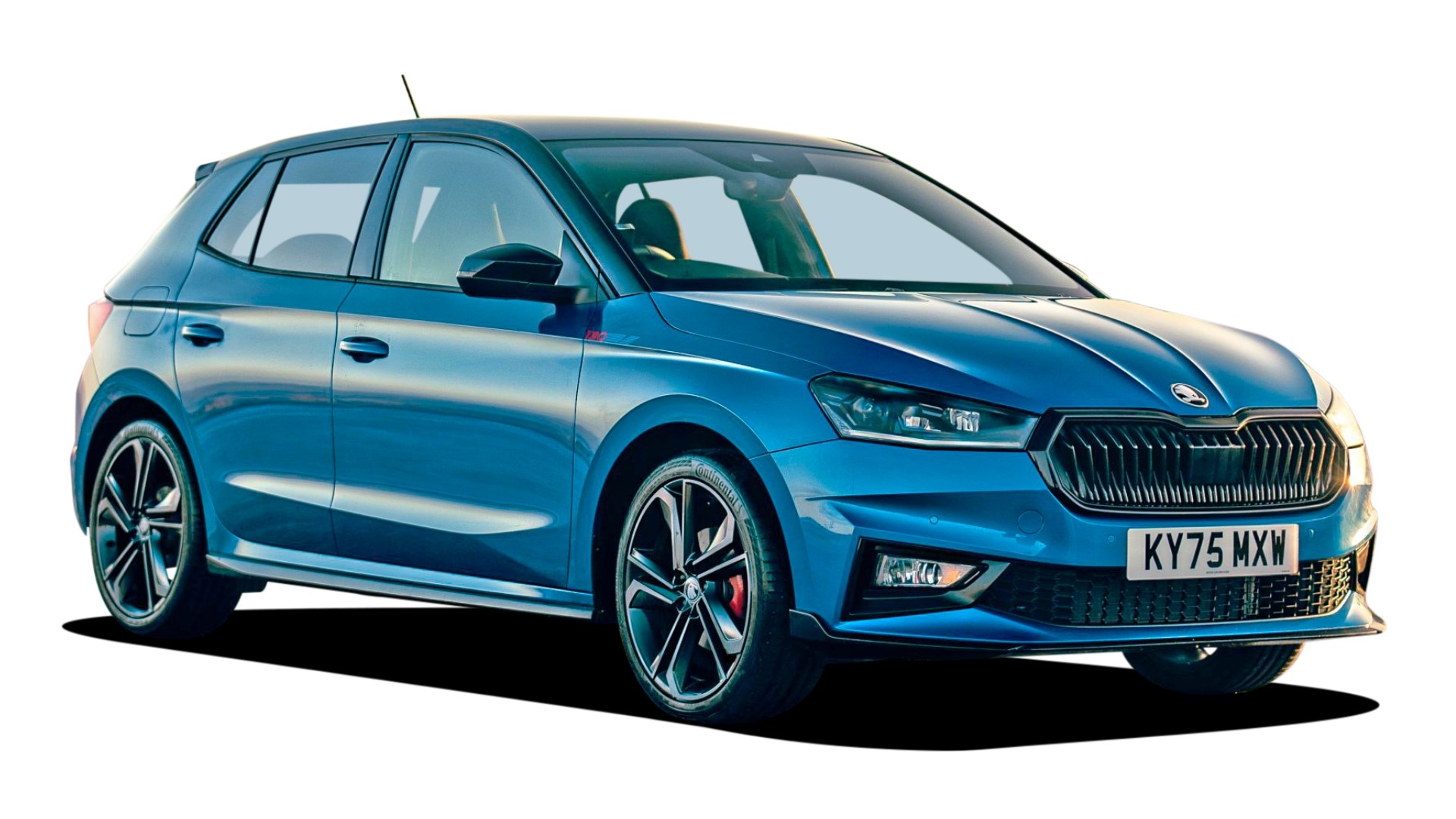
The Fabia 130 is Skoda's first attempt at a sporty Fabia since the vRS bowed out in 2014, and the badge does double duty: it celebrates the brand's 130th birthday while deliberately sidestepping the vRS name to keep some distance from that hotter heritage. Think of it as a warm hatch rather than an all out hot hatch, based on the top spec Monte Carlo trim, which occupies roughly the same space in the range as Ford's old ST-Line models.
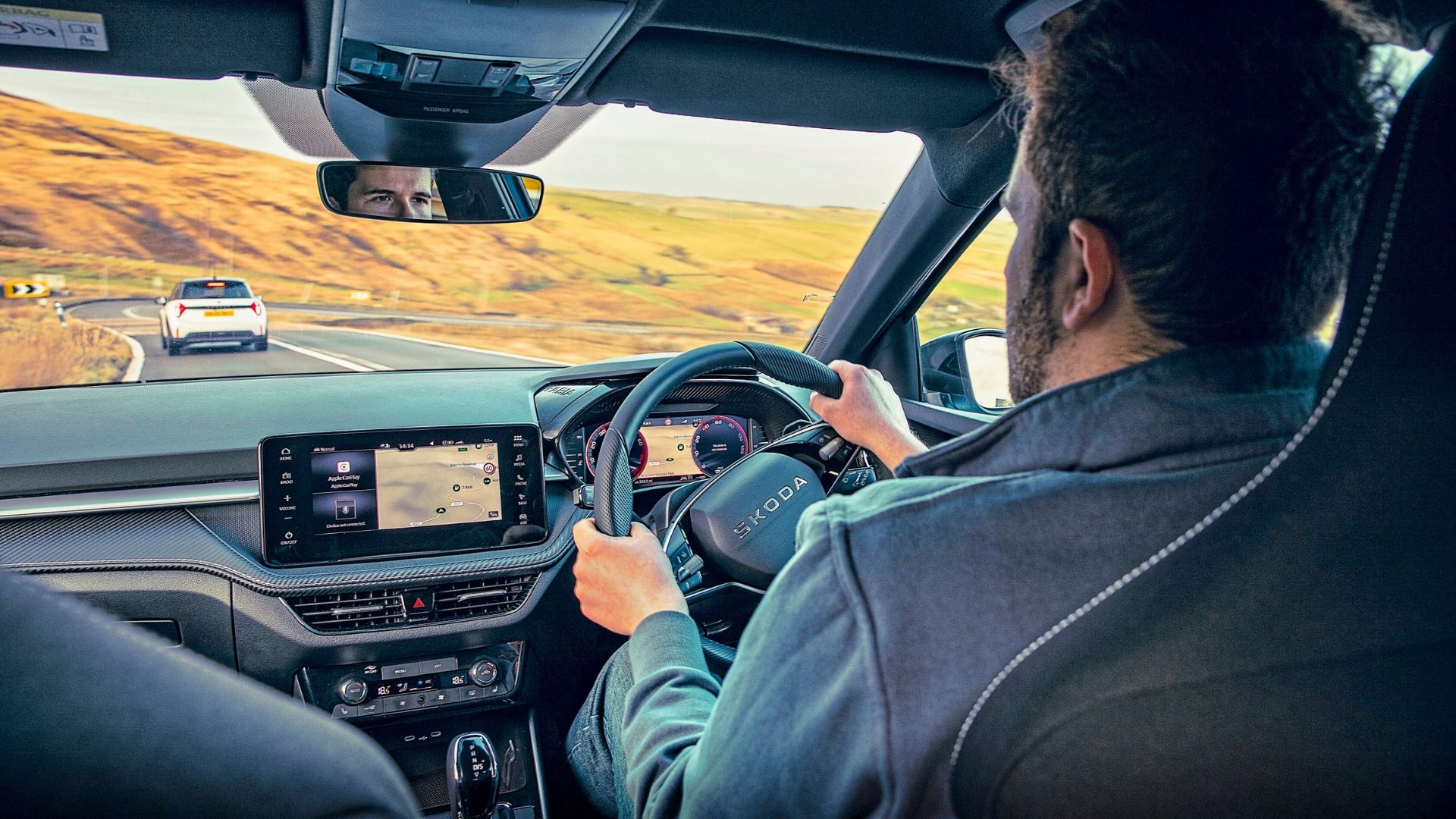
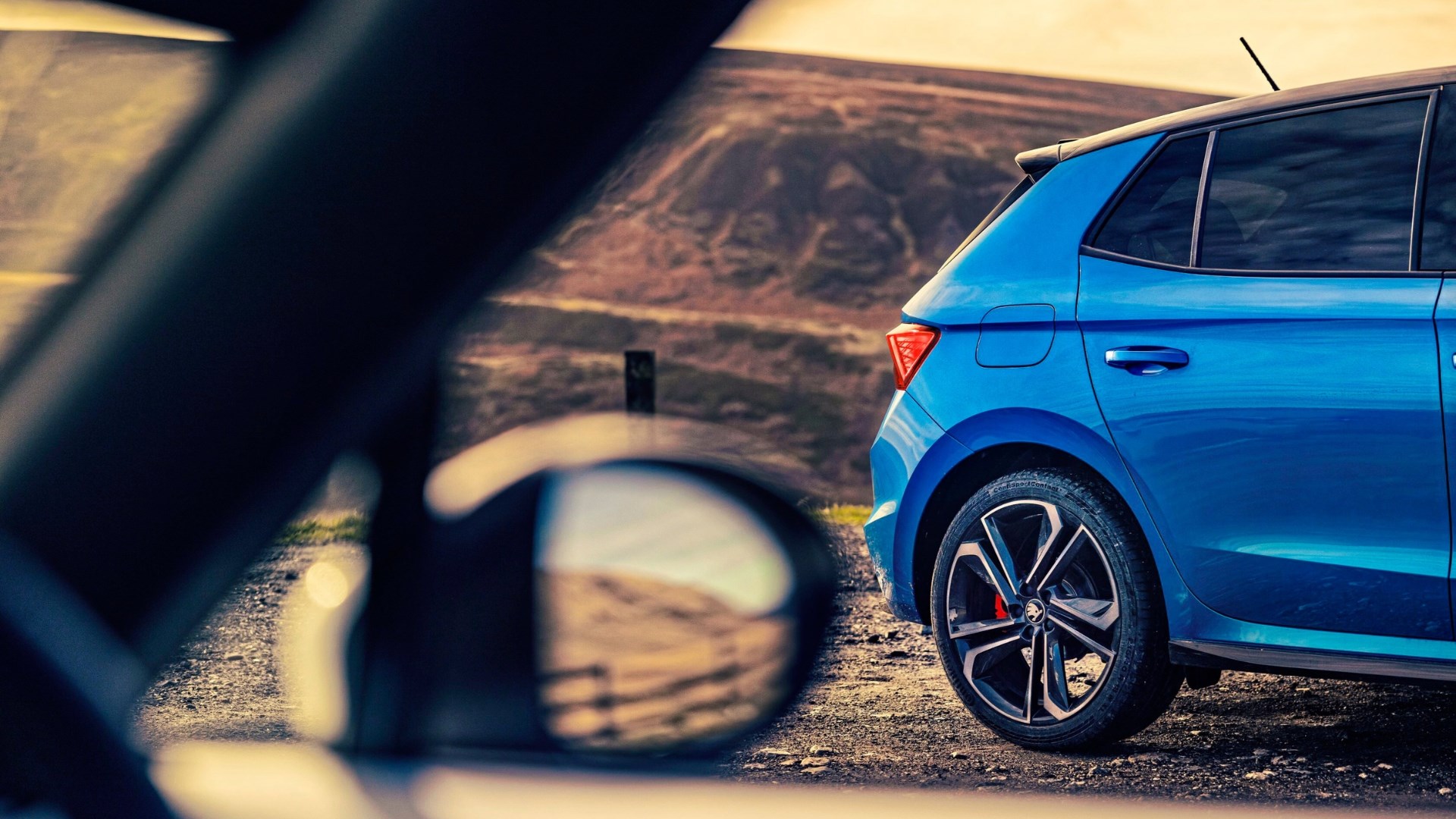
Visual changes are modest: a small black front splitter, an extended rear spoiler, a black tailgate decal and assorted stickers. It is also the only Fabia with exposed exhaust tips, though as the test found, they make no difference to the soundtrack. Under the skin, however, the changes run deeper than the body kit suggests.
Engine and gearbox: more than a remap
The turbocharged 1.5-litre petrol has been remapped from 148bhp to 175bhp, and to cope with the extra output, Skoda borrowed hardy components such as the intake manifold, vibration damper and rocker arms from larger Volkswagen Group models. Torque arrives early, with 184lb ft available from just 1,500rpm, which explains why the Fabia's pace feels so much more accessible than the Mazda's. If you want to understand this engine family better, there is an in-depth guide to the VW Group's TSI engines on our Arabic sister site covering their strengths, known issues and maintenance tips.
The suspension carries over the Monte Carlo's 15mm lowered setup, the steering has been reweighted for a more exciting feel, and the seven-speed dual-clutch automatic has been recalibrated specifically for sportier downshifts. Only on paper is it eight tenths quicker to 62mph than a standard Monte Carlo; on the road the gap feels considerably larger.
How does the Fabia 130 drive?
Here is the surprise of the test. The 130 is the quickest car of the trio, hitting 62mph in 7.2 seconds, and its recalibrated DSG is a genuine asset once clicked into its sport setting. Upshifts still suffer a slight delay between input and response, but the downshift logic is so well judged that the tester never once reached for the plastic paddles or wished for a manual, even on the Peaks' most demanding sections. Whatever wizardry Skoda's engineers applied has worked.
An ESC Sport mode and the ability to fully disable traction control add further mischief. You need to brake hard and commit to a corner, but the rear axle will move, giving the Fabia a semblance of adjustability that makes it, in the tester's memorable framing, the ideal starter on someone's hot hatch journey: Skoda's amuse bouche before the Golf R's Tomahawk steak.
Two criticisms temper the enthusiasm. First, the steering, while well weighted, feeds back very little, which saps confidence when the road really starts twisting. Second, the 1.5-litre engine sounds a touch thrashy when worked hard uphill. It is worth remembering, though, that sporty Fabias were never true hot hatches: the first vRS was a 1.9 TDI PD diesel, and the 2010 follow-up was criticised for being DSG only at launch. The 130 breaks no mould, softly softly is the Skoda way.
Interior, tech and practicality
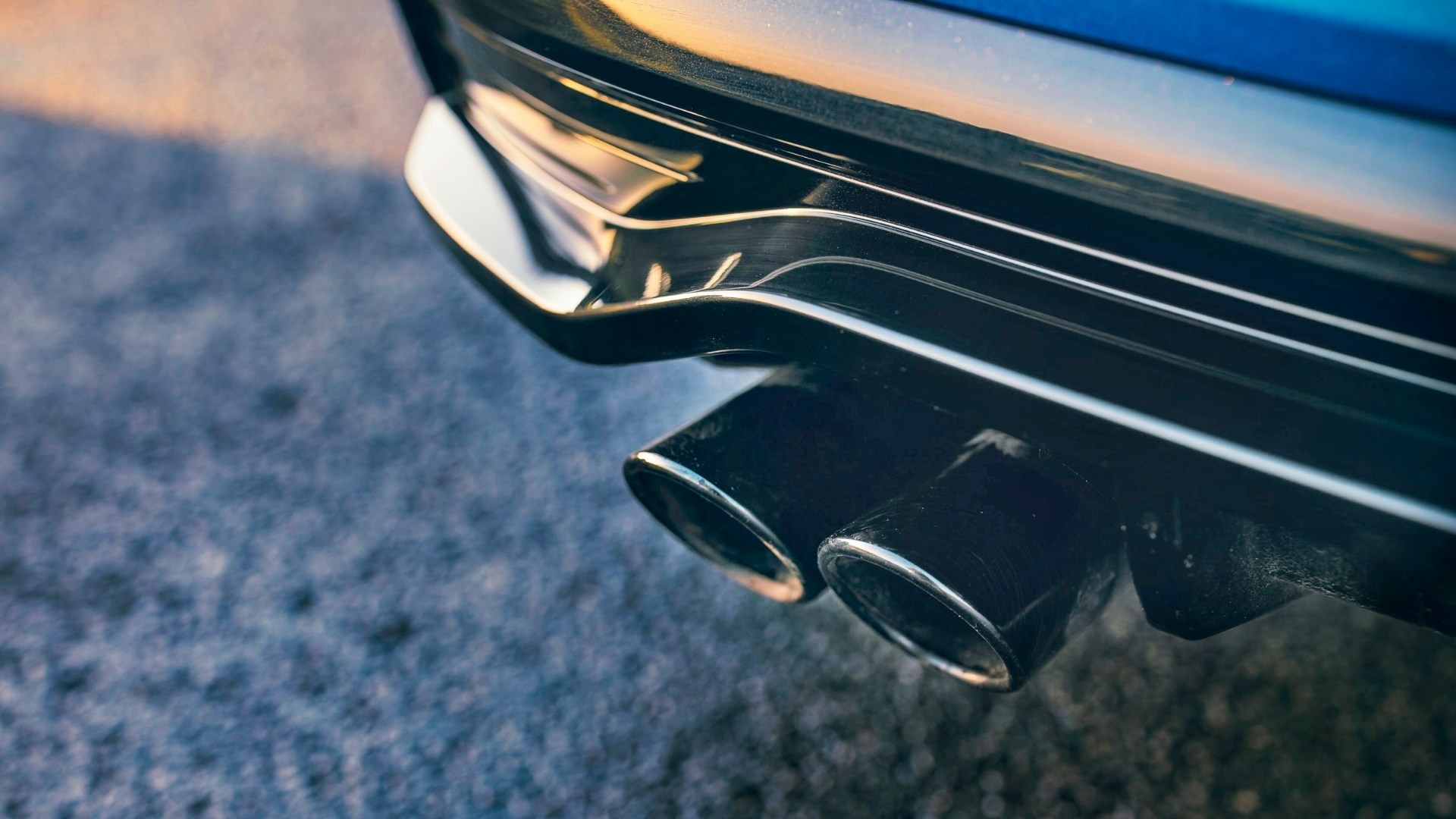
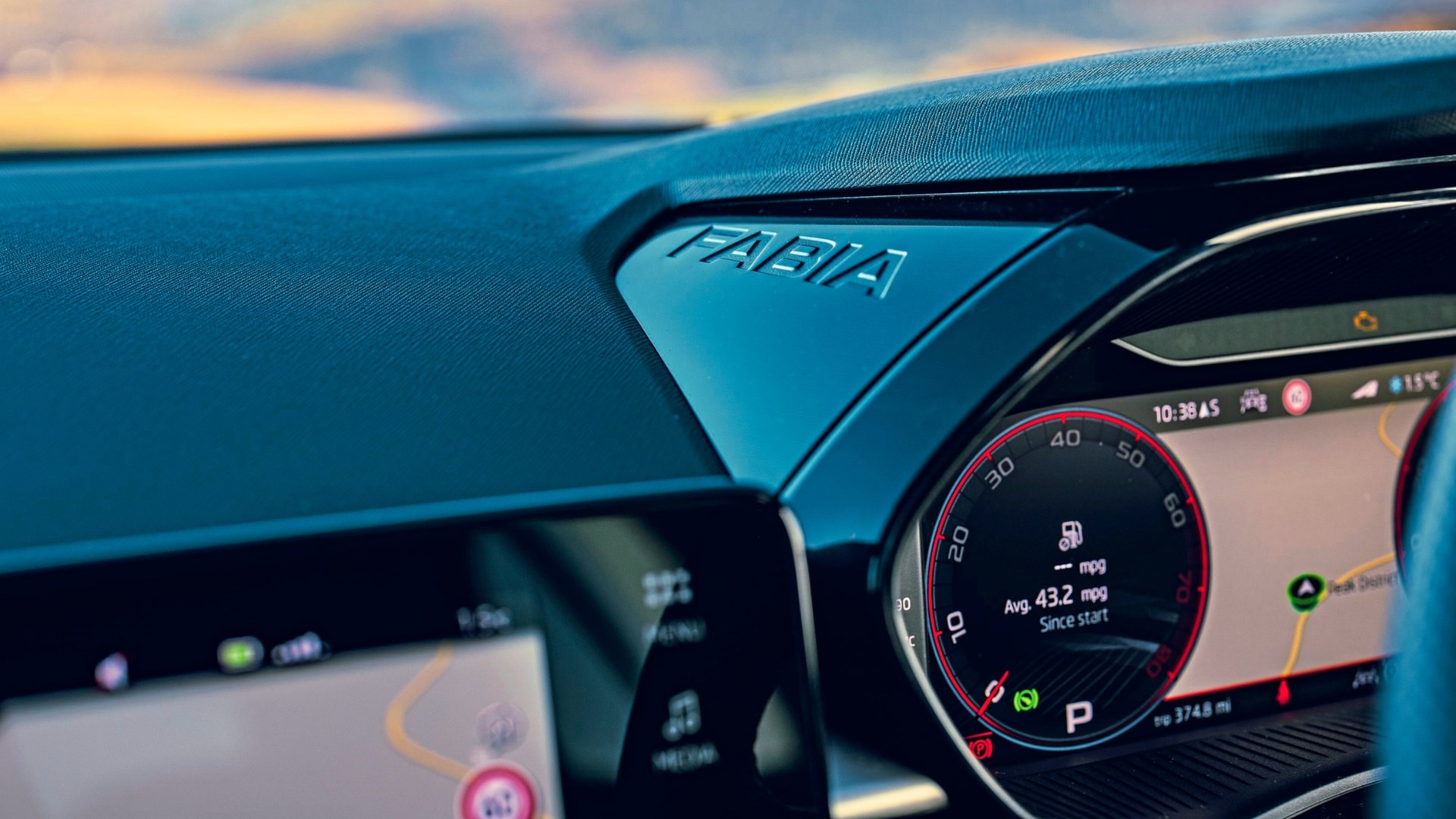
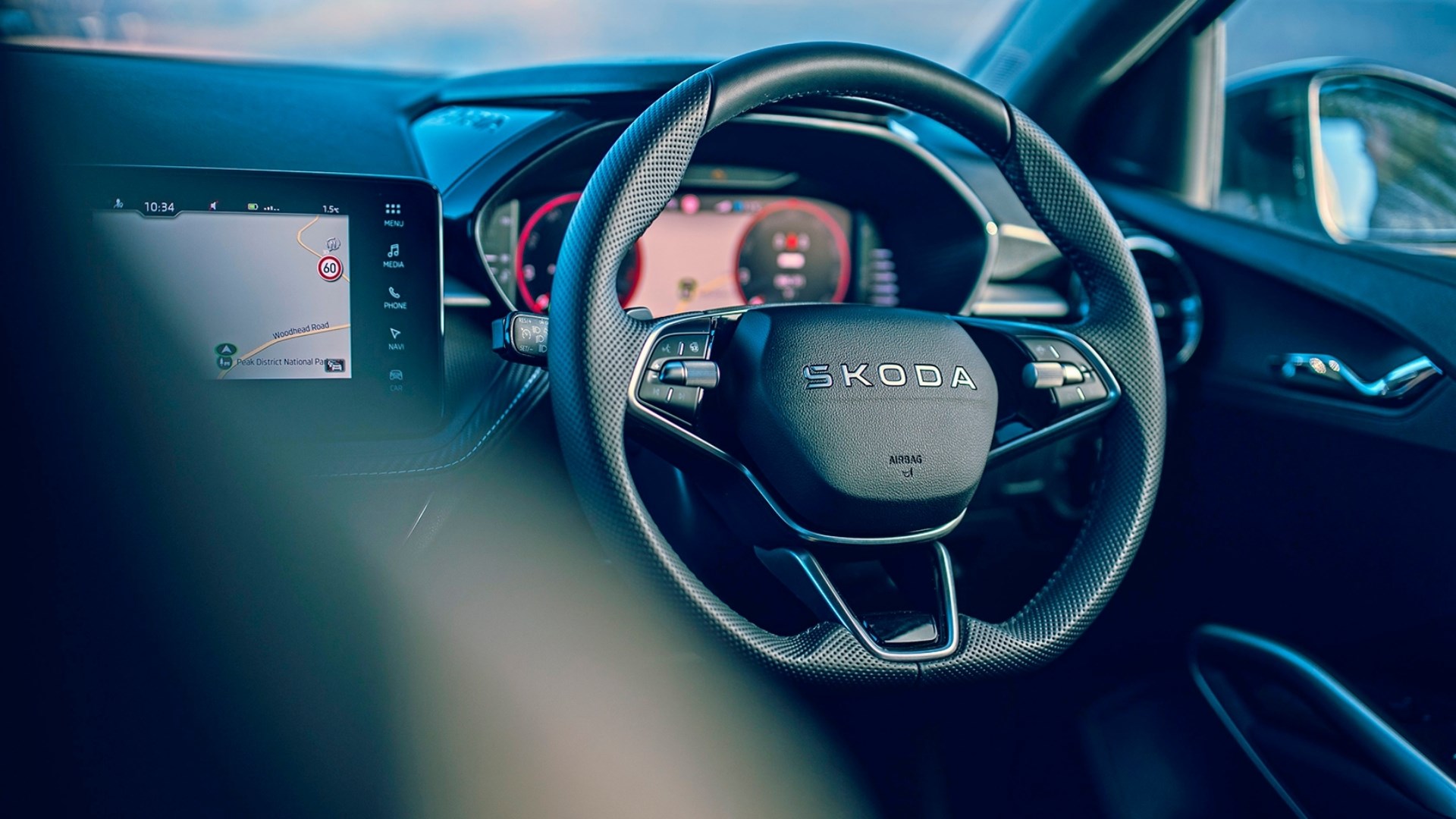
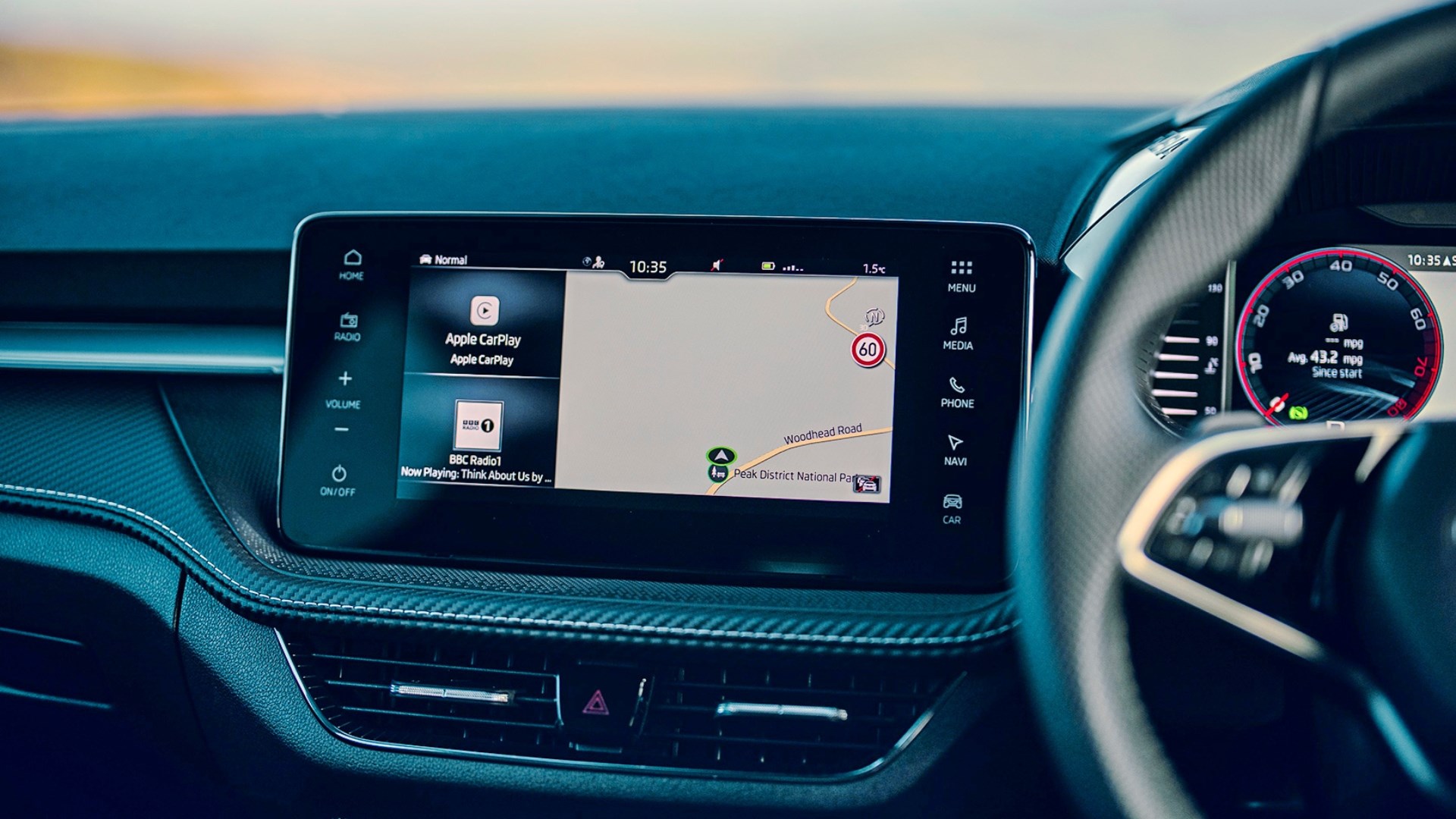
Inside, the 130 is essentially a Monte Carlo: striped sports seats (not the most comfortable over multi-hour drives), carbon fibre effect trim and a chunky gear selector and handbrake. The digital instrument cluster drew comparisons with Audi's old Virtual Cockpit, which is high praise, and there is a simple touchscreen with a proper separate climate panel. The cabin just looks a bit dated next to the Mini's.
Where the Fabia crushes its rivals is usability. Rear seats accommodate normal adults, and the 380-litre boot matches a Volkswagen Golf, a huge figure for a supermini. As a daily driver, or even as an only family car, it has no rival in this test.
Mazda MX-5 review: the purist's choice
A decade old, and still the benchmark
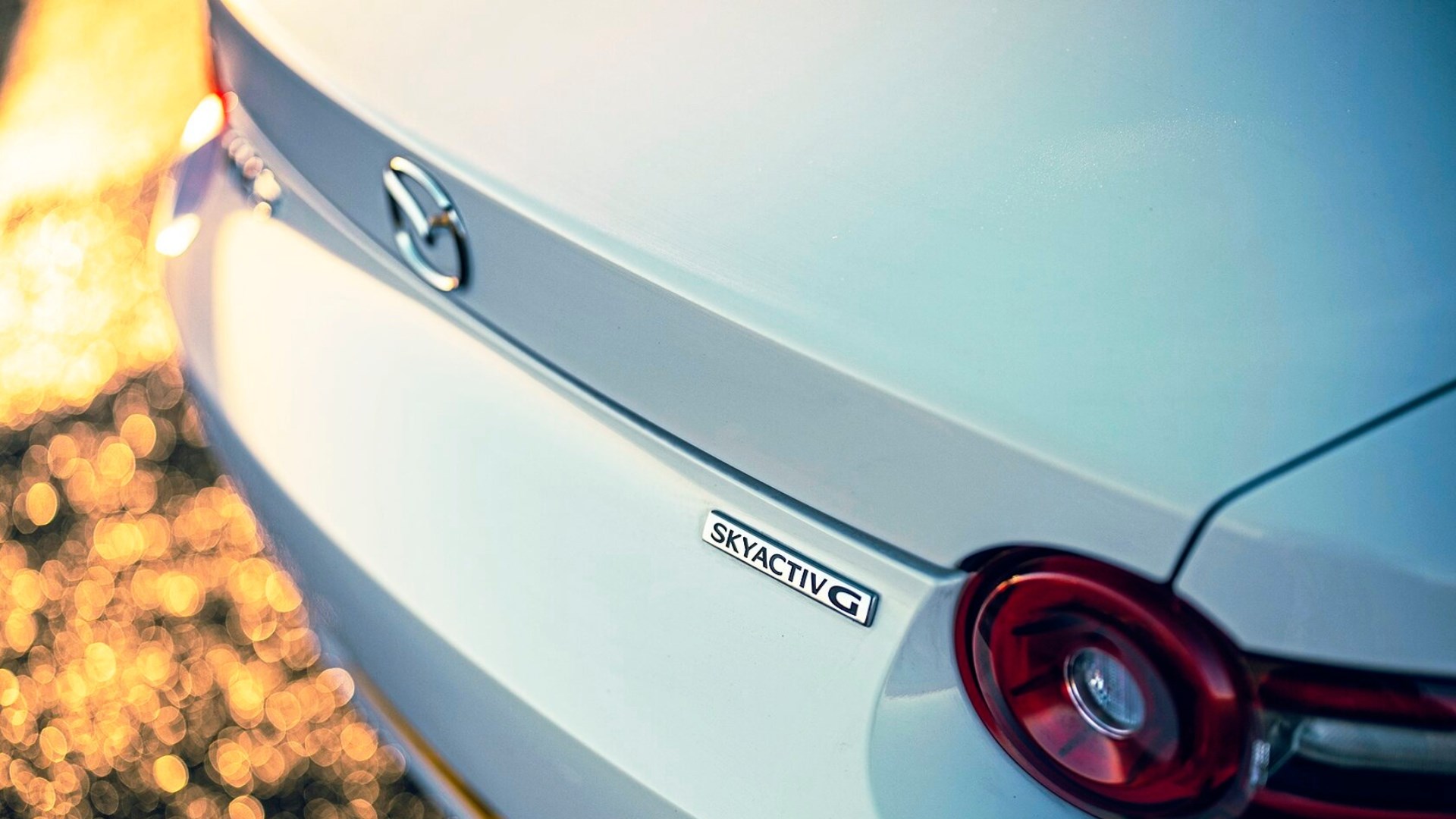
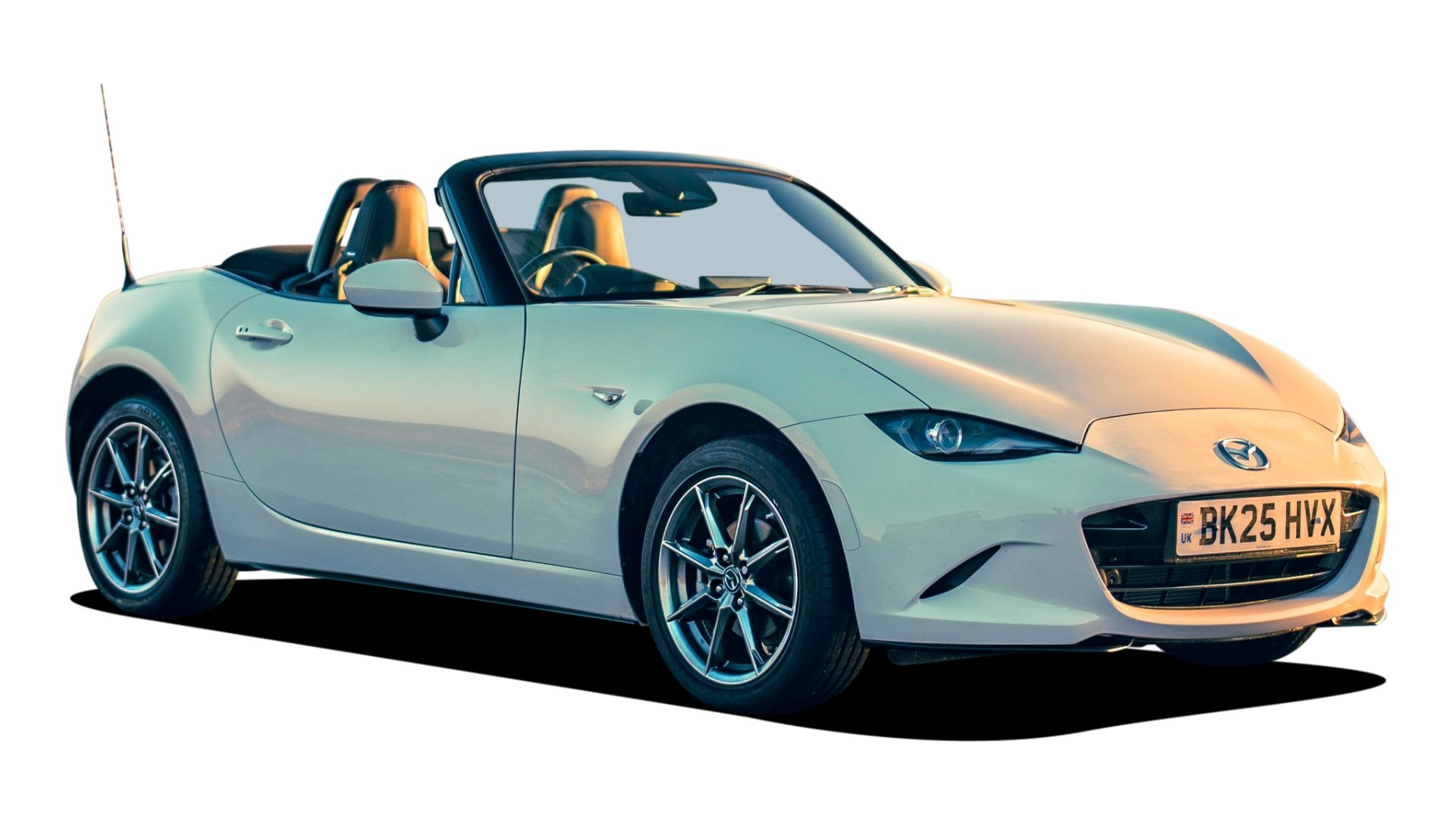
No affordable fun car test is complete without the car that defines the genre. While Audi, BMW and Mercedes have all abandoned their cheaper two seat sports cars for lack of a business case, plucky little Mazda keeps building its icon, selling around 1,500 a year in the UK across soft-top roadster and metal-roofed RF Retractable Fastback body styles. The RF commands a £2,000 premium; this test used the purer canvas-roofed car.
The fourth-generation ND MX-5 has been on sale for more than a decade, kept relevant by constant tiny updates and special editions. Returning to one after a few years away, the tester found remarkably little had changed: a few more driver assistance bings and bongs, a larger touchscreen, but fundamentally a car from another era, in ways both good and bad.
1.5-litre engine and a proper manual gearbox
UK buyers still choose between a 129bhp 1.5-litre and a 181bhp 2.0-litre, both naturally aspirated and both paired exclusively with a six-speed manual. Praise be, because the manual is disappearing fast elsewhere, as our rundown of the manual cars quietly vanishing from price lists after 2026 makes painfully clear. To stay under £30,000 the test used the 1.5, and at £28,585 it looks something of a bargain in 2026, especially since even the base model includes LED headlights, heated seats and climate control.
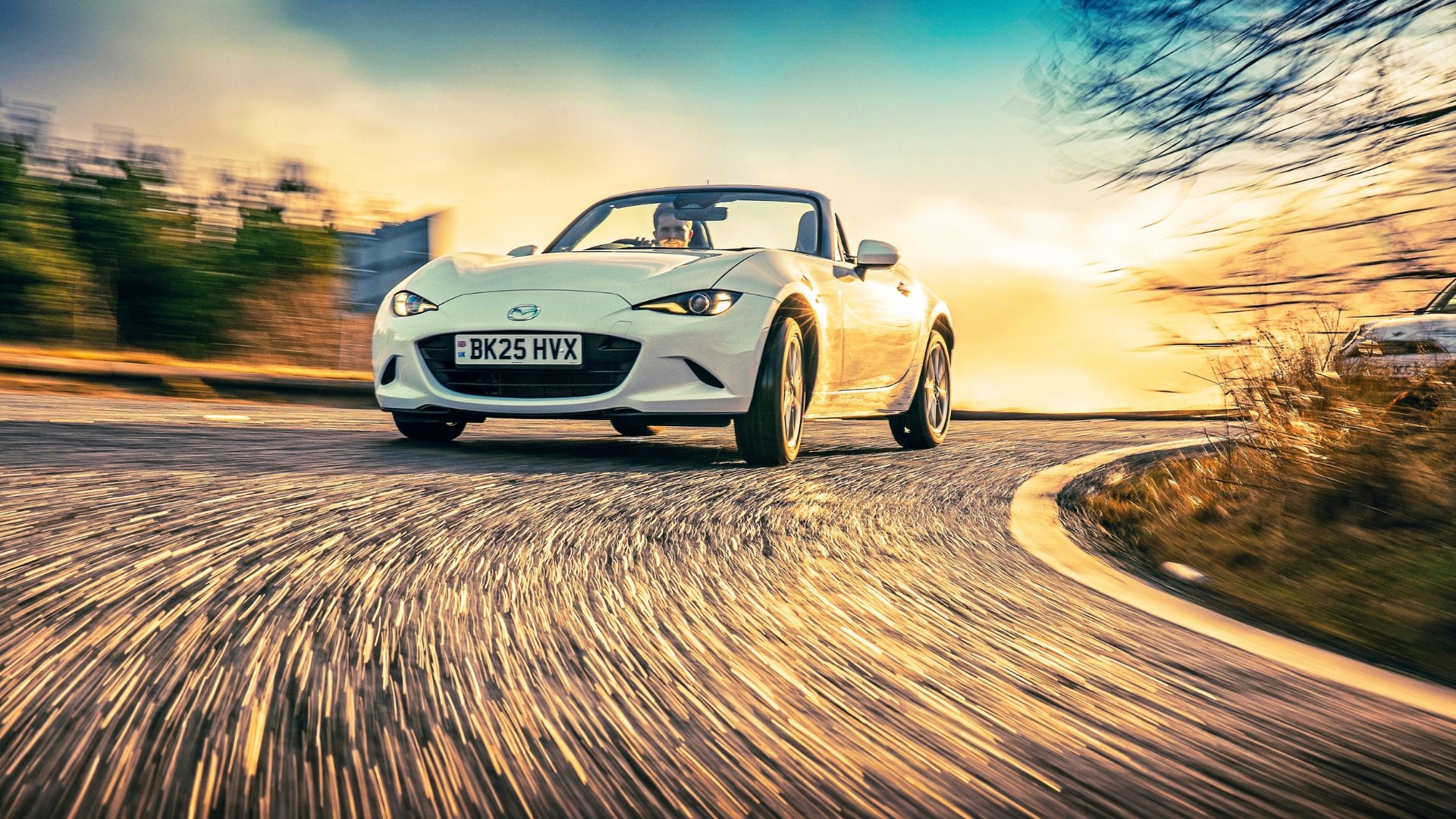
With peak power not arriving until 7,000rpm, the little 1.5 demands commitment; there is joy in eking out every drop, and the six-speed shift is every bit as precise as memory suggests, so rowing through the ratios never feels like a chore. The tester did miss the 2.0-litre's more effortless delivery, and could not keep pace with the Fabia on the climbs, yet reported arriving second at the summit with the biggest grin. The steering is beautifully precise, the chassis carries a delightful rear bias, and at barely 1,100kg the Mazda is a featherweight by modern standards. It constantly tugs at your sleeve like a child that wants to play.
Even near freezing, the roof stays down; them's the rules, and the powerful heated seats make it a genuine all-year convertible. This is the cleanliness of an analogue experience: organic controls undiluted by modern requirements, ease of use paired with genuine tactility.
Living with the MX-5
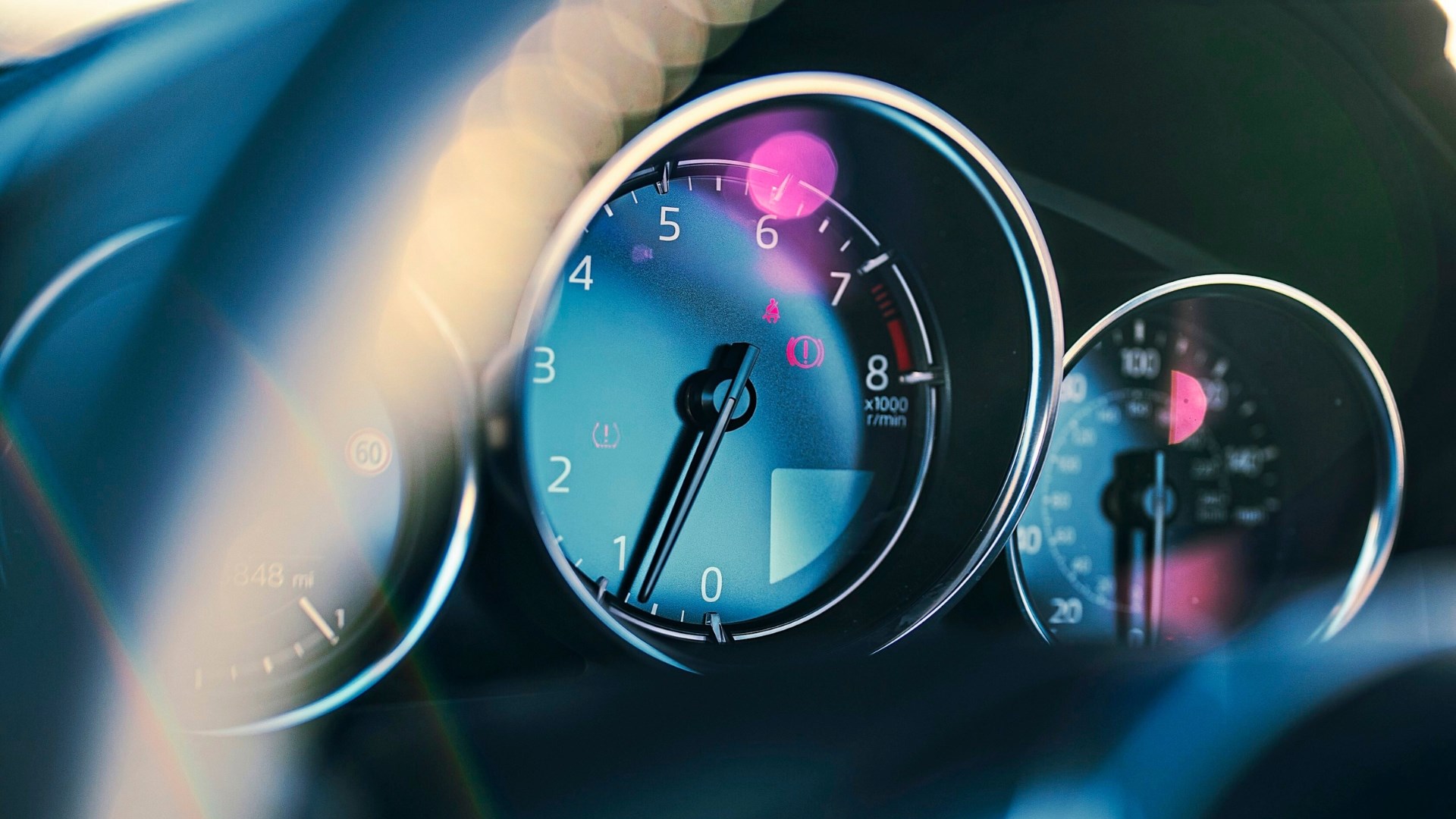
Step inside and it is 2010 again, delightfully so. There is an amusingly large handbrake, brilliantly clear analogue dials that escaped digitalisation, and an 8.8-inch screen that remains small and can be operated by a good old-fashioned rotary controller. The supposedly touch-sensitive screen seems to decide on its own terms when it will accept pokes, but the physical controller makes that irrelevant. The roof, of course, is still fully manual.
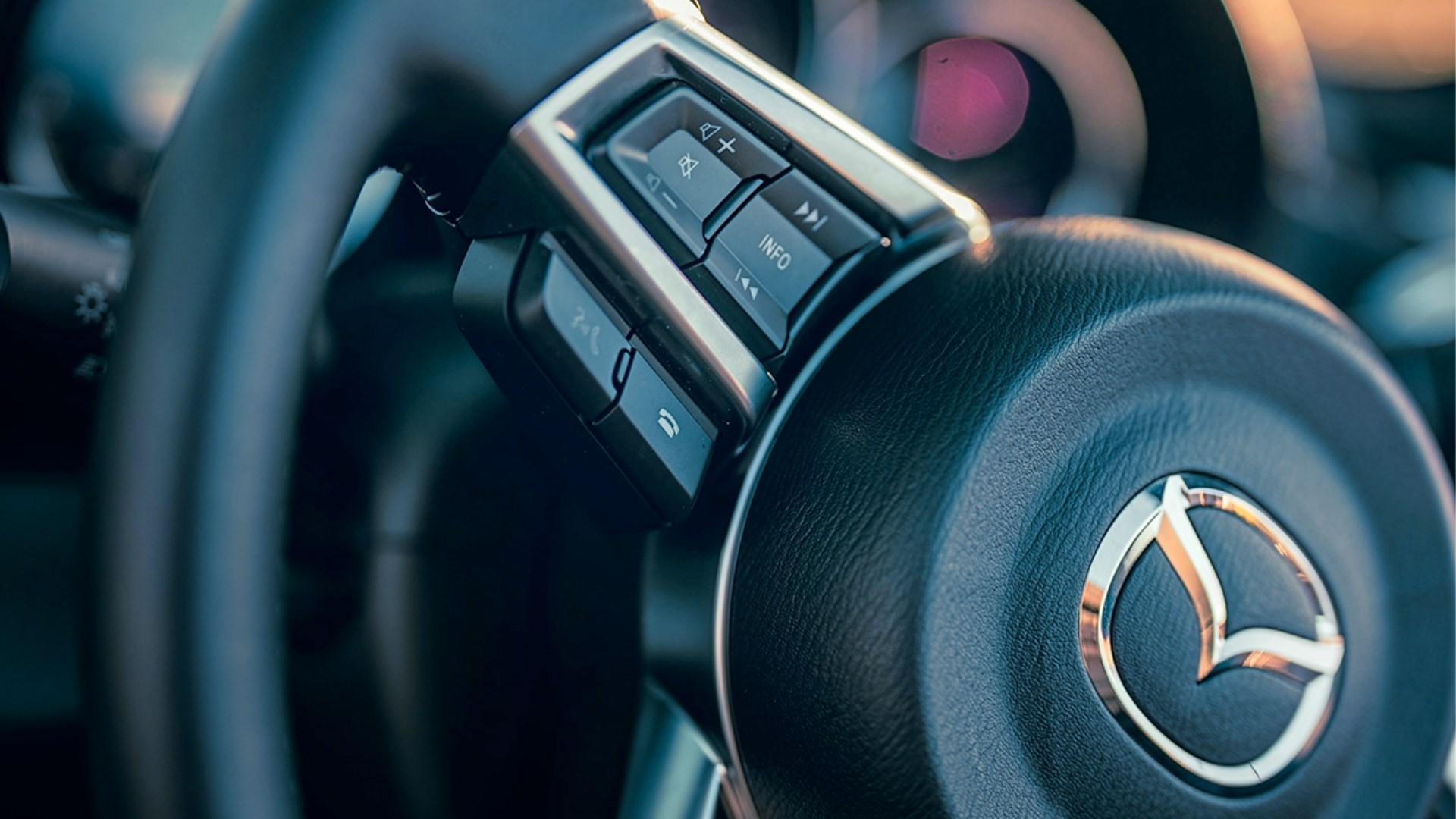
The compromises are real but manageable. Storage space is practically non-existent and the 130-litre boot swallows a few small shopping bags and little else. Cabin space is snug, although the firewall sits further back than expected: a six-foot tester fitted with room to spare behind the seat's full travel. What matters is that the MX-5 does not serve its performance on a plate; it makes you work, and reaching the top of a pass feels like an achievement that deserves a pat on the back.
Mini Cooper C review: small car, big personality
Engine, gearbox and that steering
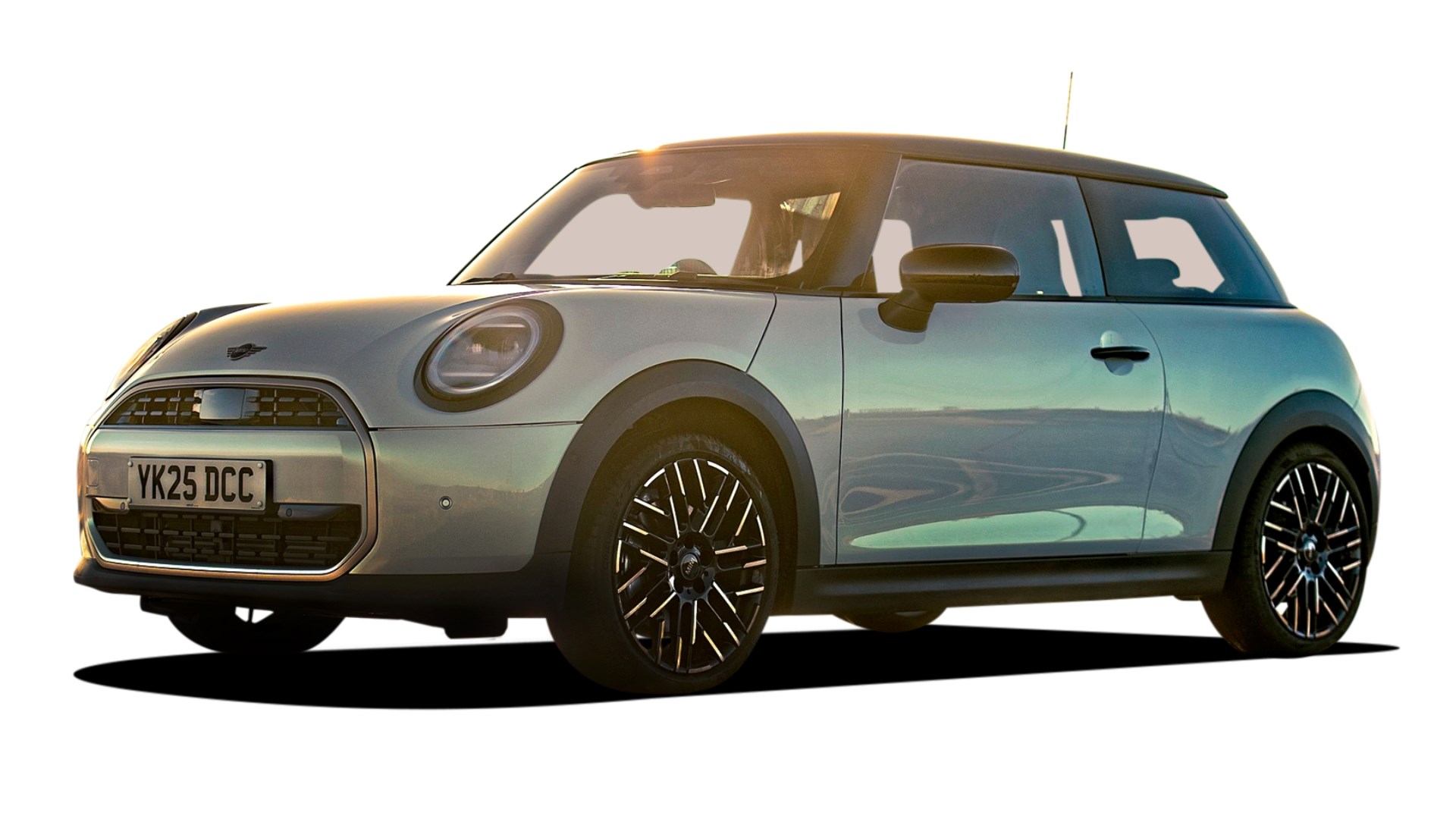
The third contender is the Mini Cooper C, the entry point of a range now split between C, Cooper S and John Cooper Works models. The C uses a 154bhp turbocharged 1.5-litre three-cylinder, chosen here for price: it starts at just £25,465 in three-door form, comfortably the cheapest ticket in this test, although the test car ballooned to £32,765 thanks to top spec Exclusive trim and a £4,000 Level 2 pack adding a panoramic roof and Harman Kardon audio. Nice to have, not strictly necessary.
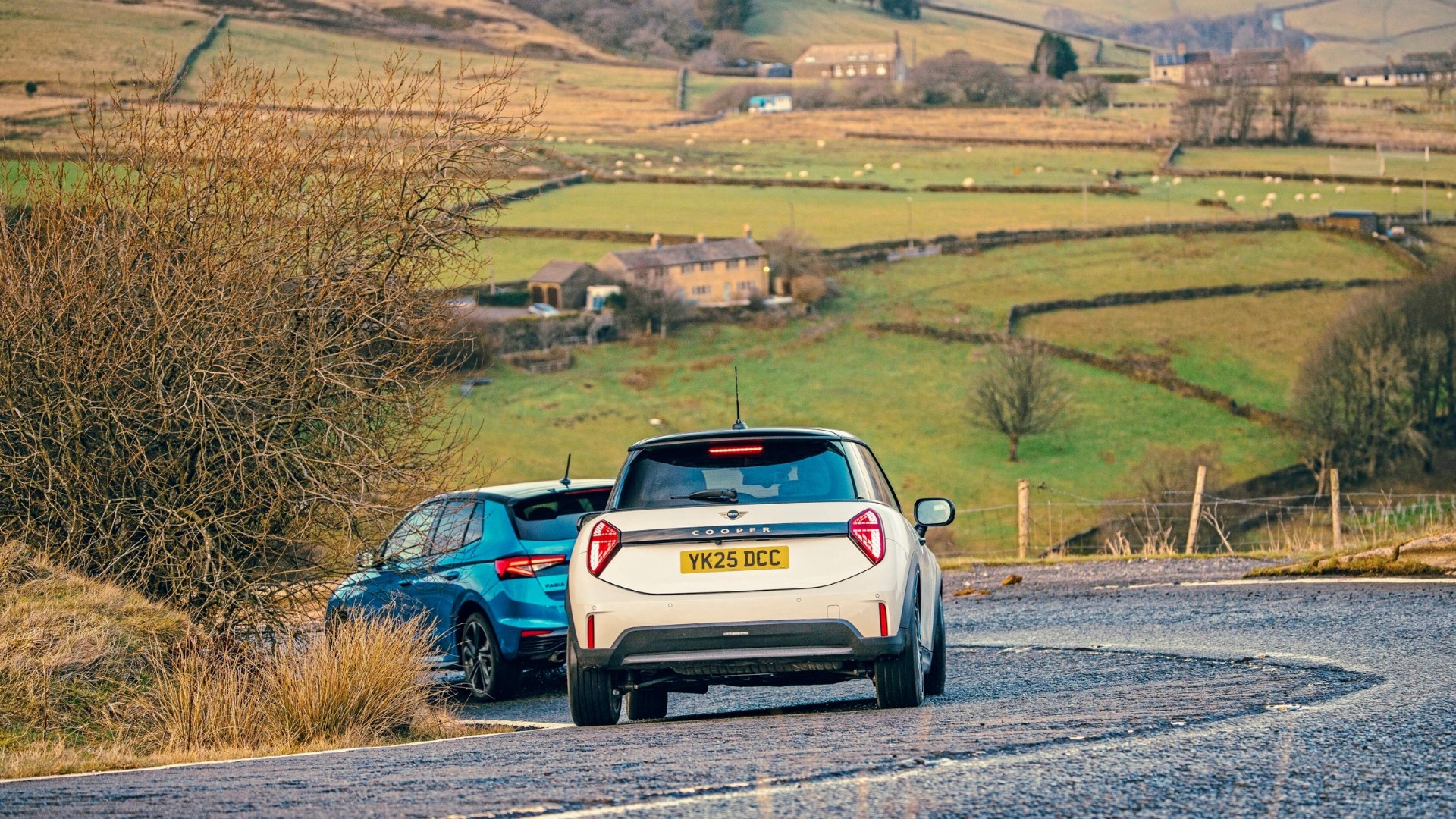
On paper the Mini trails the Fabia on power and torque and carries around 60kg more, yet on the uphill stretches climbing out of Glossop the Skoda could not shake it. The three-pot is thrummy and tuneful rather than truly sporty, and the car has a particular willingness on inclines that made the tester question why anyone needs the Cooper S, unless a fruitier soundtrack matters to you. If this breed of small, punchy hatch appeals, it is also worth reading why the latest Mini Cooper S is such a perfect blend of fun and functionality.
What truly separates the Mini is the steering. Within 30 seconds of swapping out of the Fabia, the difference is obvious: so quick and direct that a few bends are enough to build cast-iron trust that the nose will stick exactly where you aim it. The automatic gearbox has no manual option, a shame, but it is good enough that you rarely think you could do better, provided you use its L mode, which holds gears longer. Note that paddles are reserved for Sport trim cars; on this Exclusive there is no way to override the box, a real oversight.
Ride quality: pay attention to wheel size
The Mini's big weakness is a brittle ride that leaves you wincing over potholes, a trait not helped by the optional 18-inch wheels; the tester admitted a desire to try the car on its standard, if awkward-looking, 16-inch four-spokes. The cure, fittingly, is pace: at a decent lick the stiffness evaporates and the chassis breathes with the road. This is a car that relishes being driven quickly, and it left the tester repeatedly choosing the longer, more fun route home even after a freezing day on the moors.
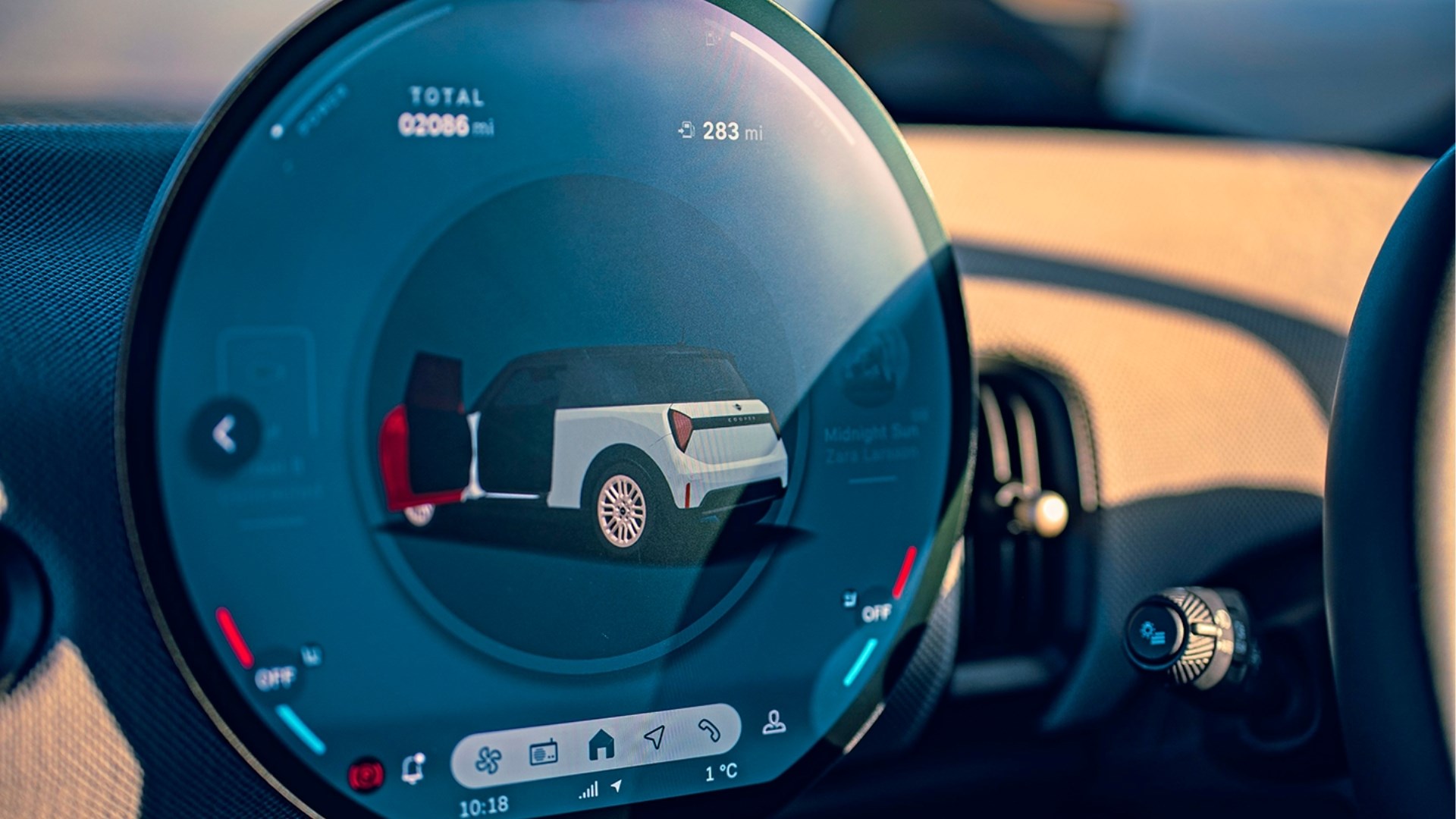
The best interior of any small car
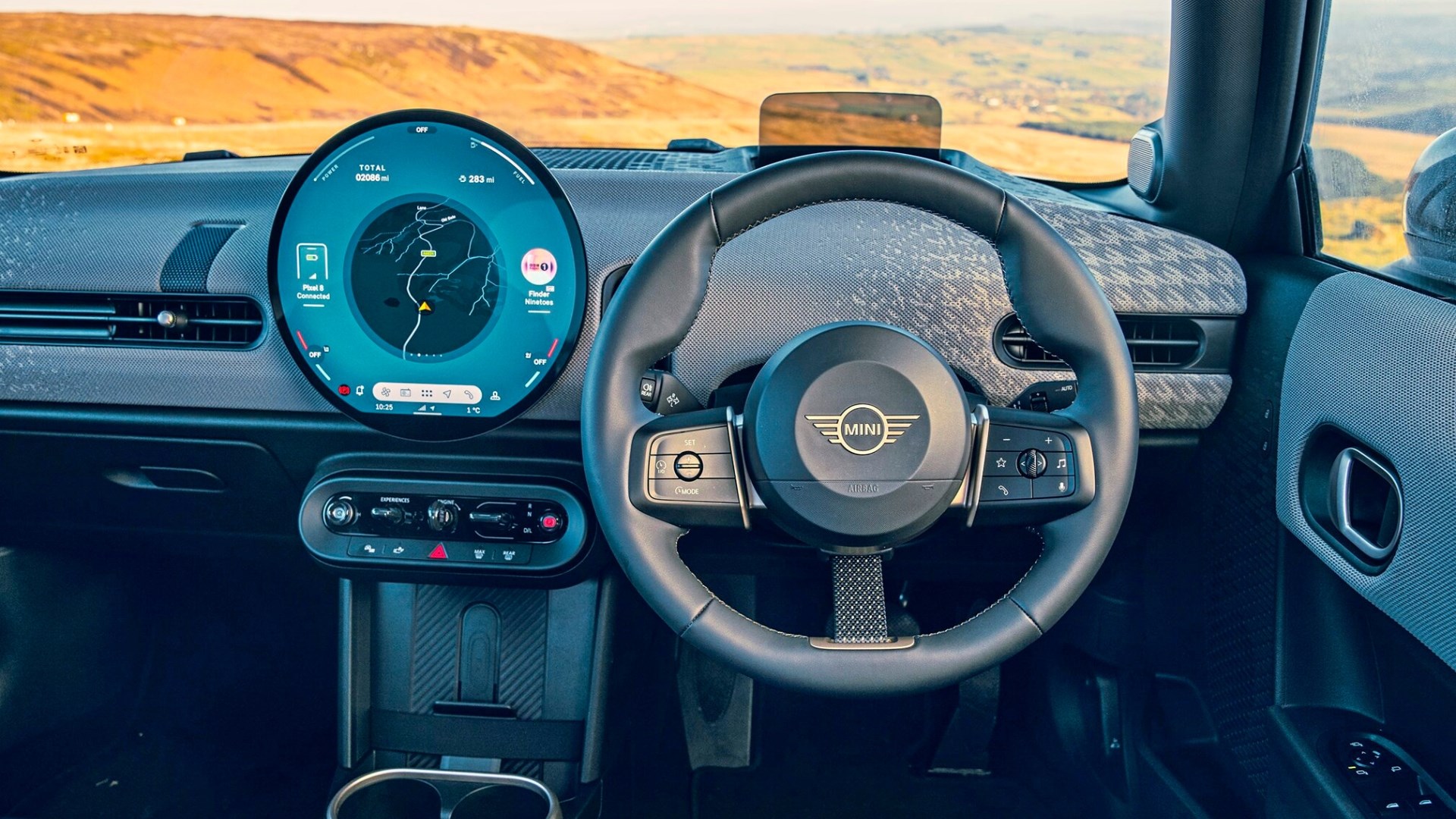
Although the new Cooper is a facelift in engineering terms, its cabin still feels cutting edge years after launch. The big circular OLED display, now standard across the range, is crisp, easy to navigate and better than systems in cars costing three times as much, even if too many functions live inside it. The nostalgia card is played perfectly: classic Mini dials can be summoned on the round screen, and the toggle strip beneath echoes the original car. Purists may grumble; everyone else will find it charming. One gripe: a rectangular Apple CarPlay window inside a circular display is not a pleasant sight.
Practicality and everyday usability: an easy Fabia win
Judged purely on space, this contest is over quickly, but the nuances matter for buyers planning to use these cars daily.
- Skoda Fabia 130: adult-friendly rear seats and a 380-litre boot equal to a VW Golf. Could easily serve as an only small family car.
- Mini Cooper C: awkward rear access and limited space behind the front seats, plus a dinky 210-litre boot. A five-door Cooper exists if practicality is a priority.
- Mazda MX-5: two seats, virtually no cabin storage and a 130-litre boot. The most compromised, and proud of it.
Running costs tell a closer story. The Fabia has the best official economy at 50.3mpg, but in CAR's real-world testing the MX-5 actually returned the best figure of the day at 48.7mpg and the longest tested range at 476 miles. Fun and frugal is a rare combination.
Image gallery: Fabia 130 vs MX-5 vs Cooper C in the Peaks
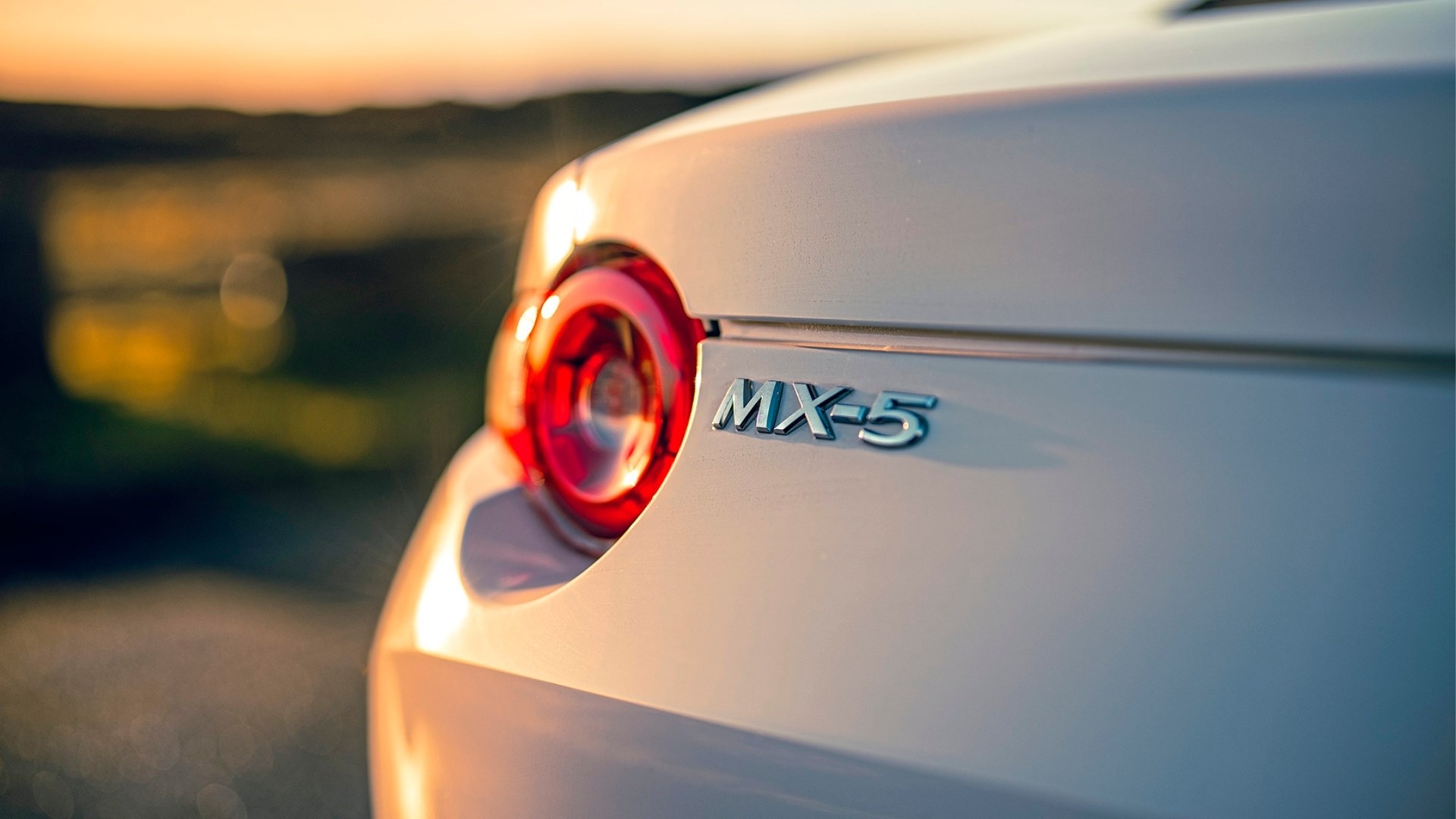
Browse the full 27-photo gallery from the original triple test below, in original order.
Final verdict: which affordable fun car should you buy?
The fact that these three cars exist at all in 2026 is worth celebrating. Each can brighten a mundane commute and tempt you off the motorway an exit early, just to steal a few extra miles of B-road. But CAR's rankings were clear.
3rd place: Skoda Fabia 130 ★★★★☆ 4/5
A suitably warmed-up Fabia, without compromising its daily usability.
The most unlikely car here, given Skoda spent a decade insisting there would be no vRS version of its smallest model. The greater surprise is how much better it drives than a standard Fabia: more willing, livelier and more involved, despite what look like small changes on paper. As a daily car where space and practicality matter, it is the clear choice. It simply cannot match the other two for outright fun.
Price: £29,995 (£30,715 as tested) | Powertrain: 1,498cc turbo four, 7-speed auto, FWD | Performance: 175bhp, 184lb ft, 7.2sec 0-62mph, 141mph | Weight: 1,271kg | Efficiency: 50.3mpg official, 46.3mpg tested, 126g/km | Boot: 380 litres
2nd place: Mini Cooper C ★★★★☆ 4/5
Stylish, entertaining to drive and the best interior of any small car.
The Mini runs the Mazda far closer than expected, winning the tester over every single time with its keen handling and wonderfully quick steering. Every drive in the Cooper is one you do not want to end. It loses points for its brittle low-speed ride and the ease with which options inflate the price, but skip the big wheels and luxury packs and it is a deeply charming thing.
Price: £25,465 (£32,765 as tested) | Powertrain: 1,499cc turbo three, 7-speed auto, FWD | Performance: 154bhp, 170lb ft, 7.7sec 0-62mph, 140mph | Weight: 1,335kg | Efficiency: 46.3mpg official, 44.7mpg tested, 137g/km | Boot: 210 litres
1st place: Mazda MX-5 ★★★★☆ 4/5
Nothing can deliver driving thrills on a budget quite like an MX-5.
Had it been fitted with the 181bhp 2.0-litre, the winning margin would have been clearer still; the 1.5 can feel a touch lacking in a straight line. But the Mazda's sheer balance, nimbleness and ability to generate a smile within seconds won the tester over every single time. It is the antithesis of the modern car: small, light, compact on the road, and the most efficient machine in this test to boot. Where affordable fun new cars are concerned, it remains unbeatable and in a class of its own.
Price: £28,585 (£30,585 as tested) | Powertrain: 1,496cc naturally aspirated four, 6-speed manual, RWD | Performance: 129bhp, 112lb ft, 8.3sec 0-62mph, 127mph | Weight: 1,106kg | Efficiency: 45.6mpg official, 48.7mpg tested, 476-mile tested range | Boot: 130 litres
FAQ: Skoda Fabia 130 vs Mazda MX-5 vs Mini Cooper C
Which is the fastest: Fabia 130, MX-5 or Mini Cooper C?
The Skoda Fabia 130 is the fastest, accelerating from 0-62mph in 7.2 seconds with a 141mph top speed. The Mini Cooper C manages 7.7 seconds and 140mph, while the 1.5-litre Mazda MX-5 records 8.3 seconds and 127mph.
How much does the Skoda Fabia 130 cost in the UK?
The Skoda Fabia 130 starts from £29,995, exactly £3,000 more than the 148bhp Fabia Monte Carlo it is based on. The car in CAR's triple test cost £30,715 with a spare wheel and winter pack, and a fully optioned example can reach around £33,000.
Is the Skoda Fabia 130 a proper hot hatch?
Not quite. Skoda positions it as a warm hatch and deliberately avoided the vRS badge. It adds a 175bhp remap, Monte Carlo-based lowered suspension, recalibrated steering and gearbox software and an ESC Sport mode, but it stops short of full hot hatch intensity.
Can you still buy a Mazda MX-5 with a manual gearbox?
Yes. In the UK every MX-5, whether the 129bhp 1.5-litre or the 181bhp 2.0-litre, comes exclusively with a six-speed manual gearbox and rear-wheel drive, in both roadster and RF body styles.
Does the Mini Cooper C come with a manual gearbox?
No. The current petrol Mini Cooper C is automatic only, using a seven-speed gearbox. Steering wheel paddles are fitted only to Sport trim cars; the Exclusive trim tested here offers no manual override at all.
Which of the three is the most economical?
Officially the Fabia 130 leads with 50.3mpg. In CAR's real-world testing, however, the Mazda MX-5 proved the most efficient, returning 48.7mpg and a tested range of 476 miles, ahead of the Fabia's 46.3mpg and the Mini's 44.7mpg.
Which is the most practical: Fabia 130, MX-5 or Cooper C?
The Fabia 130 wins easily, with adult-sized rear seats and a 380-litre boot that matches a VW Golf. The Mini offers 210 litres and tight rear access, while the two-seat MX-5 manages just 130 litres.
Which car won CAR magazine's triple test?
The Mazda MX-5 won, praised for its balance, nimbleness and unmatched fun-per-pound. The Mini Cooper C finished a close second on steering feel and interior quality, with the Skoda Fabia 130 third but rated the best everyday choice. All three cars earned four stars.
Conclusion: reports of the fun car's death have been exaggerated
The cheap fun car is rare in 2026, but this triple test proves it is not extinct. The Skoda Fabia 130 is the thinking buyer's pick: quickest on paper, cheapest to fuel officially and genuinely capable of swallowing family duty, even if its steering and soundtrack keep it from greatness. The Mini Cooper C counters with the quickest steering, the most character and the finest cabin in the segment, at the cost of a fractious ride. And the Mazda MX-5 does what it has done for over three decades: win hearts through balance, simplicity and a manual gearbox, using less fuel than both rivals in the process.
The wider picture offers hope too. As the reborn Honda Prelude hybrid coupe shows on our sister site, manufacturers are rediscovering the appetite for attainable sporting metal. Enjoy this trio while they exist, and if you are shopping, drive all three on roads like these before you sign anything.
Which would you pick: Fabia, MX-5 or Mini?
Drop your verdict in the comments, share this comparison with a fellow petrolhead, and follow us for more comparison tests, reviews and car buying guides.


