

The All-New Hyundai NEXO Can Refuel in Minutes. Here Is What That Range Claim Really Means.
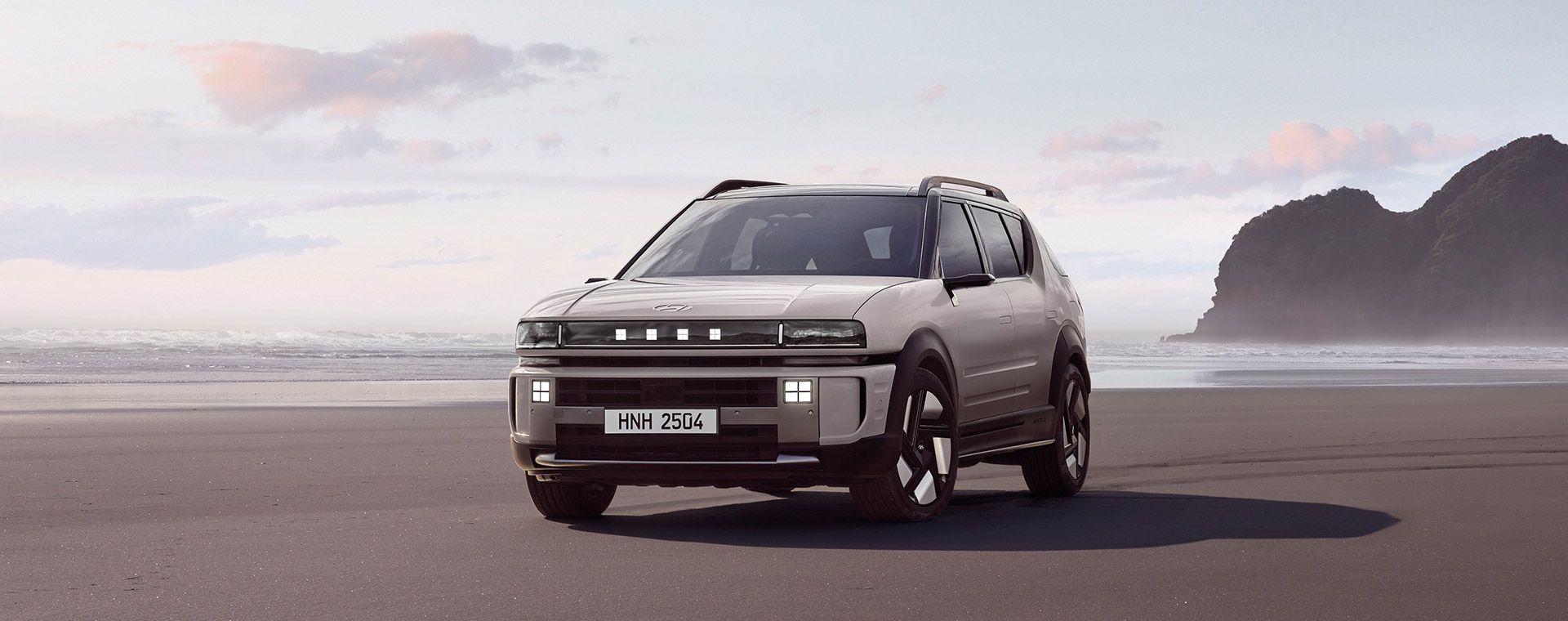
Most zero-emission SUVs ask you to plan the day around a charger. The all-new Hyundai NEXO asks a different question. What if a refill took about as long as a fuel stop, and the published target was 826 km?
That is the promise sitting behind Hyundai's highlights page. The page itself is mostly photography, a short statement of commitment, and a 25-image gallery. The useful story is in the numbers Hyundai published around that page, and in the limits those numbers do not remove.
This guide rebuilds those highlights into a buyer's briefing. Every specification below comes from Hyundai's own product pages or newsroom releases. Where a figure is projected, estimated, or specific to one market, we say so. We have not invented a price, a United States on-sale date, or a test-track result.
Key takeaways
- The all-new Hyundai NEXO is a hydrogen fuel cell electric SUV. It makes electricity on board and drives a front electric motor. Hyundai says the tailpipe output is water vapor.
- Hyundai projects up to 826 km of WLTP range on 18-inch wheels for the European model, from a refill it describes as about five minutes. Fill time and amount can change with the station and the weather.
- Total system output is 190 kW. The front motor is rated at 150 kW and 350 Nm. The 0 to 100 km/h time is 7.8 seconds, and top speed is 179 km/h.
- Hyundai Motor Group announced a five-star Euro NCAP rating on December 14, 2025, including 90 percent for adult occupant protection and 85 percent for child occupant protection.
- There is no global price in the official materials used here. U.S. availability was not confirmed in those materials either. Local hydrogen stations matter more than the brochure.
What the highlights page is really saying
Hyundai titles the story "Clearly Committed." The copy is short on purpose. Every innovation begins with commitment. The NEXO, Hyundai says, comes from a long bet on hydrogen mobility, and it leads with stronger performance and a view that reaches past today.
That is a brand statement, not a spec sheet. It still tells you how to read the car. Hyundai is not presenting the NEXO as a niche science project. It is presenting a second-generation fuel cell SUV as part of a wider electrified lineup, next to battery EVs and hybrids.
The timeline is specific. Hyundai's brand journal, dated April 3, 2025, describes the all-new NEXO as unveiled in April 2025 and based on the INITIUM concept shown in October 2024. On November 11, 2025, Hyundai hosted global media in Korea and said a broader global launch was planned for early 2026. By then, Korea sales were already underway. In its October 30, 2025 retail report, Hyundai linked a sharp rise in fuel cell sales to the NEXO launch in Korea.
As of September 23, 2026, this article cannot confirm a complete country-by-country on-sale list. Early 2026 has passed, but market availability still depends on local plans and on hydrogen stations. If a distributor cannot show you both, the highlights film is not a purchase plan.
Watch the official unveil film
The highlights page embeds Hyundai's own main film, published by HyundaiWorldwide. It is the right place to see the design before the numbers take over.
Watch The all-new NEXO Global Unveil on YouTube
How the fuel cell system works, without the brochure fog
A battery electric SUV stores electricity and uses it later. The NEXO stores hydrogen, then makes electricity while you drive. Air supplies the oxygen. The fuel cell reacts the two. The motor turns the wheels. Water vapor is what leaves the tailpipe, according to Hyundai.
A small high-voltage battery still sits in the system. It does not replace the hydrogen tank. It buffers power, supports stronger acceleration, and stores energy recovered while slowing down. That is why the NEXO can feel like an EV from the driver's seat and still refill more like a fueled car, if a hydrogen pump exists.
Tailpipe chemistry is not the whole climate story. If the hydrogen is made with renewable electricity, the use-phase case is strong. If it is made from fossil fuels, the car can still be clean at the exhaust and dirty upstream. Hyundai's pages do not assign a single well-to-wheel score to every kilogram you might buy. Treat "zero emission" as Hyundai's description of the tailpipe, not as a certificate for the fuel supply.
150 kW or 190 kW? Both numbers are Hyundai numbers
This is the point that confuses most readers, and it is worth getting right.
On the official performance page, Hyundai prints 150 kW as maximum power, 7.8 seconds from 0 to 100 km/h, and 179 km/h as maximum speed. In the November 11, 2025 newsroom release, Hyundai explains the wider system. Total output rises from 135 kW to 190 kW. Battery output in the power electronics system doubles from 40 kW to 80 kW. The fuel cell stack rises from 95 kW gross to 110 kW gross, which Hyundai calls a 16 percent increase. Net fuel cell system output rises from 85 kW to 94 kW, which Hyundai calls an 11 percent increase.
The motor that actually drives the front wheels is listed at 150 kW and 350 Nm. For readers who think in American units, 150 kW converts to about 201 horsepower, and 350 Nm converts to about 258 lb-ft. Those conversions are ours, not a separate Hyundai horsepower claim. The published European spec sheet does not list an all-wheel-drive version.
How to read the power claim: 190 kW is total system output. 150 kW is the front motor. 110 kW gross and 94 kW net describe the fuel cell stack and fuel cell system. If two reviews quote different numbers, check which part they mean before you assume one of them is wrong.
826 km is a target, not a promise for every trip
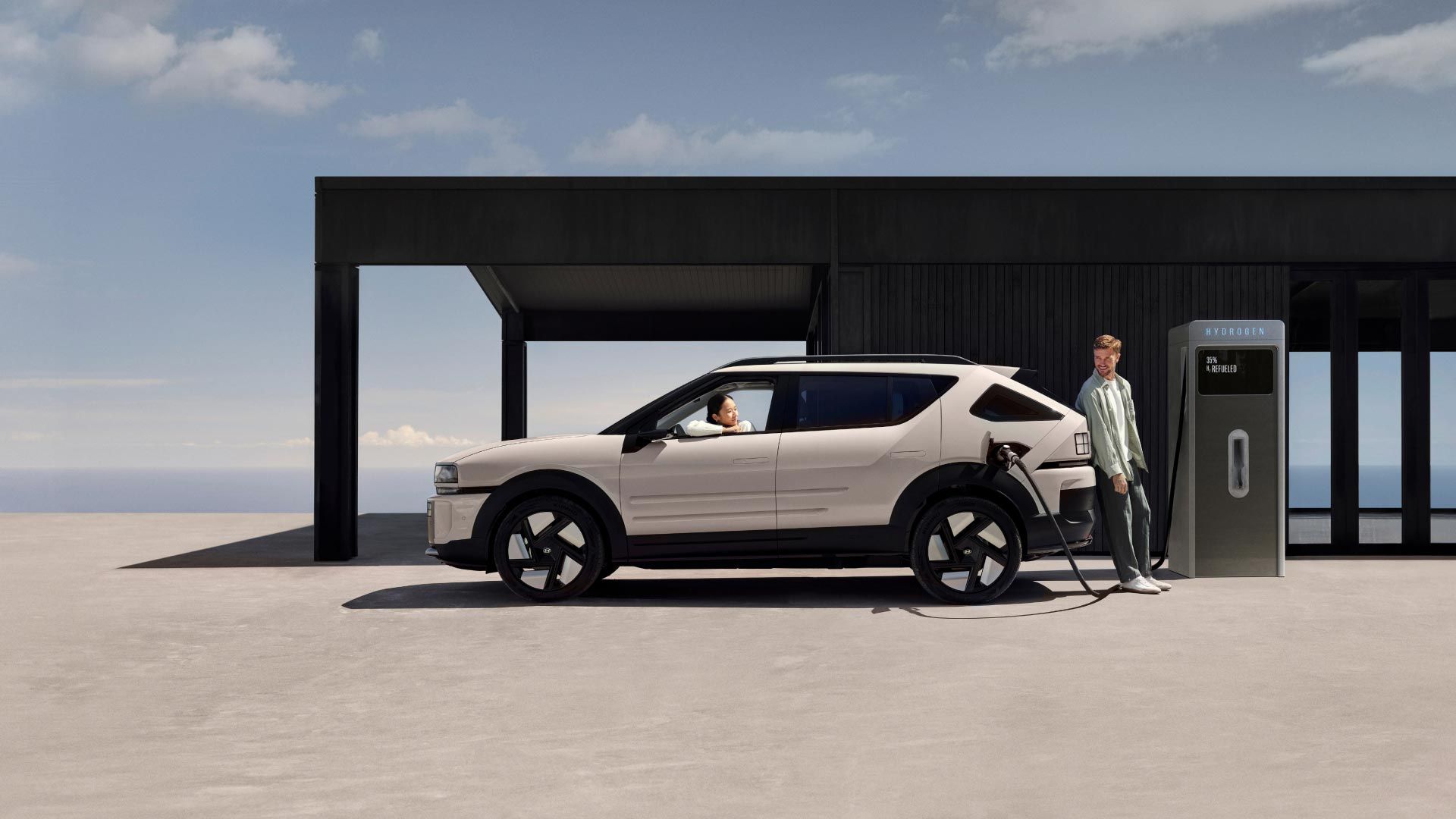
Hyundai's headline range is up to 826 km, about 513 miles, on the WLTP cycle. The footnote matters. It is a projected figure for the European model with 18-inch wheels. It is not an EPA rating, and it is not a guarantee of what you will see in winter, at highway speed, or after a partial fill.
The refill is described as about five minutes. The performance page adds the practical limit. Time and amount can vary with station pressure and temperature, the pressure and temperature of the hydrogen already in the tank, and the season. A five-minute claim and a slow or incomplete fill can both be true, on different days, at different pumps.
Storage is part of the range gain. Usable hydrogen rises from 6.33 kg in the previous generation to up to 6.69 kg. Tank volume is listed at 162.6 liters, in three tanks of 54.2 liters each. Hyundai says the larger storage does not steal cabin space.
Estimated WLTP consumption is 0.81 kg per 100 km on 18-inch tires and 0.89 kg per 100 km on 19-inch tires. Hyundai states that energy consumption figures are not finalized and should be used only as written. We will not turn those estimates into a cost-per-mile figure, because hydrogen price varies by station and was not published in the specification release.
Cold weather is the other range risk Hyundai chose to address in engineering language. The November release cites better low-temperature operation, a more durable membrane, more uniform cells, and a new Wake Up anti-freezing function. That is a reliability claim, not a published winter range. Ask for local cold-weather guidance if you live where a fuel cell has to start below freezing.
Quicker than before, and tuned to feel calm
The acceleration story is easy to verify and easy to overread. Hyundai says 0 to 100 km/h now takes 7.8 seconds, down from 9.2 seconds. That is a clear step for passing and joining a highway. It is not a performance-SUV number. If you want Hyundai electricity with a much sharper edge, the Hyundai Ioniq 5 N is a different car, with a different job.
Top speed is listed at 179 km/h, or 111 mph. Combined with front-wheel drive, the NEXO reads as a long-distance family SUV, not a back-road toy.
The driving aids are more interesting than the sprint time. e-Handling uses motor torque in turns to keep traction balanced and steering more confident. Hyundai's newsroom description says the system adjusts motor output to the road so grip and response improve together. You should still treat it as a stability aid, not as a substitute for tires and speed.
There are two ways to slow down and recover energy. The Smart Regenerative System can adjust regeneration from navigation data and from traffic ahead. Hyundai says it can also account for map features such as speed cameras and speed bumps, and that drivers can set a preferred following distance. Separately, the performance page shows a regenerative braking paddle shift, so the driver can manage recovery without always using the brake pedal.
Quietness gets the same level of attention. Active Noise Control-Road is designed to cut road noise. Hyundai also lists sound-absorbing tires and acoustic laminated glass. The glass note is specific. Acoustic laminated glass is not applied to the fixed glass in the front and rear doors, or to the rear quarter glass. Active Sound Design can play simulated sound through the speakers if you want the cabin to feel less silent. The performance page mentions drive modes for calm roads and more spirited ones, but it does not publish the mode names. We will not guess them.
European-specification models add towing of up to 1,000 kg. Hyundai calls this the first fuel cell vehicle to offer that level of function. That "first" is the company's claim. Confirm the rating, the hitch, and the legal rules in your market before you plan to tow. A published European figure is not automatically the car your dealer can order.
Art of Steel is a design idea, and a clue to the next Tucson
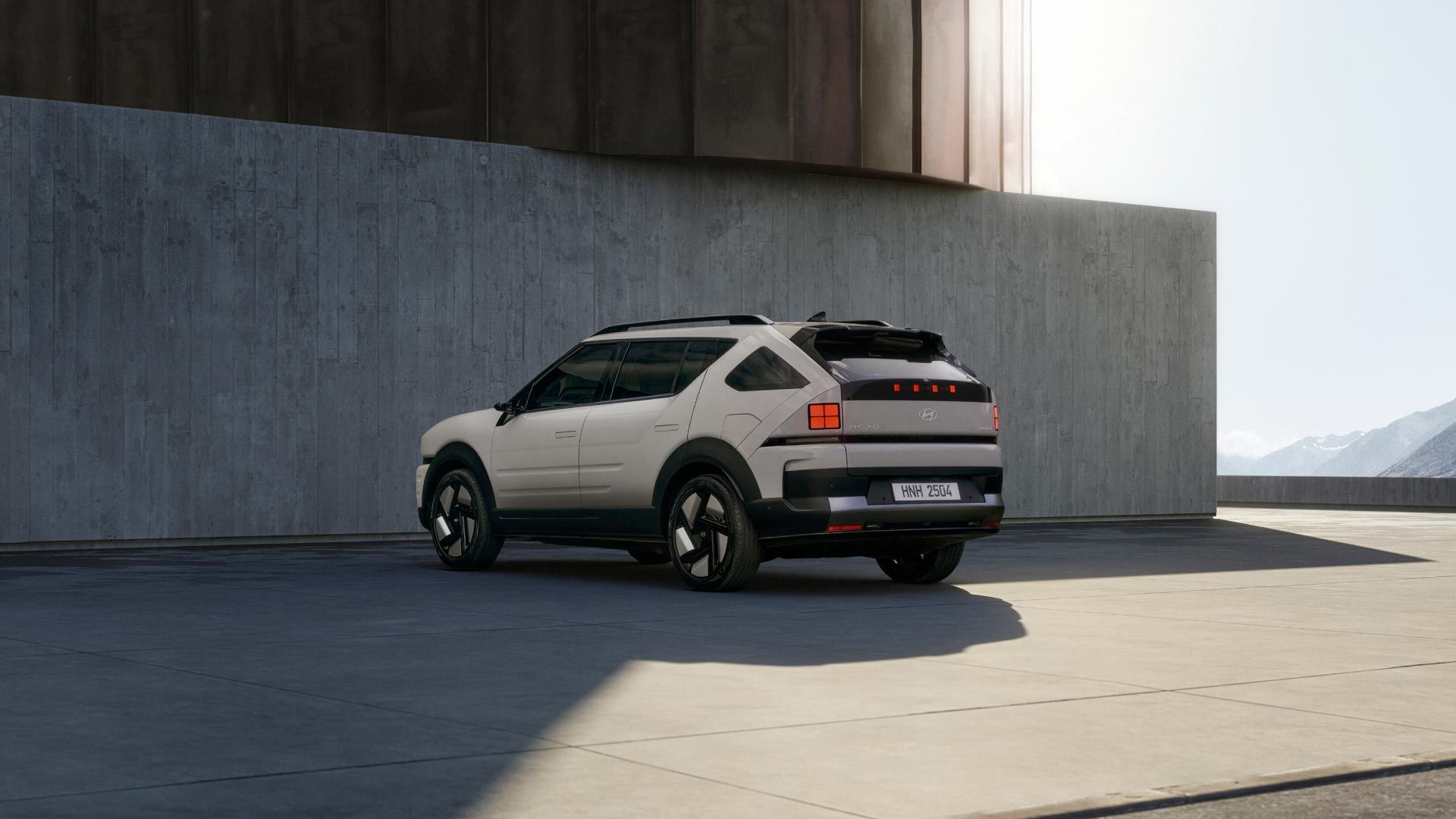
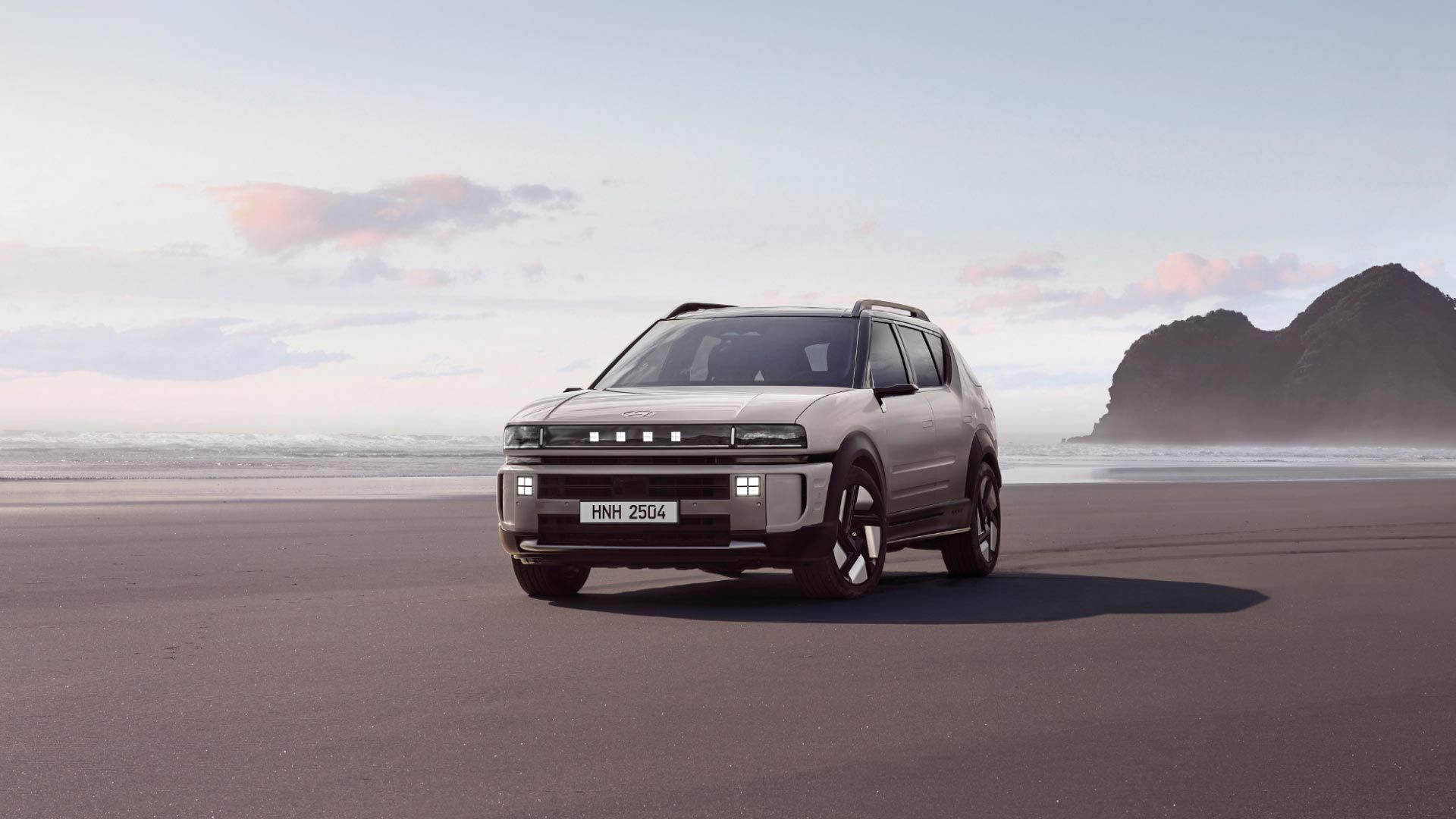
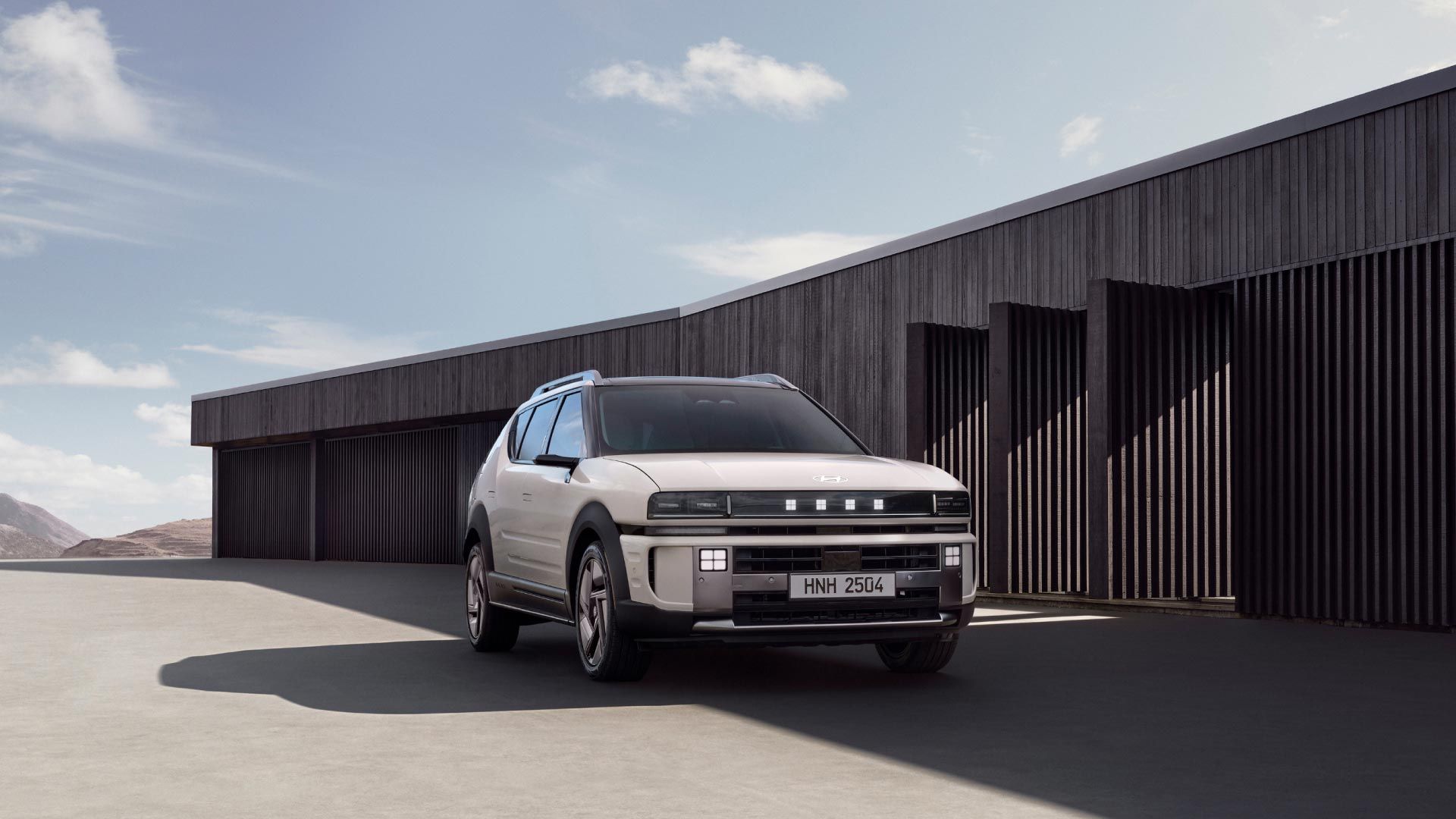
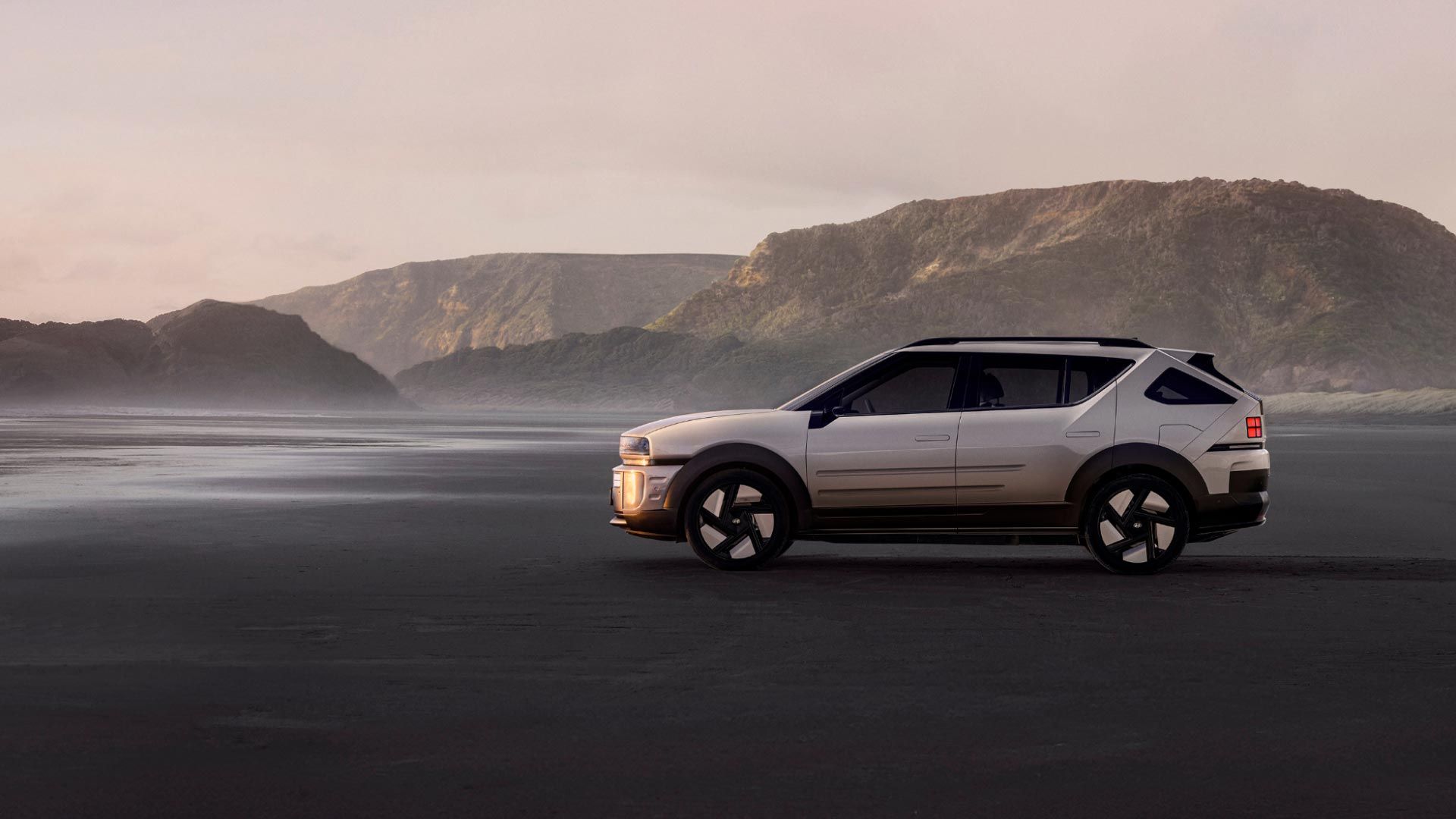
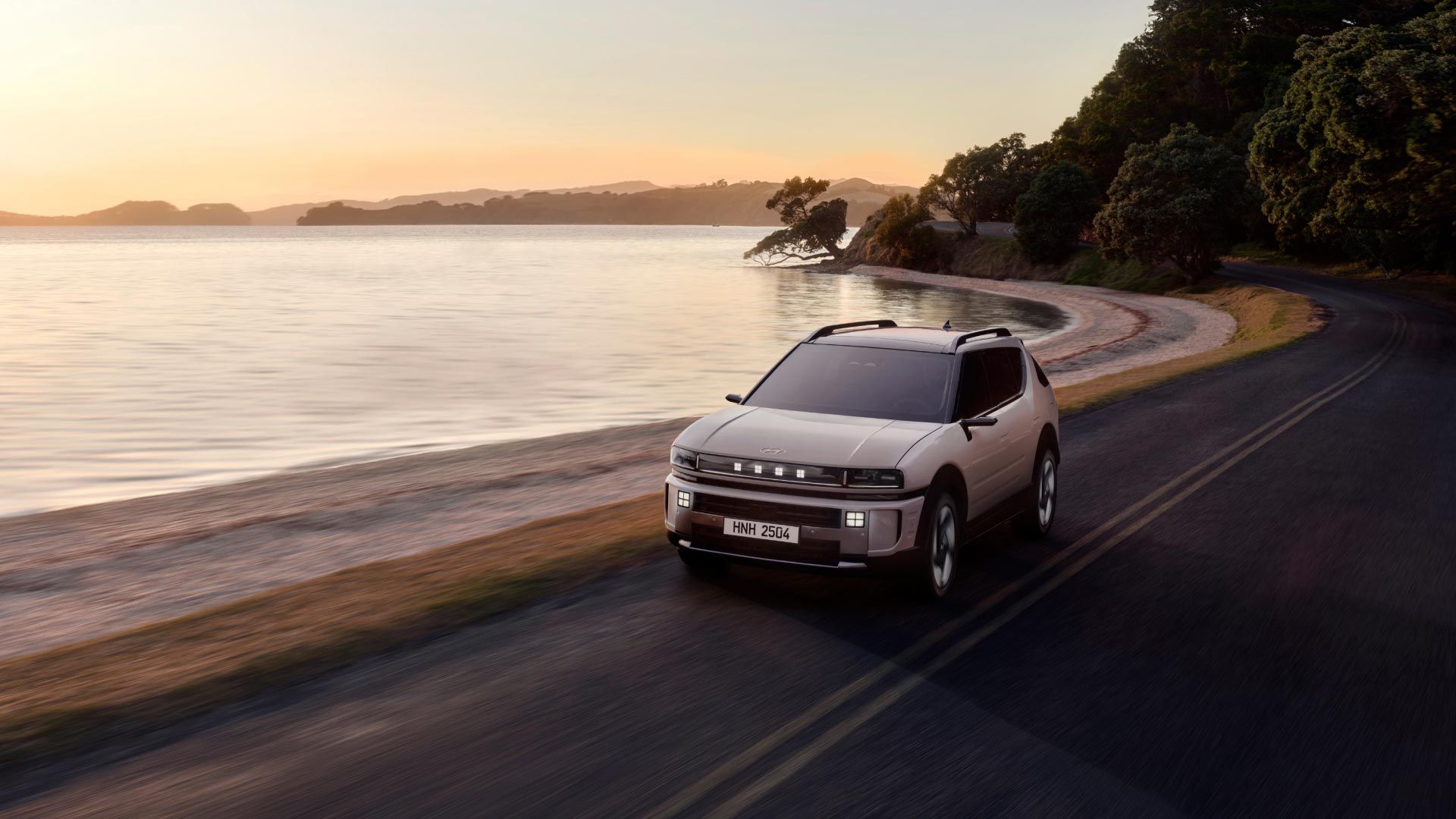
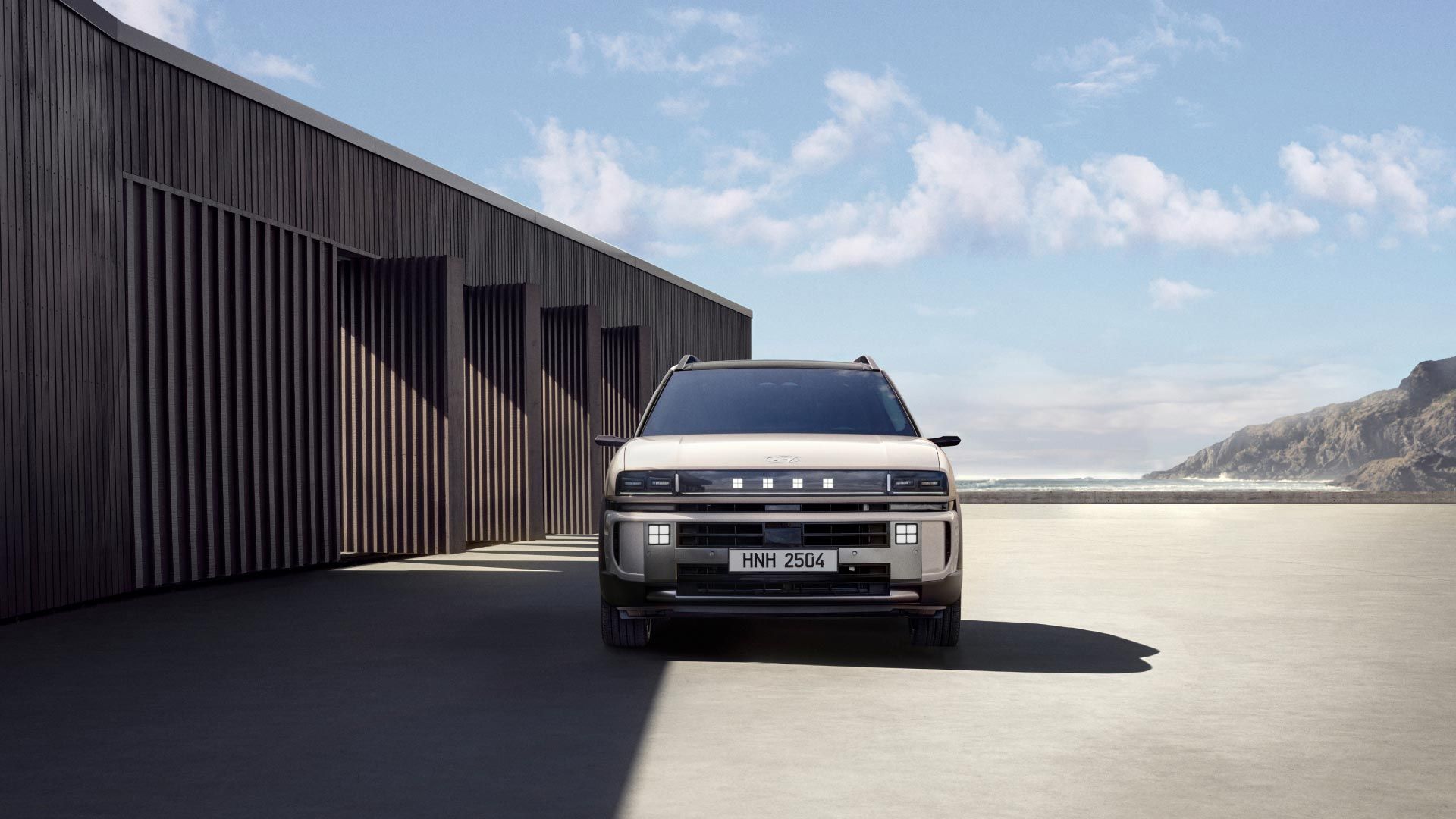
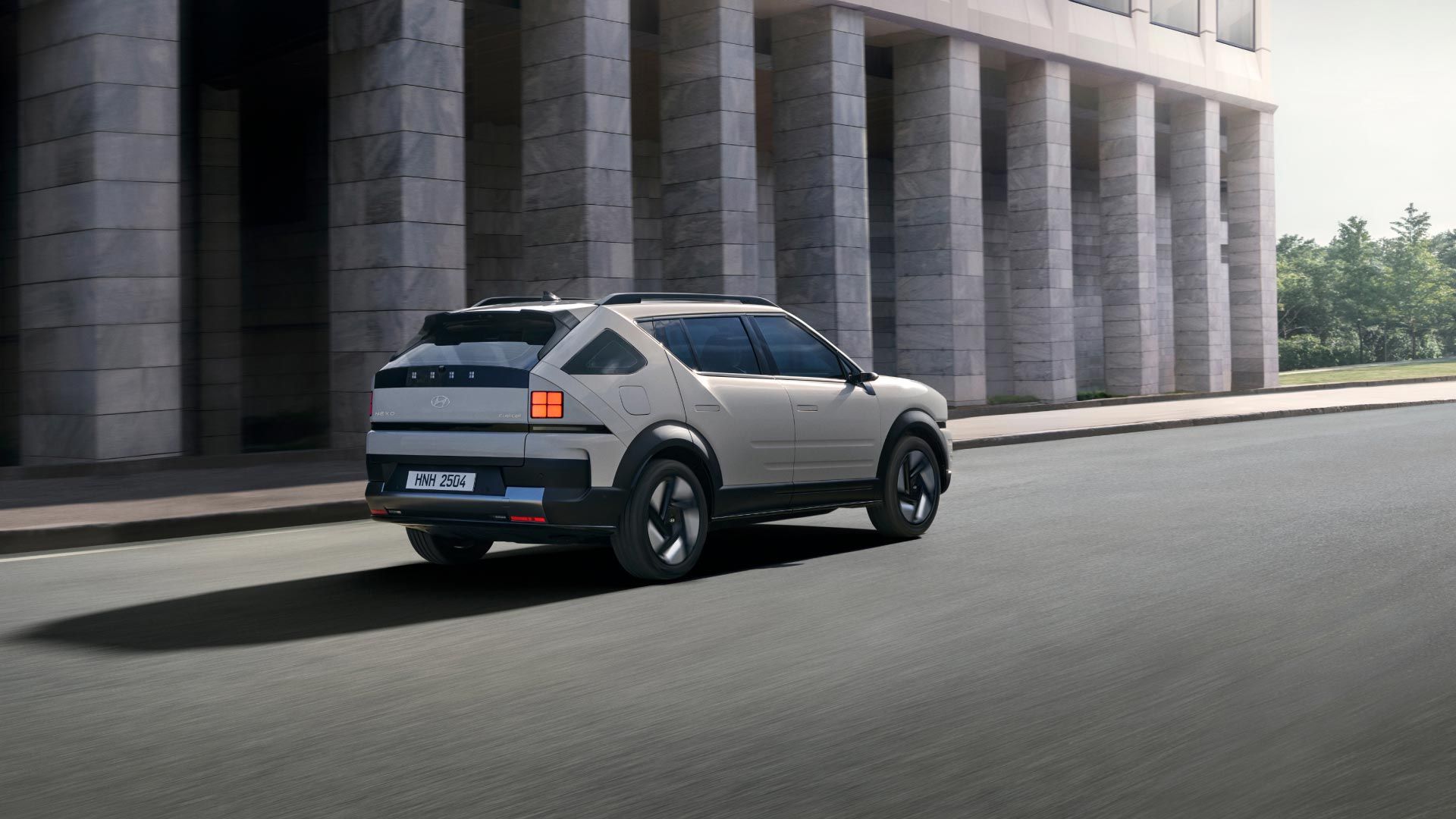
The design language is called Art of Steel. Hyundai's idea is that steel's strength and formability should be visible, not hidden under soft curves. The body uses bold lines, an arch-shaped cross section, and horizontal grooves on the doors. The result is more upright and rugged than the first NEXO, and it is already influencing other Hyundais. Our look at the 2027 Hyundai Tucson notes that the next Tucson is expected to move toward this boxier stance, with the NEXO as one of the references.
Two lighting signatures do the brand work. HTWO lamps refer to Hyundai Motor Group's hydrogen brand and the line "Hydrogen for Humanity." The 4 Dot lamps are there so the car still reads as a Hyundai at night without relying on the H emblem. Aerodynamic 18-inch and 19-inch wheels are part of the same exterior story. The 19-inch set is the one tied to the higher consumption estimate, so the prettier wheel can cost range.
Hyundai lists six exterior colors: Creamy White Pearl, Phantom Black Pearl, Amazon Gray Metallic, Ocean Indigo Matte, Ecotronic Gray Pearl, and Goyo Copper Pearl. The company describes a three-coat paint process that shifts with light. Interior choices in the European spec sheet are Serene Gray with Mosi Ivory two-tone, Dark Teal with Obsidian Black two-tone, and Obsidian Black monotone. Colors are a classic market variable. The highlights page itself says options on the website may differ from the car sold in your country.
Official highlights gallery
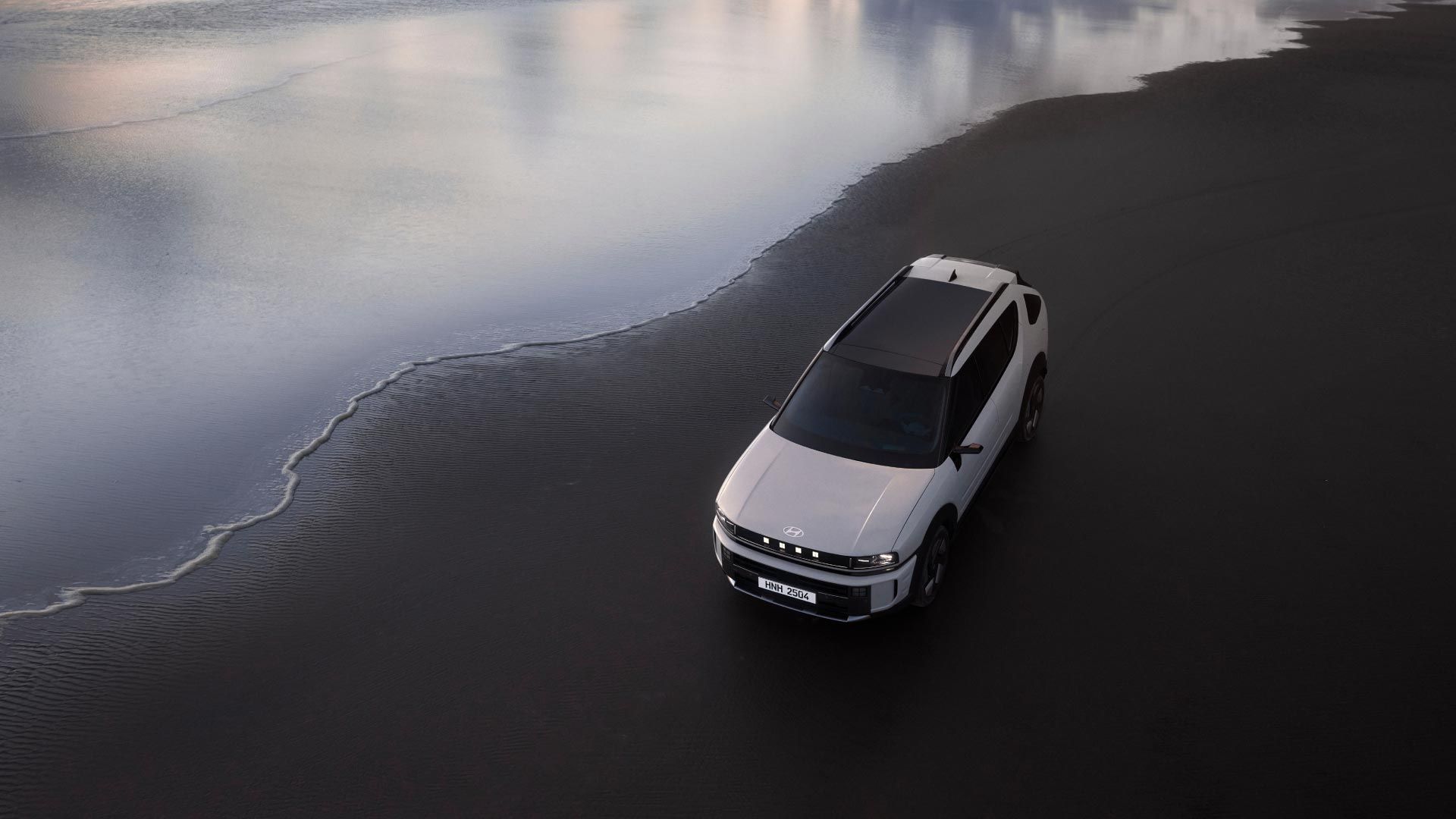
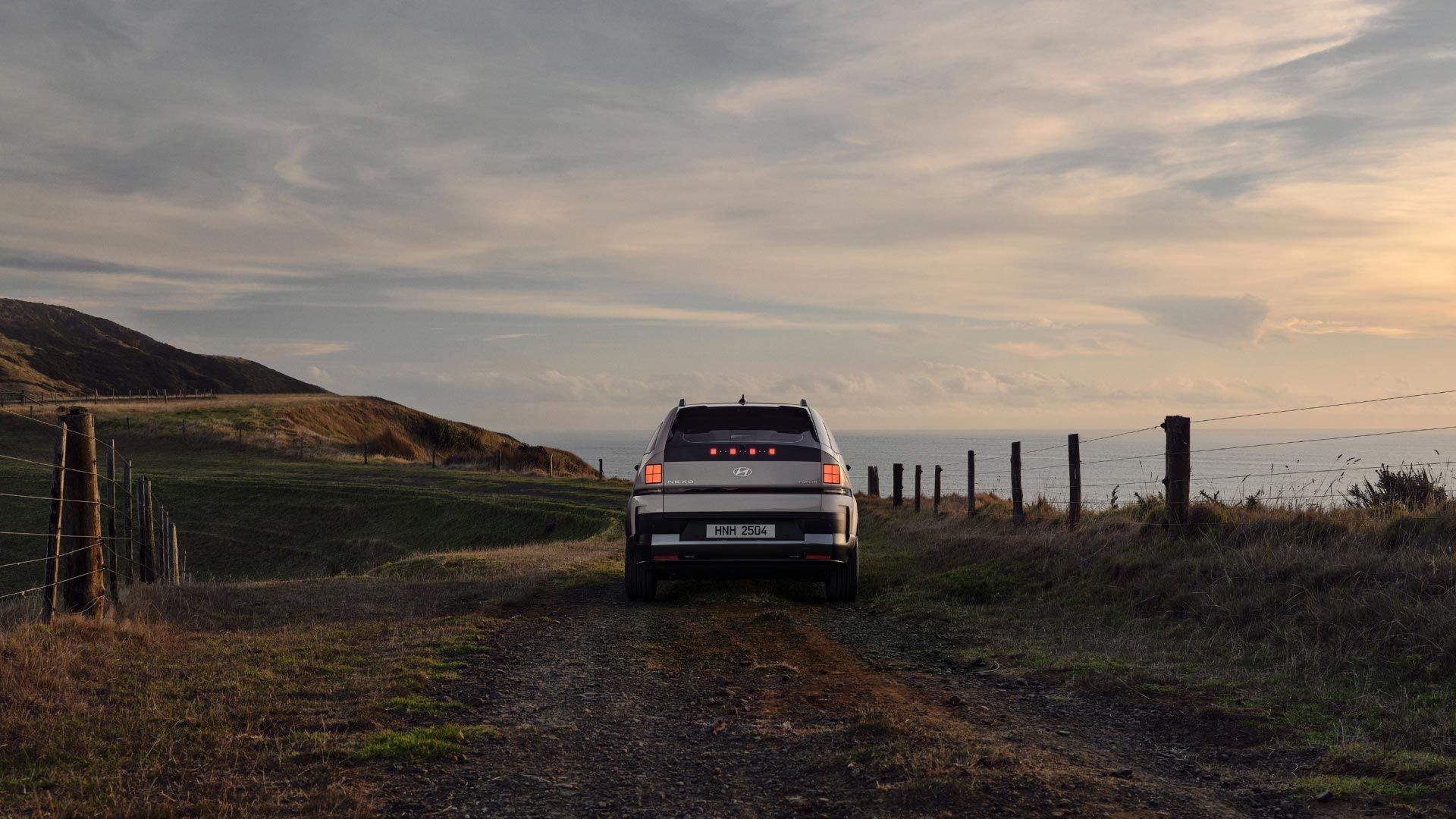
Hyundai's highlights page includes a 25-image gallery, in this order. Captions follow the original descriptions. Availability of colors and features in the photos can differ from a local car.
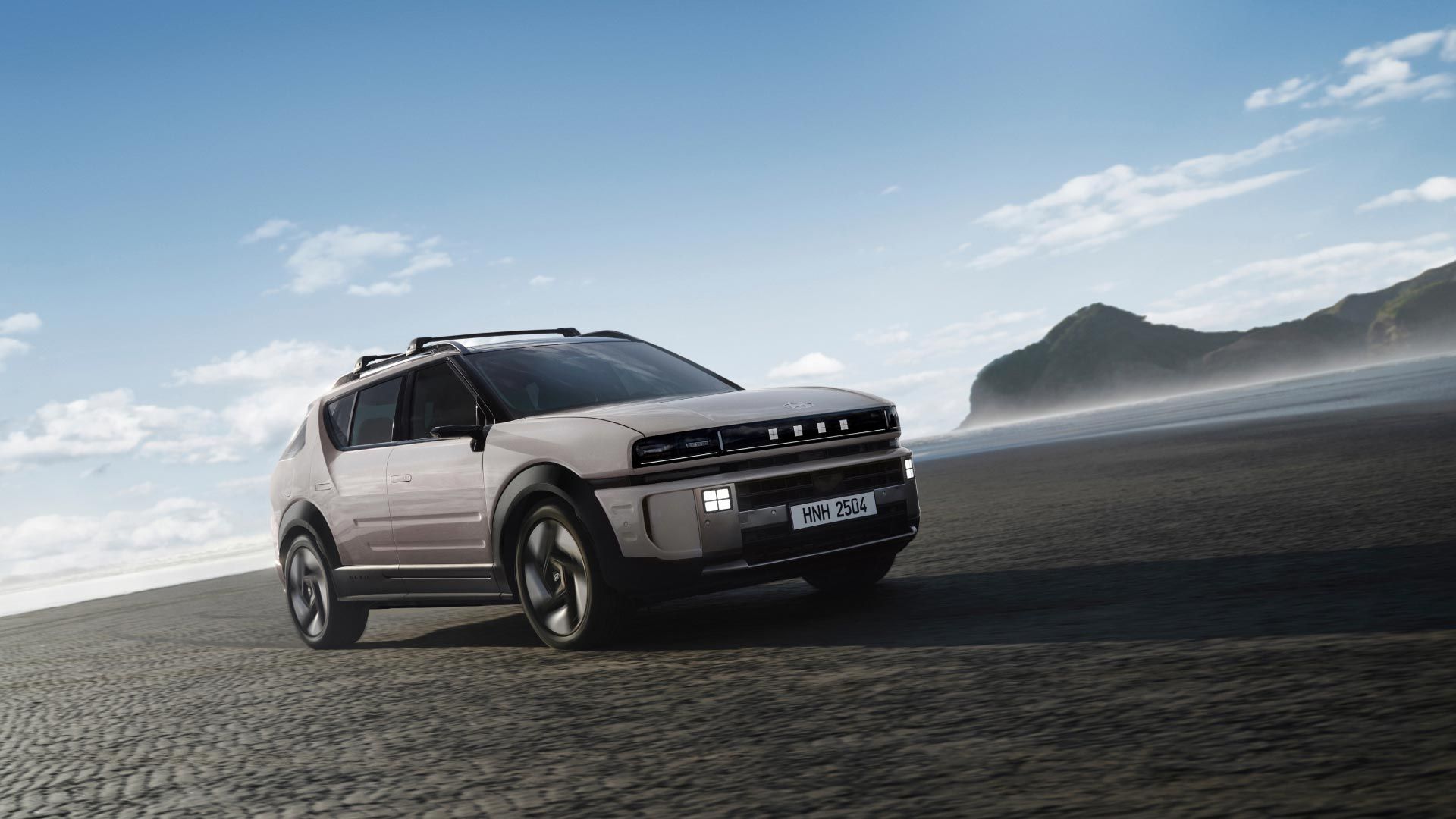



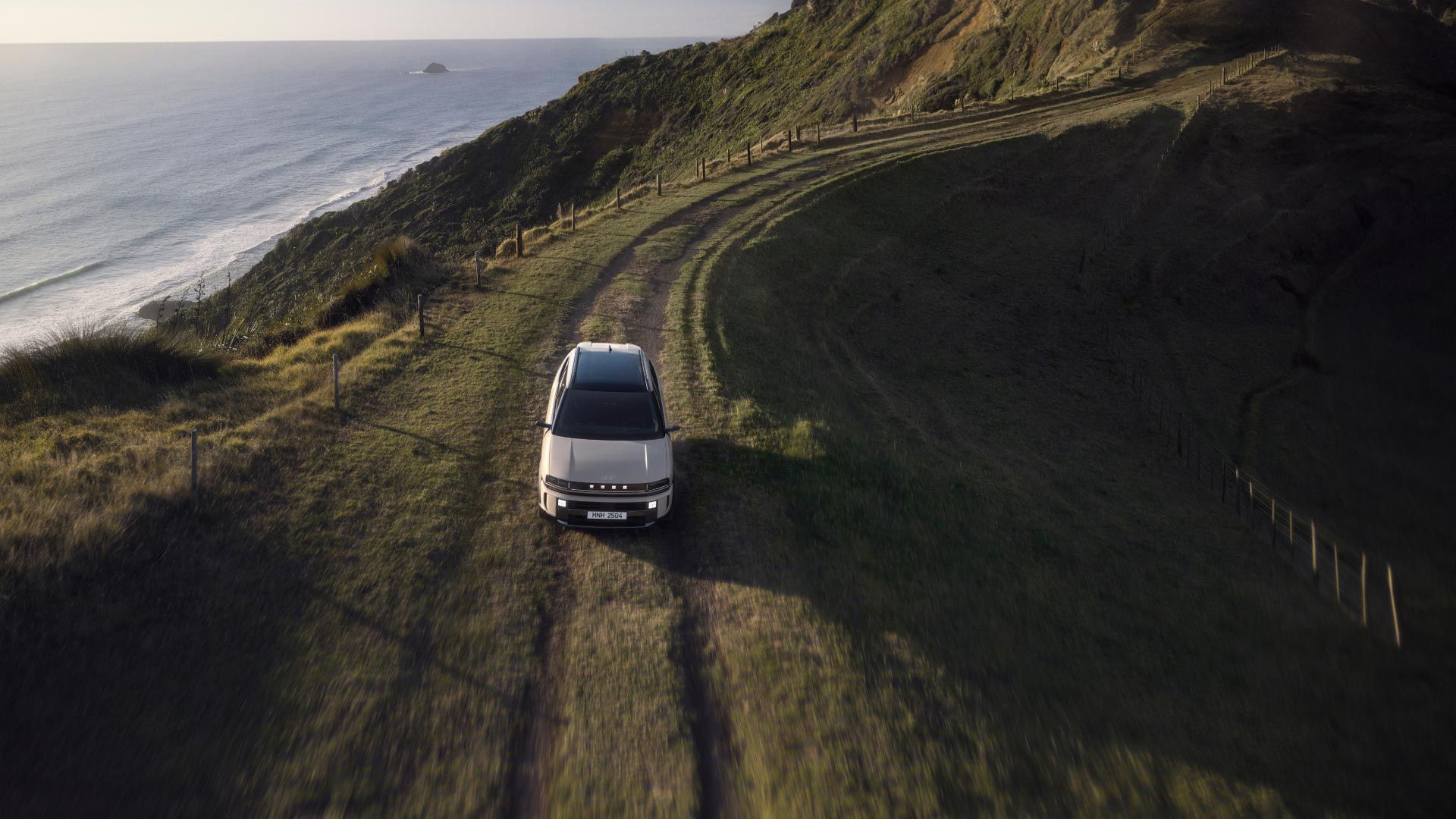
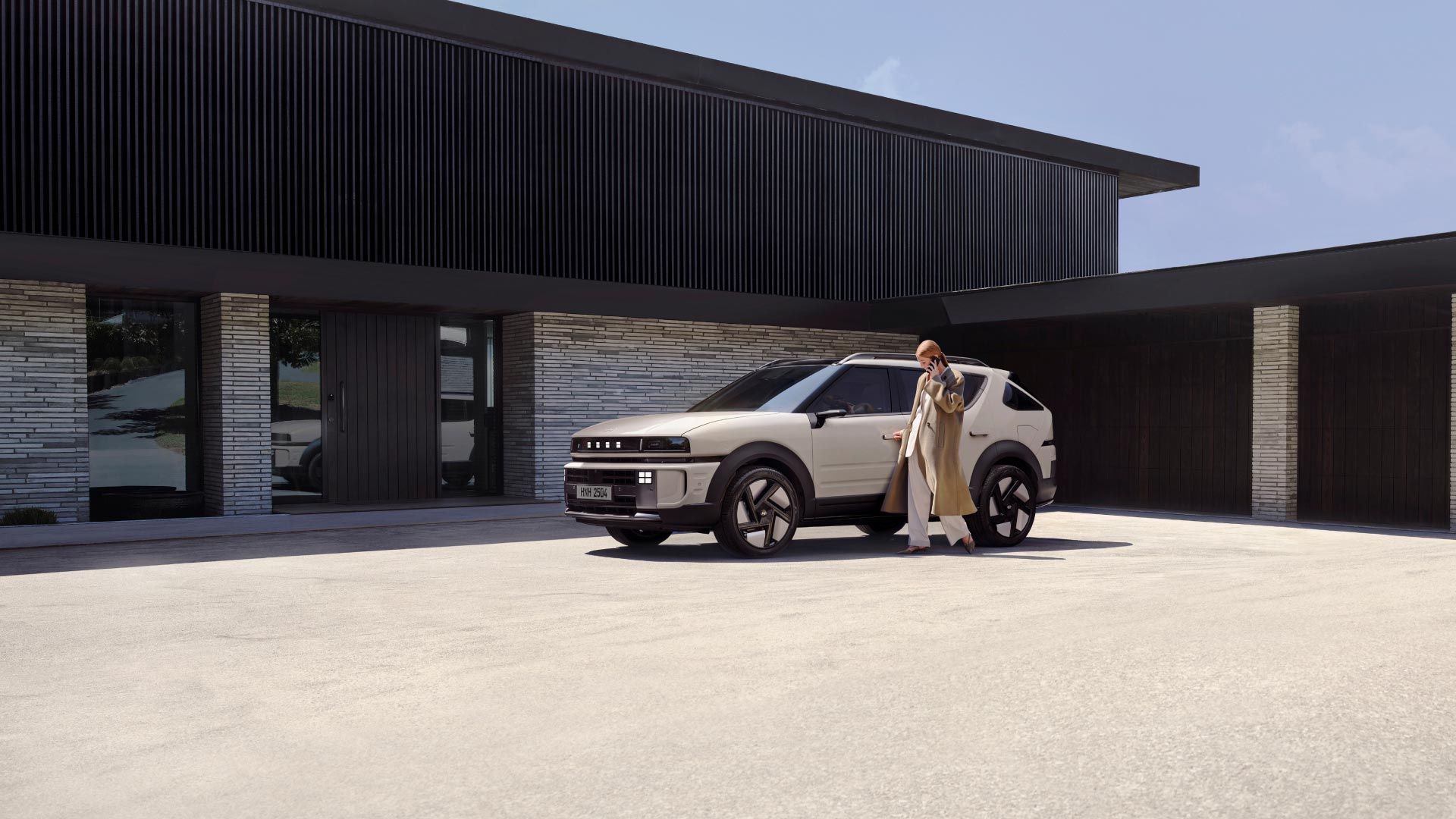
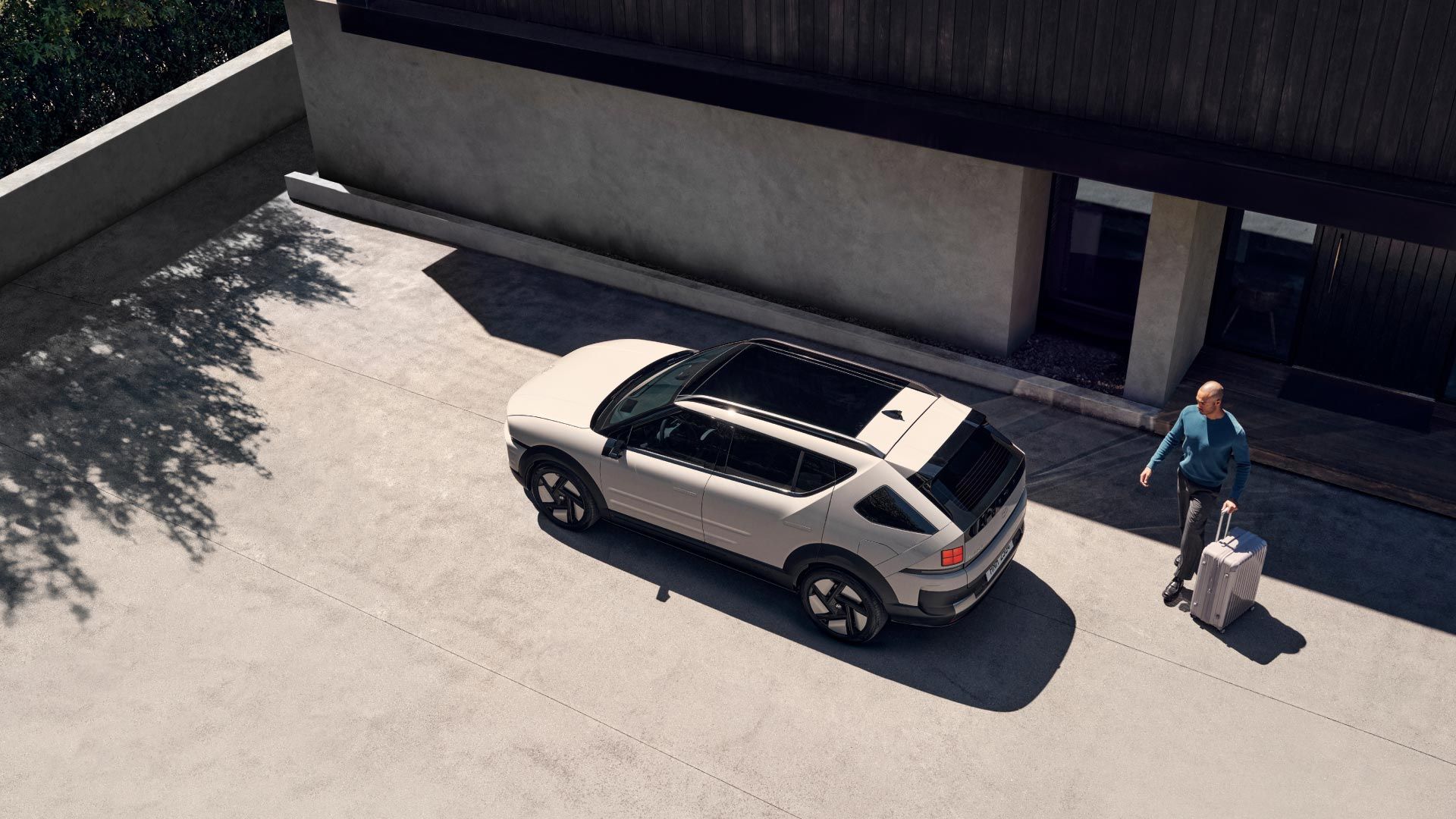
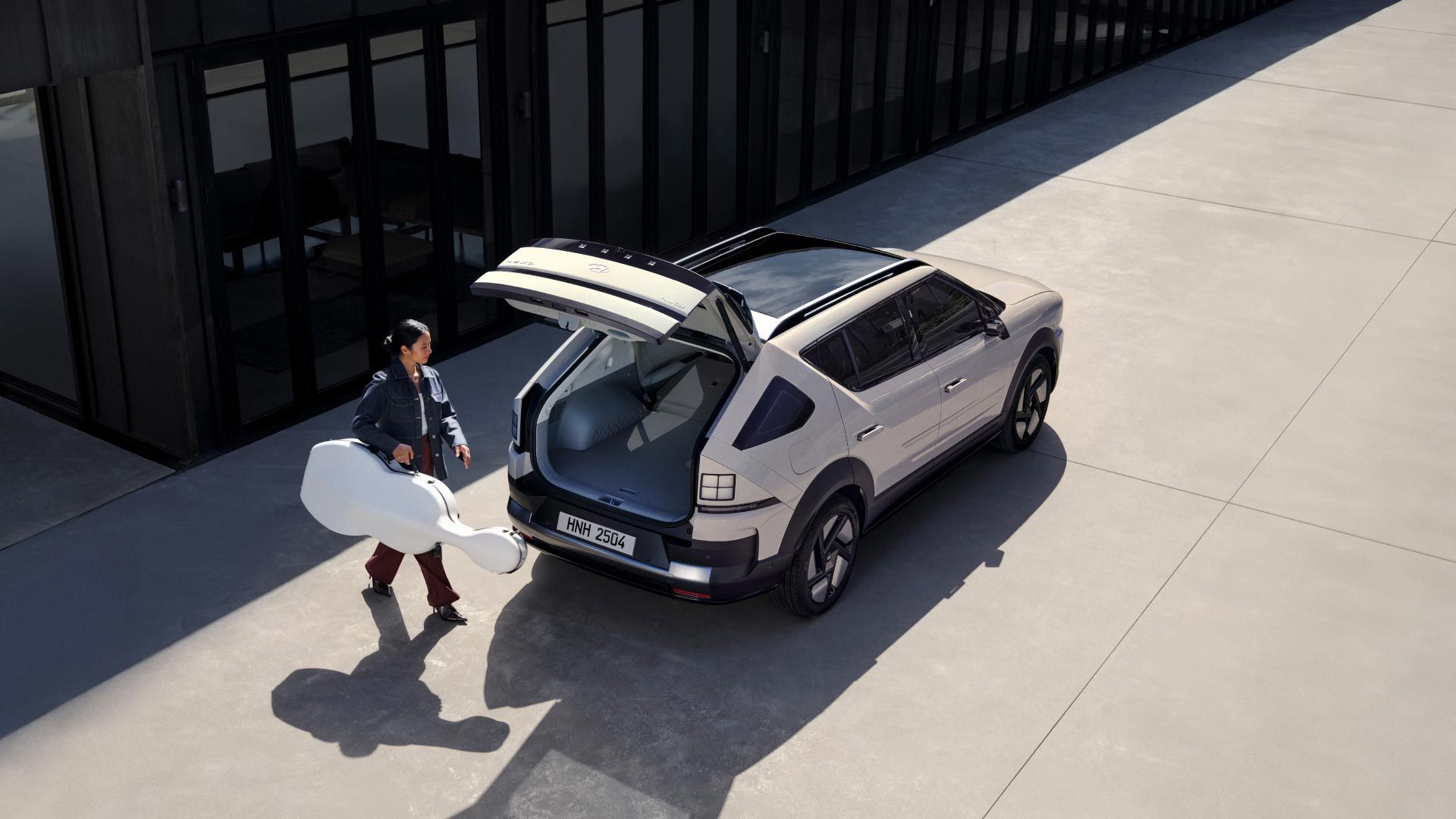
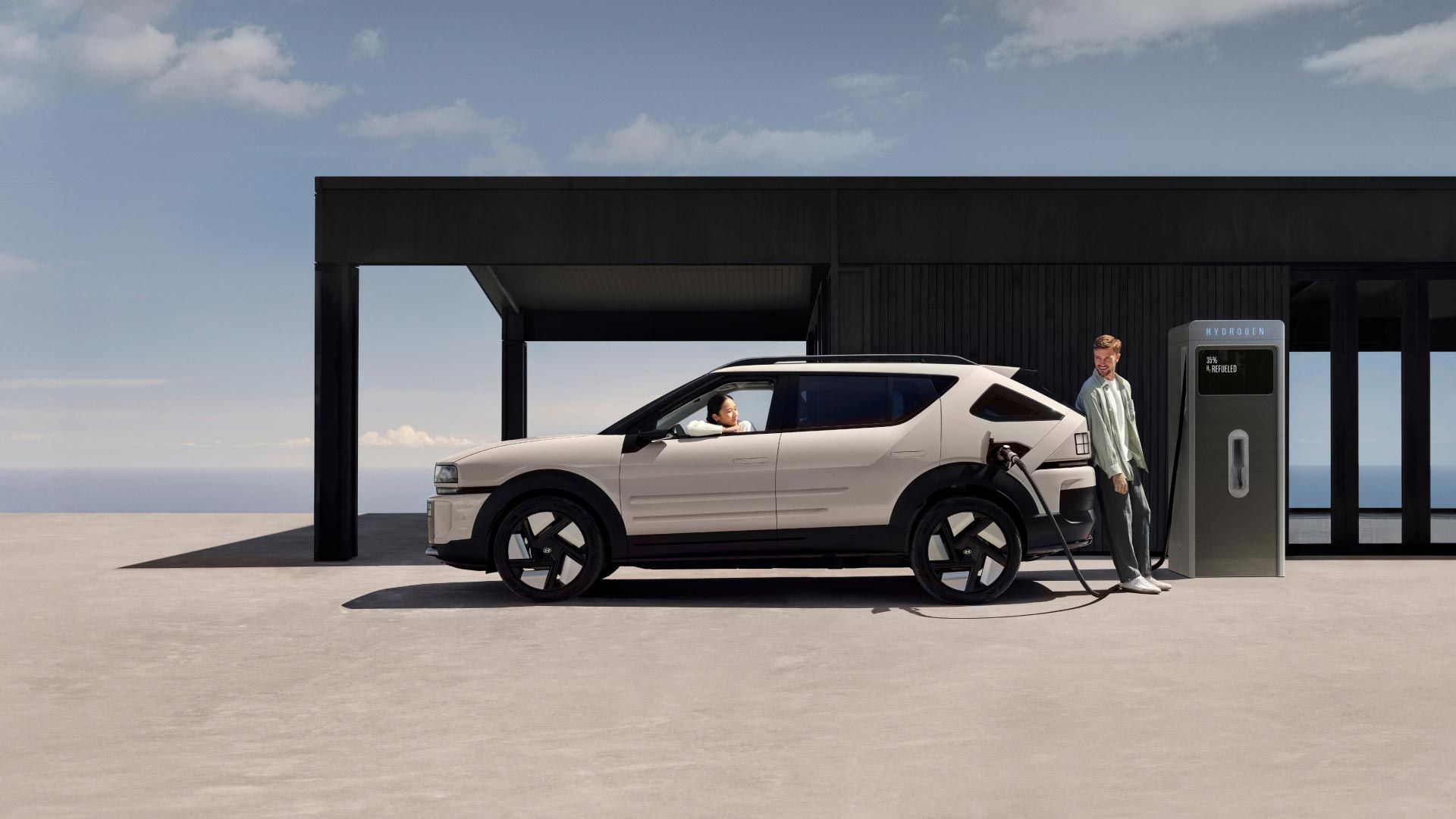
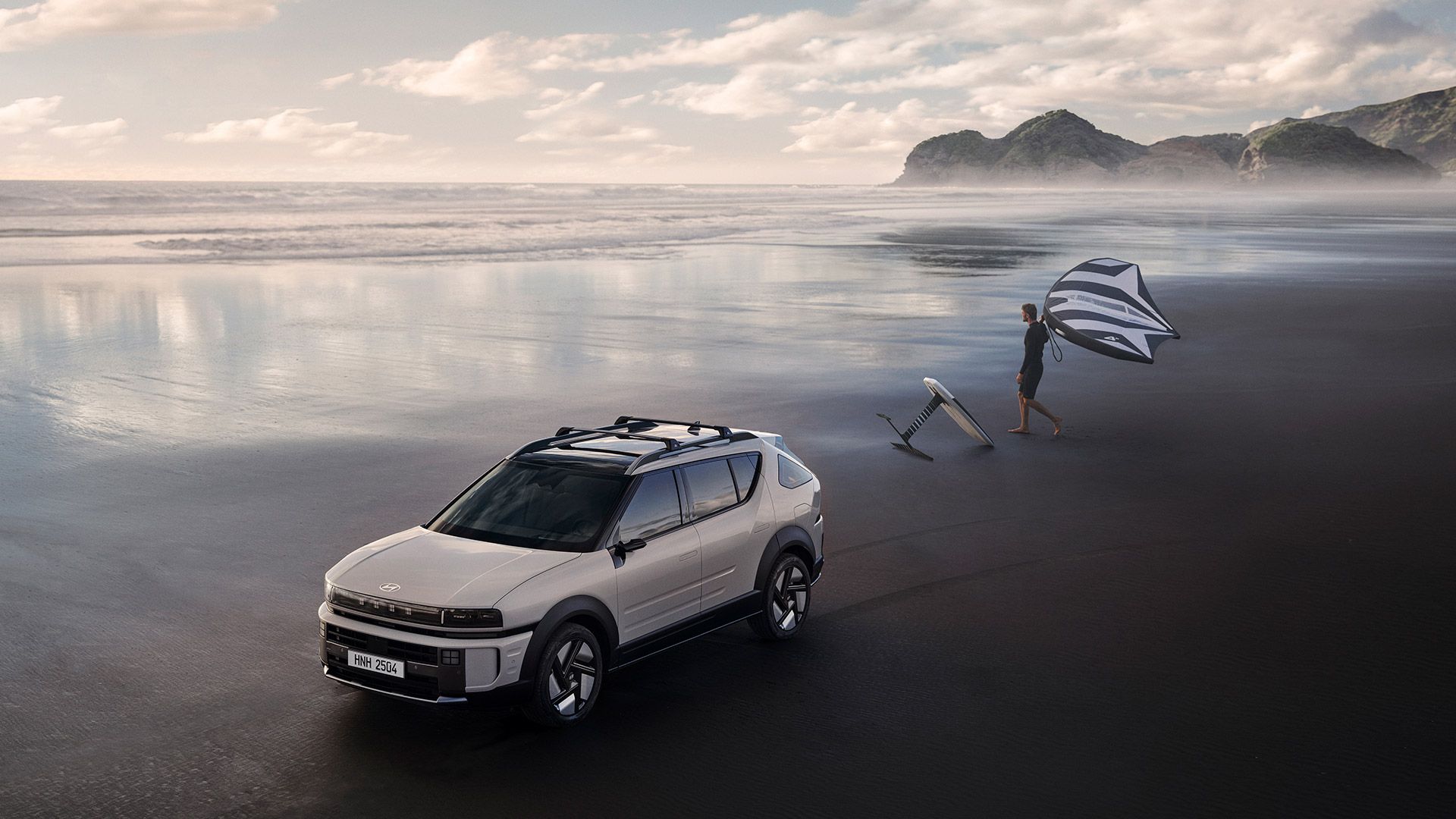

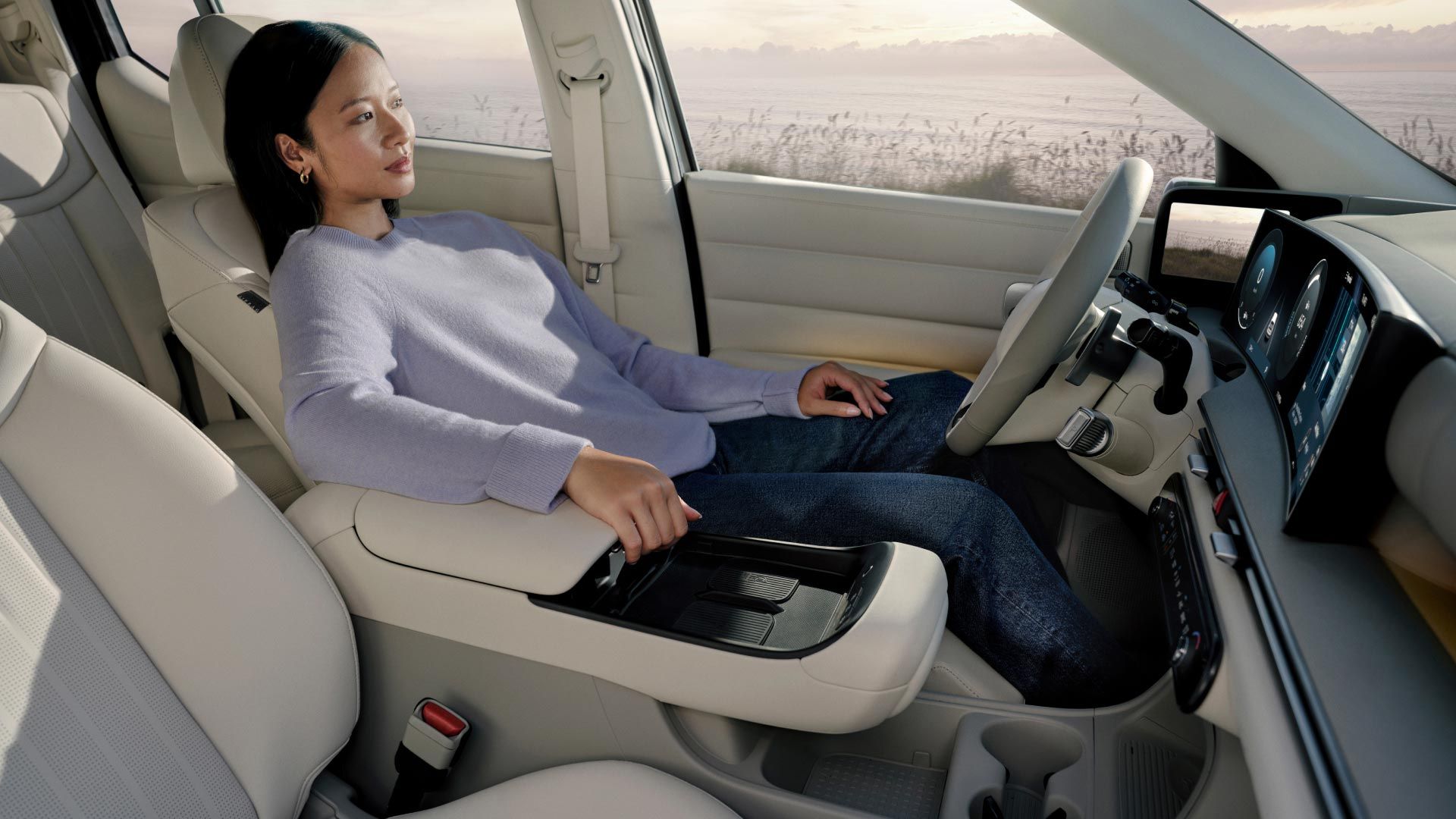
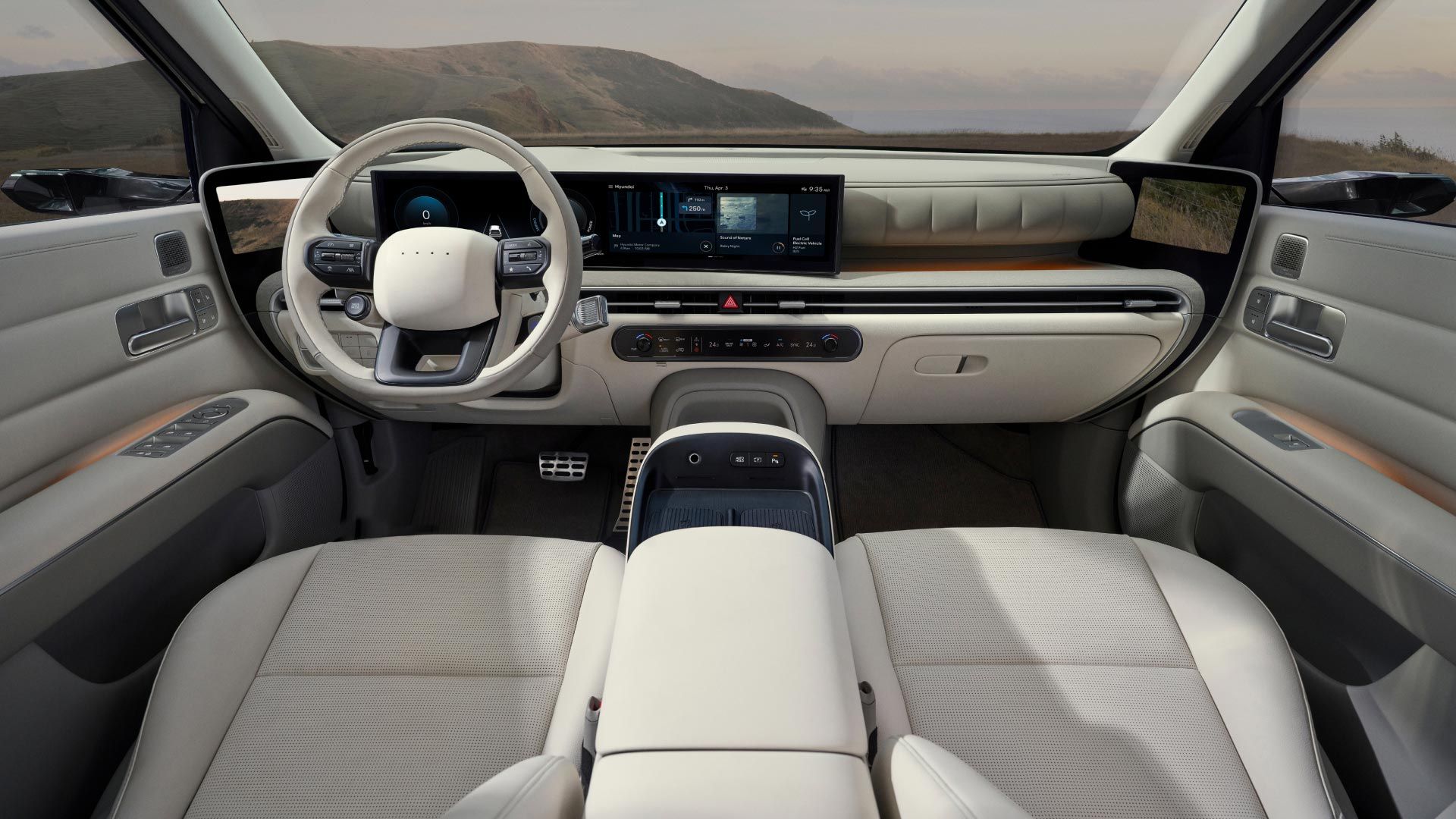
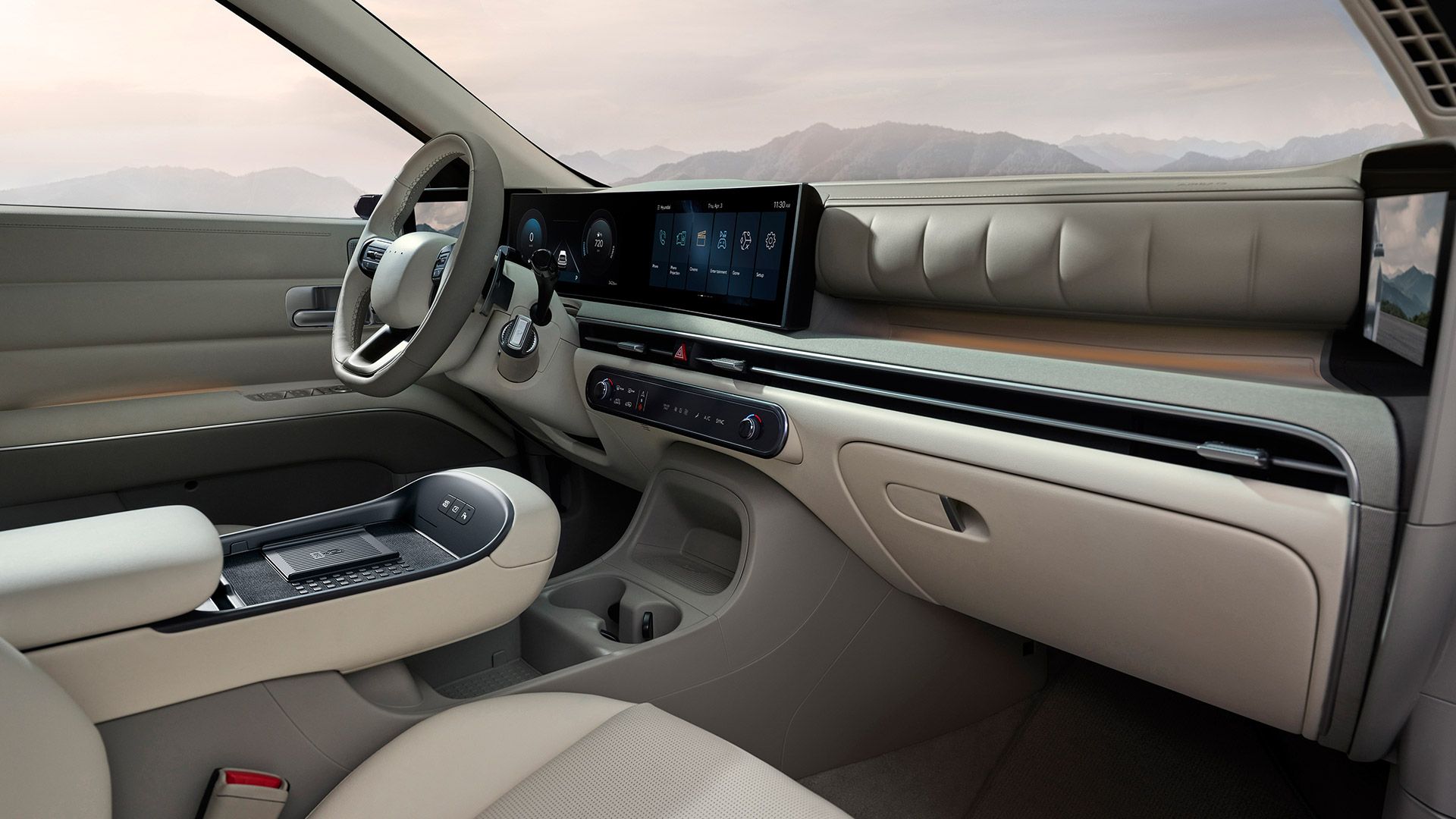
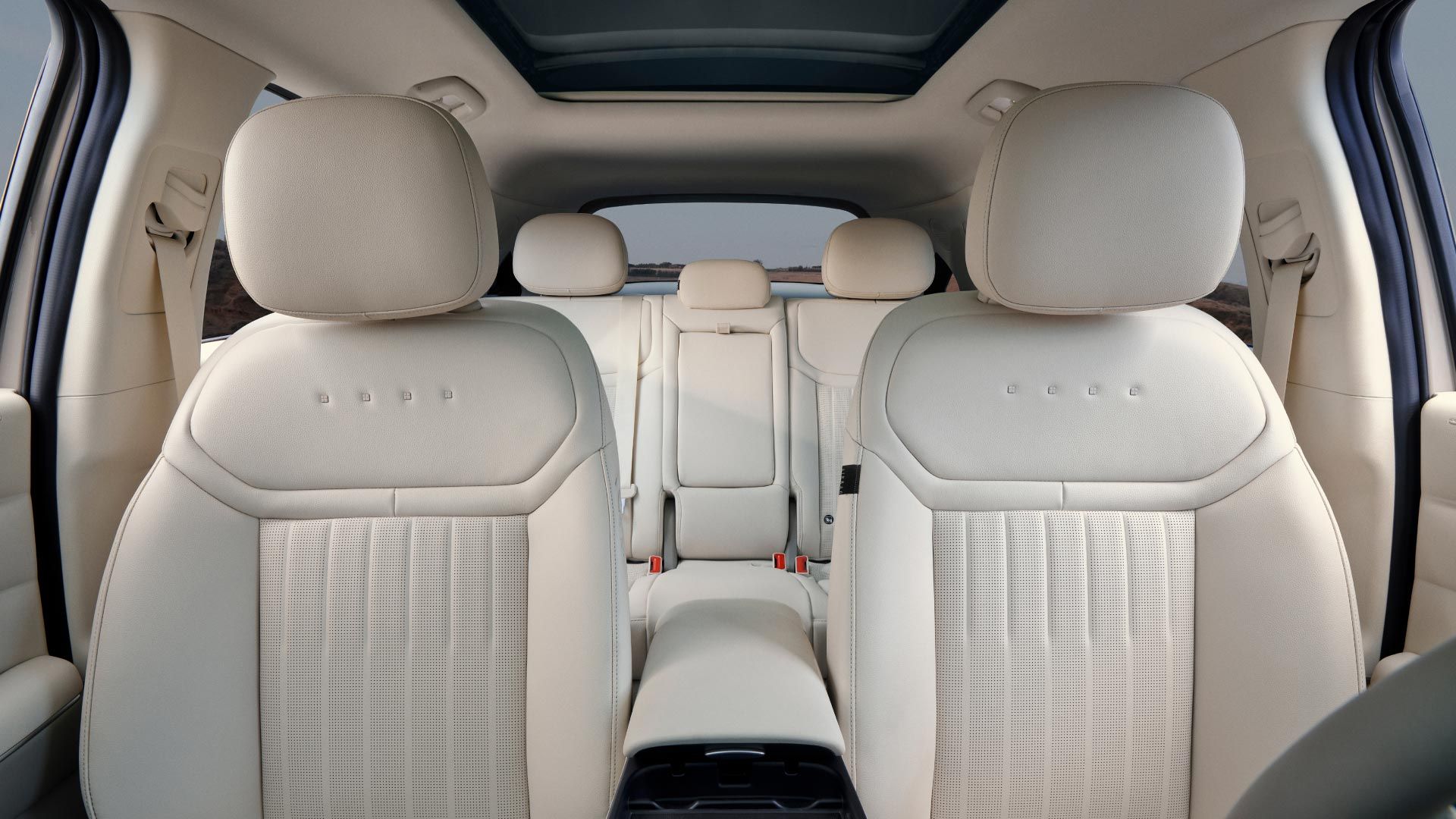
The cabin is larger. The cargo number depends on the ruler.
Hyundai says the new NEXO is longer, wider, and taller than its predecessor. The European spec sheet gives the new size, not a line-by-line comparison with the old one. Length is 4,750 mm, width is 1,865 mm, and height is 1,640 mm, or 1,675 mm with a roof rack. Wheelbase is 2,790 mm. In approximate U.S. units, that is 187.0 inches long, 73.4 inches wide, 64.6 inches tall, and a 109.8-inch wheelbase. Those inch figures are conversions from Hyundai's millimeters, rounded for reading.
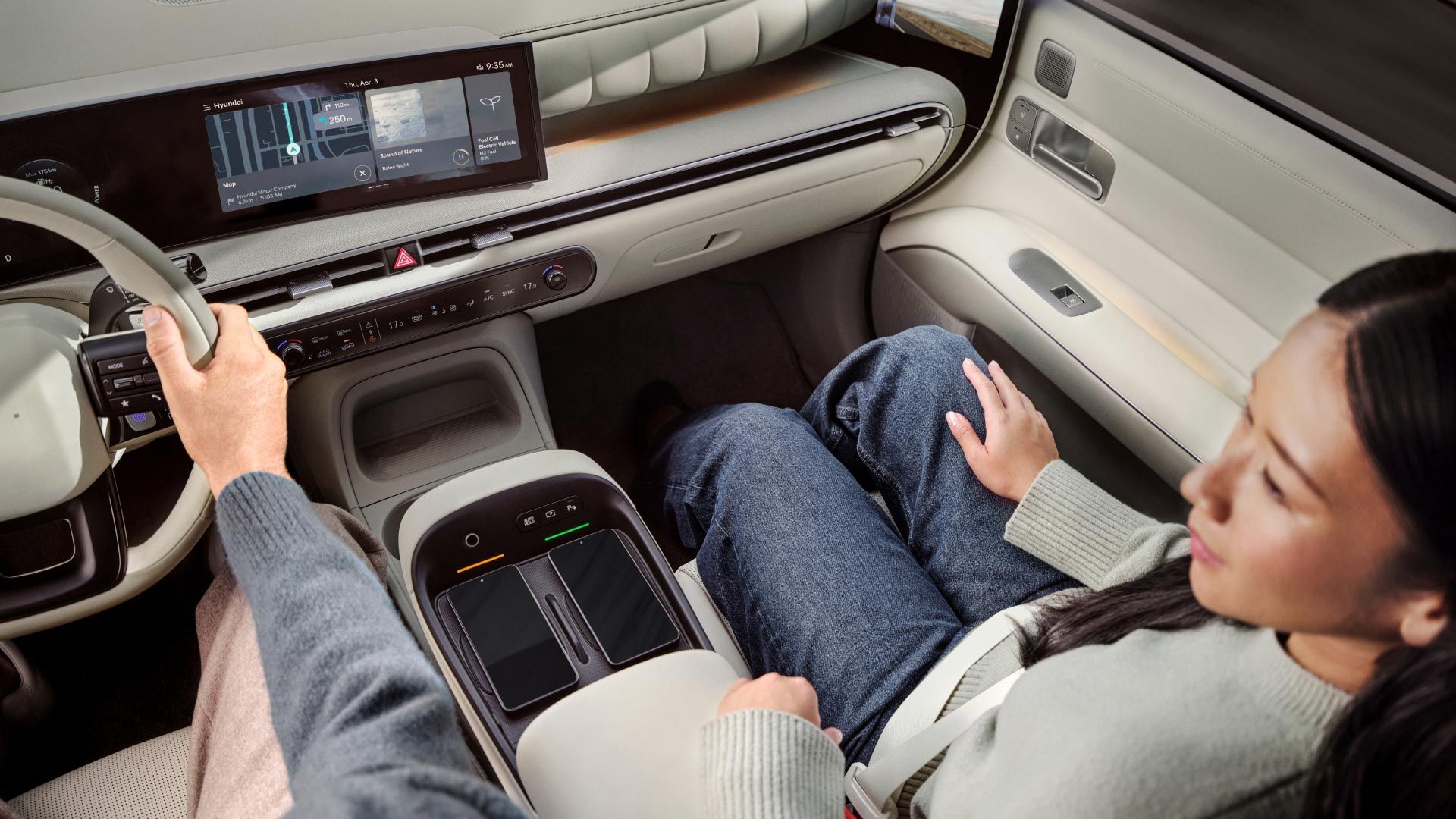
Inside, the design page calls the cabin a high-tech furnished space. Soft materials, a driver-focused curved display, and an island-style console are the main ideas. Digital side mirror screens, where fitted, sit in the dashboard instead of on the doors. First-row Premium Relaxation Seats add leg rests, and Hyundai says slimmer seatbacks improve knee room for people in the second row. Headroom and shoulder room are also described as improved. Rear doors open wider than on the previous car. A vision roof is listed as a way to make the cabin feel larger. Hyundai does not publish a glass area for that roof in the sources used here.
Cargo is the figure most likely to be copied incorrectly. The November 2025 European spec sheet lists 993 liters behind the second row and 1,719 liters behind the first row, measured to SAE standards. Hyundai says that space can hold up to four golf bags. An earlier brand journal, dated April 3, 2025, lists 510 liters, or 1,630 liters with the second row folded, under VDA standards.
Those are different measuring methods, not evidence of a silent mid-year shrink. SAE and VDA do not fill the cargo bay the same way. Lead with the SAE figures if you are reading the November spec sheet, and ask which standard your local brochure uses before you compare the NEXO with another SUV. The published cargo lines refer to space behind the first and second rows. Hyundai's spec sheet reviewed here does not list a third row.
Hyundai also lists a long set of cabin materials tied to its sustainability story: bio-process leather, bio PU leather, recycled PET fabric, linen, bio plastics, bio TPO skin, bio paint, bio PU slab foam, and recycled automotive plastic. That list is a company materials claim. It does not, by itself, tell you the share of each material in a given trim.
The tech is there to make a rare powertrain feel ordinary
Hydrogen only works as a consumer product if the car does not feel experimental every morning. That is the job of the convenience features.
The Connected Car Navigation Cockpit combines two 12.3-inch curved displays. The design page describes the same idea as a 12.3-inch panoramic curved display. Hyundai says the system supports over-the-air updates, wireless Apple CarPlay, wireless Android Auto, and generative AI voice recognition. A head-up display can put speed and driver-aid information on the glass. Audio by Bang and Olufsen is listed with up to 14 speakers and an external amplifier.
Access and identity get more than a key fob. Digital Key 2 can unlock and start the car from a phone, supports up to 15 devices including an Apple Watch, and can use an NFC card. Fingerprint recognition is described for start, in-car payments, and driver profiles. A column shifter frees console space. Dual wireless phone charging is listed, without a published pad wattage on the convenience page. Port power is less tidy. The convenience page describes 100W USB-C ports with the indoor vehicle-to-load setup. The November release also mentions USB fast charging at 15W. Both figures are published. Confirm which ports a local car actually has.
Vehicle-to-load power lets the high-voltage battery run devices inside the cabin or outside the car. Hyundai's worldwide convenience page describes 220V outlets and says the outdoor plug does not need an extra adapter. Voltage is a market detail. A 220V description on a global page is not proof that a U.S. car, if one is offered, would use 220V. Ask.
Visibility aids include a digital center mirror and digital side mirrors in select markets, plus a surround view monitor. Hyundai says the center mirror has a cleaning system for the rear camera, and that the side mirror view can work with the blind-spot view monitor. Remote Smart Parking Assist 2 can park the car while the driver watches from outside. A built-in dash cam is described with front and rear recording, voice capture, and parking motion detection for up to four days. Rear Occupant Alert uses radar to warn if movement is detected in the back seat after you leave. Several of these items are the kind that disappear between markets. The safe assumption is "listed," not "standard everywhere."
Five stars, with the structure behind the badge
Before the crash-test result existed, Hyundai said the NEXO was designed to chase top scores. The hardware description is specific. The body uses hot stamping and high-strength materials, including what Hyundai calls third-generation ultra-high-strength steel. A multi-skeleton structure and reinforced front and side load paths are meant to keep the passenger cell from collapsing. Up to nine airbags are listed, including protection aimed at the hydrogen tank as well as the people. The safety page says the airbag count may vary by market.
On December 14, 2025, Hyundai Motor Group announced that the all-new NEXO received the maximum five-star rating from Euro NCAP. The published category scores in that announcement are 90 percent for adult occupant protection and 85 percent for child occupant protection. Hyundai said the passenger cell stayed stable in the frontal offset test, with good protection for knees, femurs, and other critical areas. The side barrier test earned maximum points. A center airbag helped far-side protection. Whiplash protection was rated good in front and rear. Six-year-old and ten-year-old child dummies earned maximum points in the critical body areas Hyundai described, in both frontal and side tests. The announcement also mentions eCall, post-crash secondary-impact protection, and door and window operation if the car is submerged.
The previous NEXO was the first fuel cell vehicle Euro NCAP tested, in 2018, and it earned five stars under the rules used then. A repeat five-star result is meaningful. It is not a promise that every market's safety-assist package matches the tested car. Euro NCAP scores the specification it tests.
The driver-aid list is long, and it overlaps the Hyundai SmartSense family buyers already see on smaller Hyundais. On the NEXO safety page, Highway Driving Assist 2 can hold a set gap and help center the car, including in curves, and it can assist a lane change when the driver holds the wheel and uses the indicator above a certain speed. Forward Collision-Avoidance Assist 2 can warn and brake for vehicles, pedestrians, and bicycles, and it can add evasive steering help when the intended lane is clear. Lane Keeping Assist, Blind-Spot Collision-Avoidance Assist, Navigation-based Smart Cruise Control, and Rear Cross-Traffic Collision-Avoidance Assist are also described there.
The November spec sheet adds a wider ADAS inventory, including Safe Exit Warning, Safe Exit Assist, Intelligent Speed Limit Assist, Driver Attention Warning, Blind-Spot View Monitor, High Beam Assist, Smart Cruise Control, an emergency stop function, Lane Following Assist 2, Highway Driving Assist, Rear View Monitor, Surround View Monitor, parking distance warning, parking collision-avoidance assist, and Remote Smart Parking Assist 2. The safety page also lists Multi-Collision Brake, Driver Status Monitoring, a head-up display, and Pedal Misapplication Safety Assist, which is designed to stop a sudden launch if the wrong pedal is pressed. None of these systems remove the driver's responsibility. They also may not all be present on every trim.
Who should shortlist it, and who should not
The NEXO makes the most sense for a driver who can actually refill it. In its Q3 2025 report, Hyundai said global fuel cell retail sales reached 3,828 units, up 161 percent year over year, following the Korea launch. Korea fuel cell sales in that report were 3,723 units, up 200 percent. Hyundai also stated a 58 percent global FCEV market share and more than 1.1 billion real-world miles driven across its fuel cell history. Those are company-reported figures, not an independent audit. They do show that the car found buyers where Hyundai says the stations and the product arrived together.
If your city does not have a reliable hydrogen station on the routes you actually drive, the 826 km target does not help. A battery EV with a dense charging network, or a hybrid you can fuel anywhere, will be the more honest daily tool. Our roundup of the top electric vehicles of 2025 is the cleaner comparison if charging access is the real constraint. If you want efficiency without hunting for a hydrogen pump, start with the best hybrid vehicles of 2025.
Family size is the next filter. The NEXO's published cargo layout is two rows. Buyers who need three rows should look elsewhere, including the 2026 Hyundai Palisade Hybrid if a large hybrid SUV is the brief. Towing of up to 1,000 kg, where the European spec applies, is a genuine point of difference for a fuel cell SUV. It is not a heavy-duty tow rating.
Hydrogen is also no longer a one-brand curiosity. BMW has discussed a fuel cell path for the next X5, alongside gas, hybrid, diesel, and battery versions, with availability expected to depend on region. Our 2027 BMW X5 prototype drive is useful context, not a spec-to-spec rival test. The NEXO is the hydrogen SUV Hyundai is actually documenting in production form.
Our view, separate from Hyundai's claims: the NEXO is convincing as a long-distance, zero-tailpipe SUV in a place that already has hydrogen pumps and a local warranty story. It is not convincing as a default family SUV where a hybrid or a battery EV is simply easier to own. The engineering looks serious. The infrastructure is still the product.
What changed versus the previous NEXO
| Item | Previous NEXO, as cited by Hyundai | All-new NEXO |
|---|---|---|
| Total system output | 135 kW | 190 kW |
| Battery output in the PE system | 40 kW | 80 kW |
| Fuel cell stack, gross | 95 kW | 110 kW |
| Fuel cell system, net | 85 kW | 94 kW |
| Motor | Not restated as a single comparison line in the November release | 150 kW front, 350 Nm |
| 0 to 100 km/h | 9.2 seconds | 7.8 seconds |
| Usable hydrogen | 6.33 kg | Up to 6.69 kg |
| Projected range | Not restated in the November comparison lines used here | Up to 826 km WLTP, 18-inch, European model |
Hyundai also says the new body is longer, wider, and taller. It does not print the old exterior dimensions in the November spec table, so this guide does not invent the difference in millimeters.
All-new Hyundai NEXO specifications
The table below follows Hyundai's November 11, 2025 European specification sheet. Hyundai says specifications can vary by country and can change without notice. Energy consumption figures are estimates and were not finalized in that release.
| Specification | Published figure |
|---|---|
| Body and role | Hydrogen fuel cell electric SUV |
| Length | 4,750 mm (about 187.0 inches) |
| Width | 1,865 mm (about 73.4 inches) |
| Height | 1,640 mm, or 1,675 mm with roof rack (about 64.6 or 66.0 inches) |
| Wheelbase | 2,790 mm (about 109.8 inches) |
| Tires | 225/55R18 and 245/45R19 |
| Motor | 150 kW front, 350 Nm |
| Total system output | 190 kW |
| Fuel cell stack | 110 kW gross, 94 kW net system output |
| High-voltage battery | 80 kW power, 2.64 kWh energy |
| Hydrogen tank | 162.6 liters, three tanks of 54.2 liters |
| Usable hydrogen | Up to 6.69 kg |
| Projected WLTP range | 826 km with 18-inch wheels, European model |
| Estimated WLTP consumption | 0.81 kg/100 km on 18-inch, 0.89 kg/100 km on 19-inch. Not finalized. |
| 0 to 100 km/h | 7.8 seconds |
| Maximum speed | 179 km/h (111 mph) |
| Cargo, SAE | 993 liters behind the second row, 1,719 liters behind the first row |
| Cargo, earlier VDA figure | 510 liters, or 1,630 liters with the second row folded |
| Towing | Up to 1,000 kg on European-specification models |
| Airbags | Up to nine. Count may vary by market. |
| Displays | Two 12.3-inch curved displays in the ccNC description |
| Audio | Bang and Olufsen, up to 14 speakers |
| Price | Not published in the official highlights or November spec release reviewed here |
| U.S. on-sale date | Not confirmed in those official materials |
Pros and cons
What holds up
- A long projected WLTP range, with a refill Hyundai describes in minutes rather than in charging sessions.
- A documented power increase, and a 0 to 100 km/h time cut from 9.2 seconds to 7.8.
- Water vapor at the tailpipe, if that is the emission result you need.
- European towing of up to 1,000 kg, unusual for this kind of vehicle.
- A five-star Euro NCAP result, with adult and child scores published by Hyundai.
- Serious cargo space on the SAE measurement, in a two-row cabin.
What still blocks a casual buy
- Hydrogen stations, not the spec sheet, decide whether the car is usable.
- The detailed figures are European, and Hyundai says market specs can differ.
- Consumption numbers are estimates and were not finalized.
- The published motor is front-wheel drive only.
- No global price was published in the sources used for this guide.
- U.S. availability was not confirmed in those sources.
- Real-world range will not always match 826 km.
Frequently asked questions
What is the all-new Hyundai NEXO?
The all-new Hyundai NEXO is a hydrogen fuel cell electric SUV. It stores hydrogen, produces electricity in a fuel cell, and drives a front electric motor. Hyundai says the tailpipe output is water vapor, not carbon dioxide.
How far can the Hyundai NEXO travel on a full hydrogen fill?
Hyundai projects up to 826 km on the WLTP cycle for the European model with 18-inch wheels. That is a lab-cycle target, not a guaranteed real-world result. Wheel size, speed, weather, and how full the station can fill the tank can all change the trip.
How long does a Hyundai NEXO hydrogen refill take?
Hyundai describes a refill of about five minutes. The official performance page also says fill time and the amount delivered can vary with station pressure and temperature, the hydrogen already in the tank, and the season.
What is the power output of the new NEXO?
Hyundai lists 190 kW of total system output and a front motor rated at 150 kW and 350 Nm. The fuel cell stack is rated at 110 kW gross and 94 kW net. The high-voltage battery is listed at 80 kW and 2.64 kWh. The 0 to 100 km/h time is 7.8 seconds.
Is the Hyundai NEXO a battery electric vehicle?
No. It is a fuel cell electric vehicle. A small high-voltage battery supports the system and can power external devices, but the driving energy comes from hydrogen rather than from a large plug-in pack alone.
How much cargo space does the NEXO have?
Hyundai's November 2025 European spec sheet lists 993 liters behind the second row and 1,719 liters behind the first row, using SAE measurement. An April 2025 Hyundai brand journal lists 510 liters, or 1,630 liters with the second row folded, using VDA standards. Ask which standard your local brochure uses.
Did the all-new NEXO earn a five-star safety rating?
Yes. On December 14, 2025, Hyundai Motor Group announced a maximum five-star Euro NCAP rating, including 90 percent for adult occupant protection and 85 percent for child occupant protection. Safety equipment and driver aids can still vary by market.
Is the new Hyundai NEXO on sale in the United States, and what does it cost?
Hyundai's worldwide highlights page and November 2025 specification release do not confirm a U.S. on-sale date or a global retail price. Korea sales were reflected in Hyundai's Q3 2025 report, and a broader global launch was planned for early 2026. Confirm current local availability, specification, and price with a Hyundai distributor. Do not rely on unofficial price estimates.
Conclusion
The highlights page asks you to believe in commitment. The documents behind it ask you to believe in a more specific product. The all-new NEXO is quicker than the fuel cell SUV it replaces, it targets a very long WLTP trip, and it can be refilled in minutes when the station cooperates. It also has a five-star Euro NCAP result and a cabin that Hyundai has measured, under two different standards, as genuinely useful.
None of that removes the buying test. Can you refill it on the roads you use? Is the car actually offered where you live? Which cargo figure, towing rating, outlet voltage, and driver-aid list apply to that car? Until those answers are local, the NEXO is an impressive hydrogen SUV on paper and a conditional one in a driveway.
Before you shortlist one
Confirm three things with a Hyundai distributor: whether the NEXO is offered in your market, which specification you would receive, and where you can refill hydrogen on your real routes. Then compare that answer with a battery EV or a hybrid you can live with this month.
Start with the official Hyundai NEXO highlights page, then use the AutoNewsLine guides linked above if the infrastructure does not fit.
Sources
Figures in this article were checked against Hyundai publications. This is not a road test, and it does not set a price.
- Hyundai worldwide highlights
- Performance page, including the 826 km, 150 kW, 7.8 second, and 179 km/h callouts
- Design page
- Safety page
- Convenience page
- Brand journal, April 3, 2025, including the VDA cargo figures and INITIUM reference
- Newsroom specification release, November 11, 2025
- Euro NCAP announcement, December 14, 2025
- Q3 2025 retail sales report, October 30, 2025
- Official unveil film on YouTube
Hyundai also offers an e-brochure from the product pages. Specifications in this article were taken from the pages and releases above, not transcribed from that PDF.


