

Hyundai i20 N Review (2021-2024): The Brilliant Hot Hatch Cut Down in Its Prime
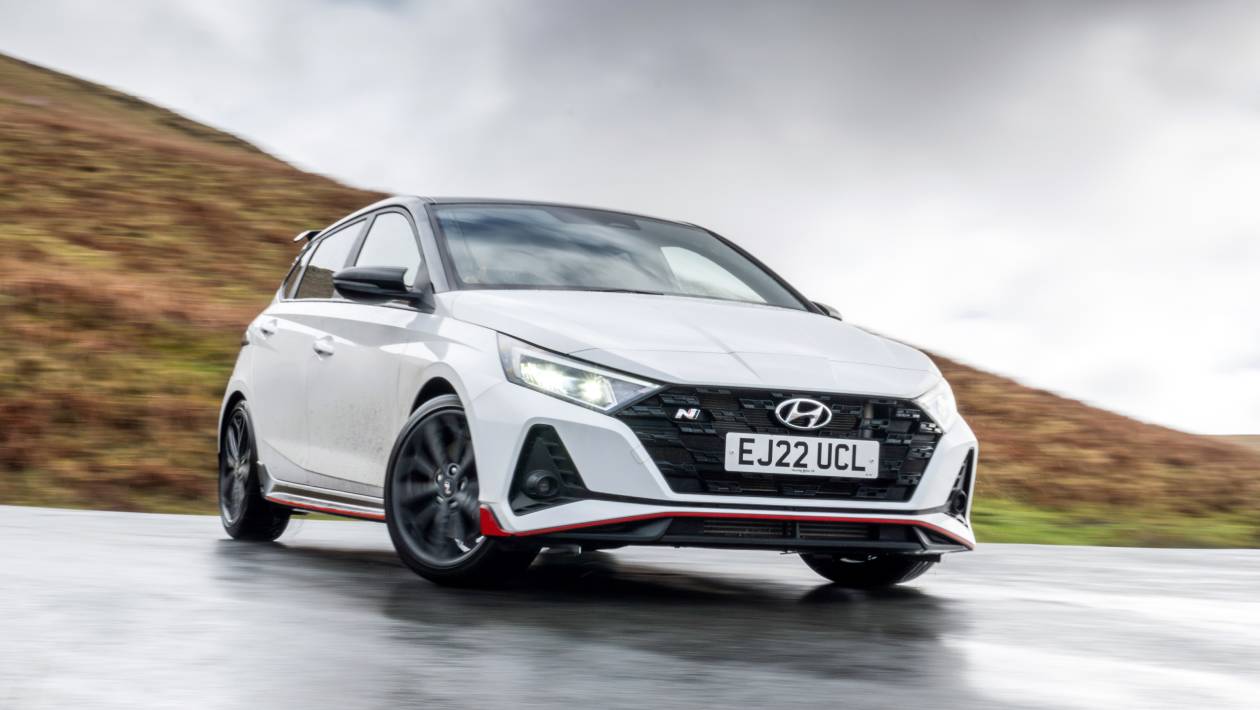
In a few short years, Hyundai's N division accomplished something remarkable. Through cars like the i30 N and the i20 N, the performance sub-brand went from obscurity to cult-hero status almost overnight. The Hyundai i20 N, in particular, proved that you could build a genuinely thrilling hot hatch without breaking the bank. It was agile, it was characterful, and it punched so far above its weight that it embarrassed cars costing twice as much.
Then, just as quickly as it arrived, it was gone. Hyundai pulled the i20 N from European showrooms in 2024 as the brand pivoted toward electric performance vehicles. The result is one of the most bittersweet stories in the modern hot hatch world: a car that was cut down in its prime, before it had a chance to fully cement its legacy.
This review dives deep into what made the Hyundai i20 N so special, how it stacks up against its rivals, and whether it remains a smart buy on the used market in 2026.
Key Takeaways
- The i20 N produced 201bhp from a 1.6-litre turbocharged four-cylinder engine paired exclusively with a six-speed manual gearbox.
- At just 1190kg, it was one of the lightest hot hatches on the market, giving it a power-to-weight ratio of 172bhp/ton.
- It recorded a 0-62mph time of 6.2 seconds, beating the Ford Fiesta ST by 0.3 seconds.
- New price was approximately 26,530 GBP. Used examples now start from around 16,000 GBP in 2026.
- Hyundai discontinued all petrol-powered N cars in Europe, shifting focus to electric performance models like the Ioniq 5 N.
Engine, Gearbox and Technical Highlights
A Purpose-Built Powertrain
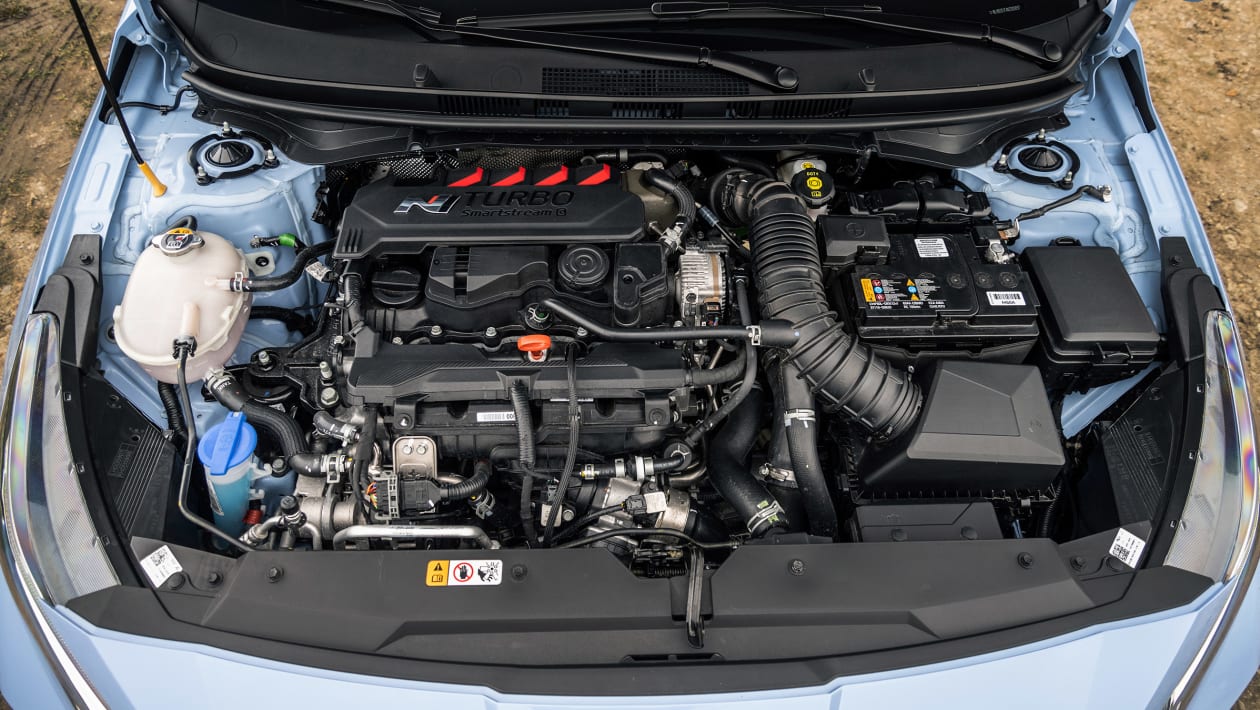
Hyundai started with one of its existing 1.6-litre turbocharged four-cylinder engines and gave it a thorough overhaul. The result features a reworked turbocharger, an upgraded intercooler, 350-bar direct injection pressure, and a variable valve duration system. The numbers tell part of the story: 201bhp at 5500rpm and 203lb ft of torque arriving from just 1750rpm.
What the numbers do not convey is the engine's personality. In typical N fashion, it delivers turbocharger whistles, a distinctive rasp from the exhaust, and plenty of pops and bangs on the overrun. It is more boisterous than the three-cylinder unit found in the Ford Fiesta ST, though it does lack that final degree of sparkle when chasing the redline. The engine was originally designed for Hyundai and Kia's more sedate models, and underneath its raucous character, it occasionally feels a touch lethargic. A heavy flywheel means revs take a moment to climb and likewise to die away, which can make upshifts feel slightly slurred at times.
Manual Only, As It Should Be
The only gearbox available was a six-speed manual, sending drive through a Torsen-style mechanical limited-slip differential. There was no automatic option, no dual-clutch alternative. In an era when manual transmissions are rapidly disappearing from new car showrooms, the i20 N stood as a last bastion of driver involvement. If you are interested in which manual cars are still available and which are vanishing, check out this comprehensive guide on manual transmission cars going away after 2026.
Chassis and Suspension
The i20 N sits 40mm lower than a standard i20, with much stiffer springs, firmer dampers, and reinforced suspension joints. The front subframe has been strengthened, additional weld points have been added throughout the shell, and there is a brace in the luggage area. The clutch and transmission have also been beefed up to handle the increased loads and the launch control system.
Hyundai quotes a kerb weight of 1190kg. That makes it just 3kg heavier than a Fiesta ST and a substantial 90kg lighter than the all-wheel-drive Toyota GR Yaris. In a world where cars keep getting heavier, this kind of restraint deserves recognition.
Driving Modes: Borrowed from BMW's Playbook
As well as the usual Eco, Normal, and Sport settings, the i20 N offers a more aggressive N Mode and a fully configurable N Custom mode. You can individually adjust steering weight, engine mapping, stability control levels, and exhaust loudness. These are all toggled via quick-flick shortcut buttons on the steering wheel, and you can also switch automatic rev-matching on or off at the press of a single button. The system feels remarkably similar to what BMW M offers in its modern performance cars, which is no coincidence given that Hyundai's N division was founded by Albert Biermann, a former BMW M engineering boss.
Performance, Ride and Handling
The Cornering Speed That Sets It Apart
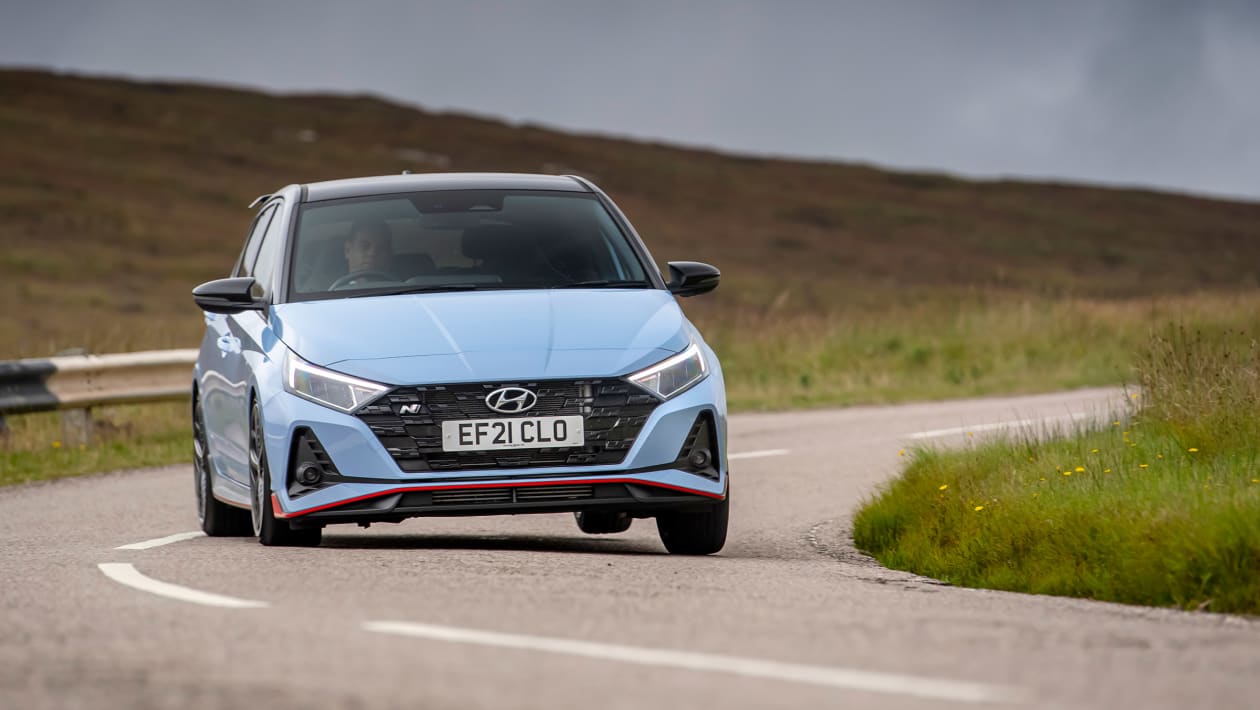
Power and performance are entirely adequate, but it is the cornering speed that makes the i20 N truly special. The limited-slip differential, standard-fit on UK-spec cars, hooks up beautifully with impressively little torque-steer. Mid-corner traction is startling, generated through bespoke Pirelli P Zero tyres, and the diff drags the nose tighter into corners rather than letting the car push wide under power.
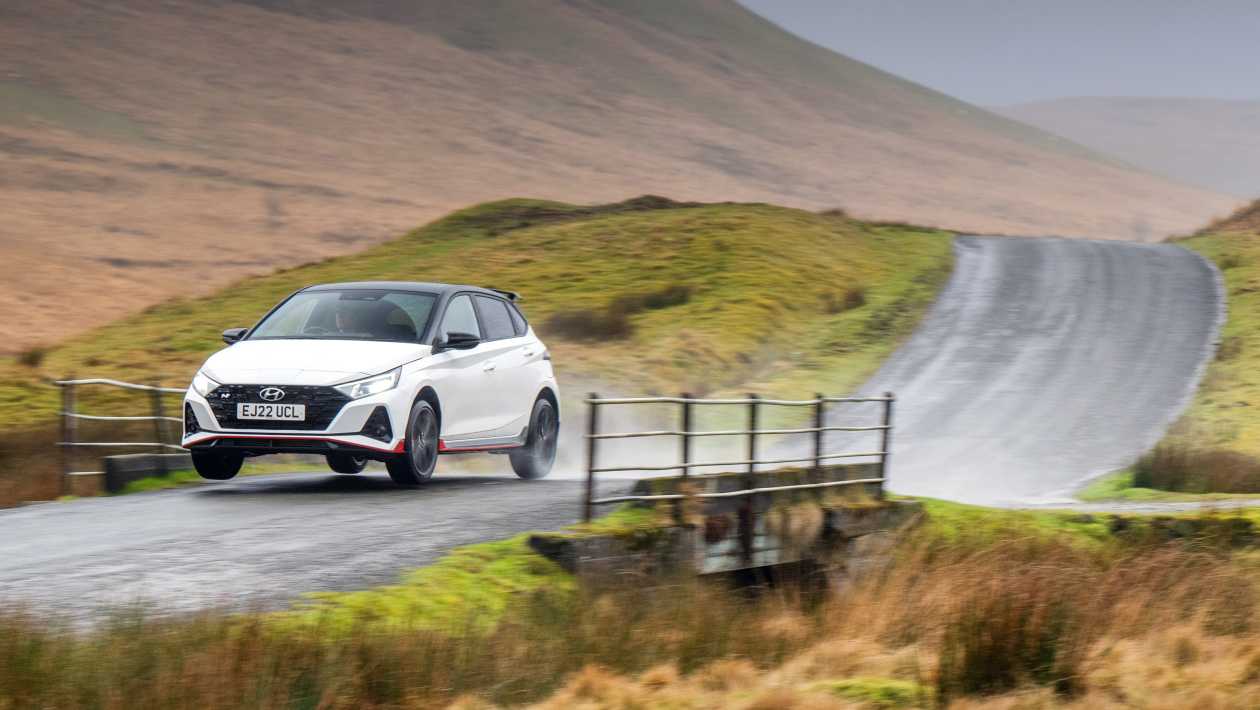
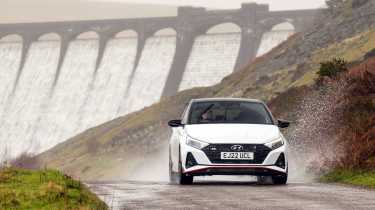
On a good B-road, the i20 N feels like a rally car. The steering is direct and accurate, the brakes offer a nicely firm pedal feel, and the tail can be mobile if you want it to be, particularly on track. The balance is so precisely throttle-adjustable that you can pick your angle of rotation almost to the degree. It is an exhilarating experience.
"There's a real satisfaction in being able to wring every last drop of performance with barely anyone noticing, and the i20 N feels like it will do this forever." John Barker, evo
The Ride Quality Trade-Off
The i20 N is not perfect. Its MacPherson-front, torsion-beam-rear suspension sits on passive dampers rather than the adaptive units found in the larger i30 N, which helps keep costs down but means the ride can feel unyielding. The suspension does not breathe with the road like some hot hatches, and you frequently find yourself fighting against bumps. Even in the lightest of its three steering weight settings, the power steering feels a little heavy, which actually makes the car feel less nimble than it truly is.
That said, for a sub-30,000 GBP car, the negatives are few and far between. As evo's Dickie Meaden explained: "There's a lot to be said for enjoying a far greater proportion of what's on offer more of the time."
On Track
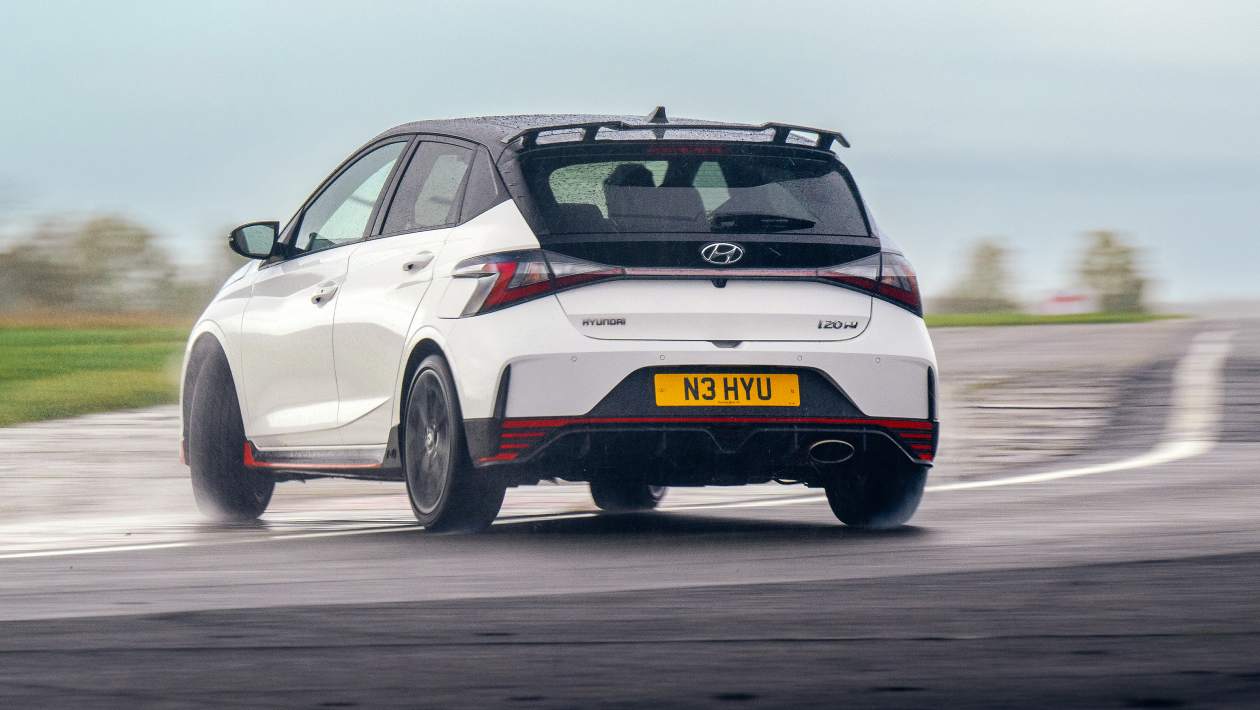
While not immune from the juddering understeer that affects most front-wheel-drive cars on track, the i20 N is far happier to move around than most rivals. The brakes are more than up to shedding its modest weight stop after stop, and the limited-slip differential allows you to get on the power earlier than you might expect through tight corners.
What We Love
- Immersive, engaging driving experience that punches well above its price
- Outstanding mid-corner traction thanks to the mechanical LSD
- Incredibly light at 1190kg for a modern hot hatch
- Manual-only gearbox preserves pure driver involvement
- Comfortable enough for daily driving and long motorway journeys
- Impressive fuel economy for a performance car (mid-30s to 40mpg)
- Strong reliability expected from a well-proven engine
- Excellent standard equipment including heated seats and steering wheel
Where It Falls Short
- Engine lacks the final 10% of sparkle at the top end
- Ride can feel thumpy and unyielding on rough roads
- Power steering is heavier than ideal, masking the car's agility
- Rev hang can make quick upshifts feel slightly slurred
- N driving modes are overly complex to configure
- Exhaust sound is not particularly inspiring, even in its loudest setting
- No longer in production, limiting supply on the used market
Design, Interior and Technology
Exterior Styling That Commands Attention
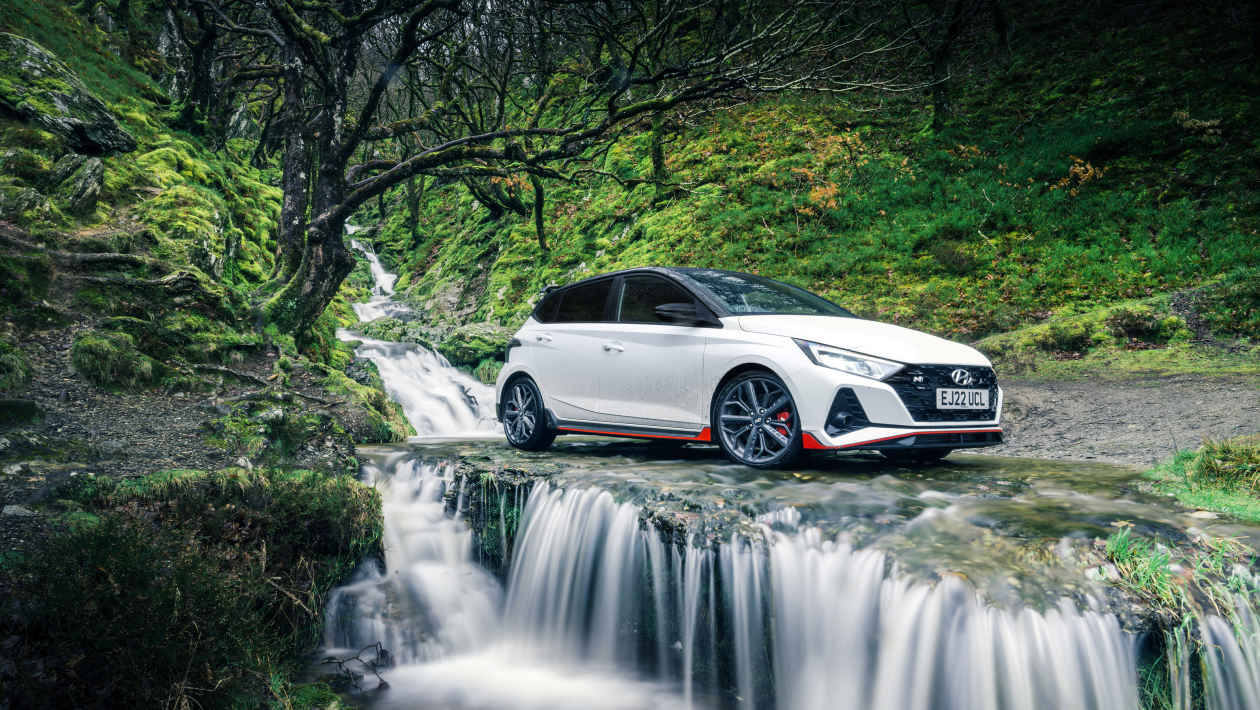
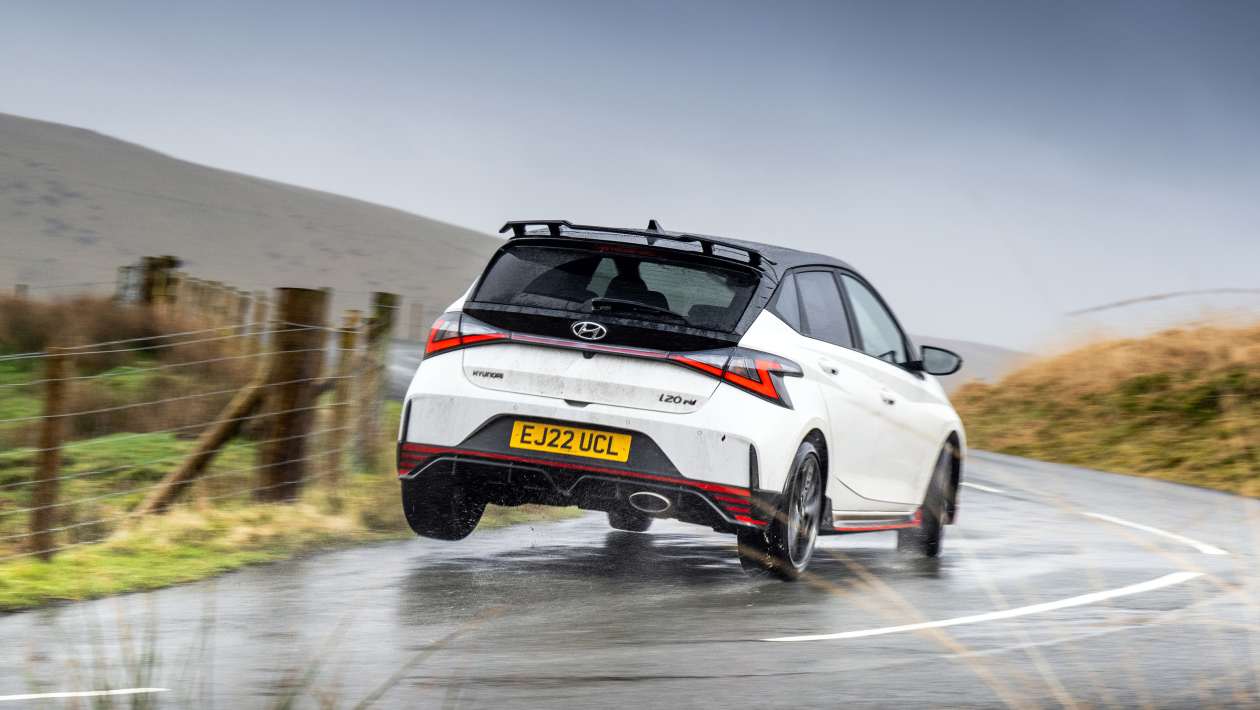
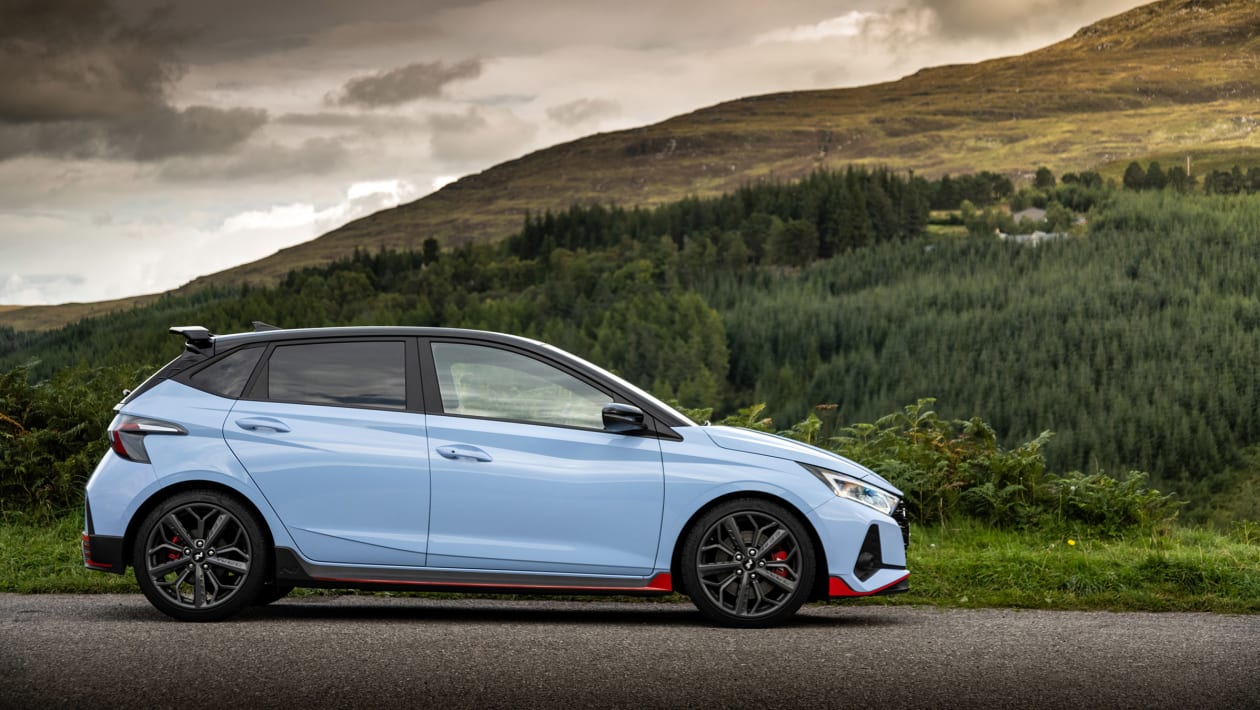
You will not mistake an i20 N for a standard i20. It rides on complex 18-inch wheels finished in anthracite grey, and features a sizable rear wing that is far more aggressive than the integrated units on its competitors. The bumpers have been completely redesigned with aggressive lower splitters, side skirts, and rear diffuser inserts, all further emphasised by chunky red stripes (or silver on cars with the optional deep red paint finish).
A clever design detail is how the red stripes almost integrate the triangular rear fog lamp, a recurring graphic across most N models. Some paint finishes can be combined with a black pillar and roof arrangement, giving the N even more visual distinction from its lesser siblings.
Cabin Quality and Equipment
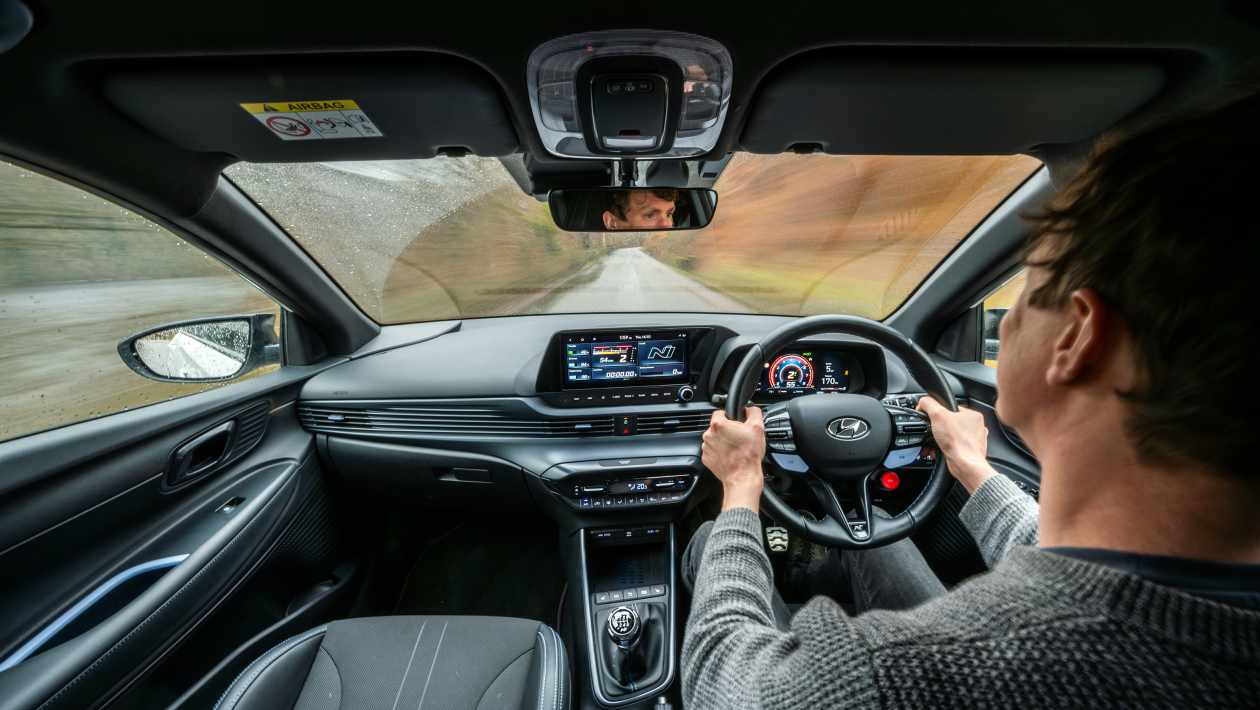
The cabin is clearly built to a budget, but it is easy on the eye. Scratchy out-of-reach plastics do not matter when all the touchpoints are spot on. The steering wheel is round, chunky, and features clear buttons for the driving modes and rev-matching function. The gearknob is spherical, as it should be, attached to a slick mechanism. There is a proper handbrake, great seats, and clear TFT dials.
In terms of standard equipment, the i20 N was positively luxurious for a supermini. Heated seats, heated steering wheel, parking sensors, reversing camera, digital dials, and a user-friendly touchscreen all came as standard. Later models introduced touch-sensitive surfaces in place of physical buttons next to the screen, which increased eyes-off-road time compared to earlier cars.
The instrument screen graphics show Hyundai's sense of fun: rendered carbon fibre in Sport mode, and animated fire crackling around the tacho when you select N Mode. Performance data displays on both the main screen and instrument panel include throttle opening, brake pressure, and individual temperatures for coolant, oil, and the engine itself. The latter is a small touch, but it shows the car was engineered by people who genuinely care about driving.
Price, Specs and Rivals
New Price and Current Used Values
The i20 N came in a single high-specification trim in its final iteration, with only an uprated BOSE sound system and various colour options available as extras. The original list price was approximately 26,530 GBP.
Since going off sale, used prices have been unusually resilient. The cheapest non-cat-damaged examples start from around 16,000 GBP, while low-mileage examples still command prices close to the original list. If you are considering a used Hyundai, you may also want to review the Hyundai Certified Used Vehicles programme, which offers comprehensive warranty coverage and a rigorous 173-point inspection on eligible models.
How It Compares to the Competition
| Specification | Hyundai i20 N | Ford Fiesta ST | VW Polo GTI | Toyota GR Yaris |
|---|---|---|---|---|
| Engine | 1.6L turbo 4-cyl | 1.5L turbo 3-cyl | 2.0L turbo 4-cyl | 1.6L turbo 3-cyl |
| Power | 201bhp | 197bhp | 204bhp | 257bhp |
| Torque | 203lb ft | 214lb ft | 236lb ft | 266lb ft |
| Weight | 1190kg | 1187kg | 1272kg | 1280kg |
| 0-62mph | 6.2sec | 6.5sec | 6.5sec | 5.5sec |
| Top Speed | 143mph | 144mph | 149mph | 143mph |
| Price New | 26,530 GBP | ~27,000 GBP | 31,415 GBP | ~46,195 GBP |
| Price Today (2026) | From 16,000 GBP | From 14,000 GBP | From 18,000 GBP | From 32,000 GBP |
The Fiesta ST: Its Natural Nemesis
The Ford Fiesta ST was the i20 N's most direct rival. The Ford edges ahead with its more responsive three-cylinder engine and slightly sharper steering feel, but the Hyundai counters with superior mid-corner traction, a more grown-up cabin, and a more comfortable ride on long journeys. Both were manual-only, both weighed under 1200kg, and both were discontinued. On the used market, they remain the two best affordable hot hatches you can buy.
The Volkswagen Polo GTI: A Disappointing Alternative
While the Polo GTI is still available at 31,415 GBP, it is rather flat and uninteresting to drive. It is neither more comfortable, better built, nor more desirable than its rivals. Unlike the Ford and Hyundai, which feel lavished with care and attention in their development, the VW feels like a distinct afterthought.
The Toyota GR Yaris: A Different Beast Entirely
The GR Yaris is a similar size to comparable superminis, but it is a far more serious machine in both performance and price. With 257bhp, all-wheel drive, and a hand-built nature, it occupies a completely different tier. Entry-level models now cost around 46,195 GBP, and supply remains limited due to its bespoke assembly process. The i20 N cannot match the GR Yaris for outright performance, but it offers a remarkably similar level of driving joy at less than half the price.
The hot hatch landscape has shifted dramatically in recent years, and the affordable end of the segment has been hit particularly hard. Recent comparisons, such as this test of Britain's last 30,000 GBP fun cars, highlight just how many once-popular names have vanished from the market.
The Hyundai N Division: Past, Present and Future
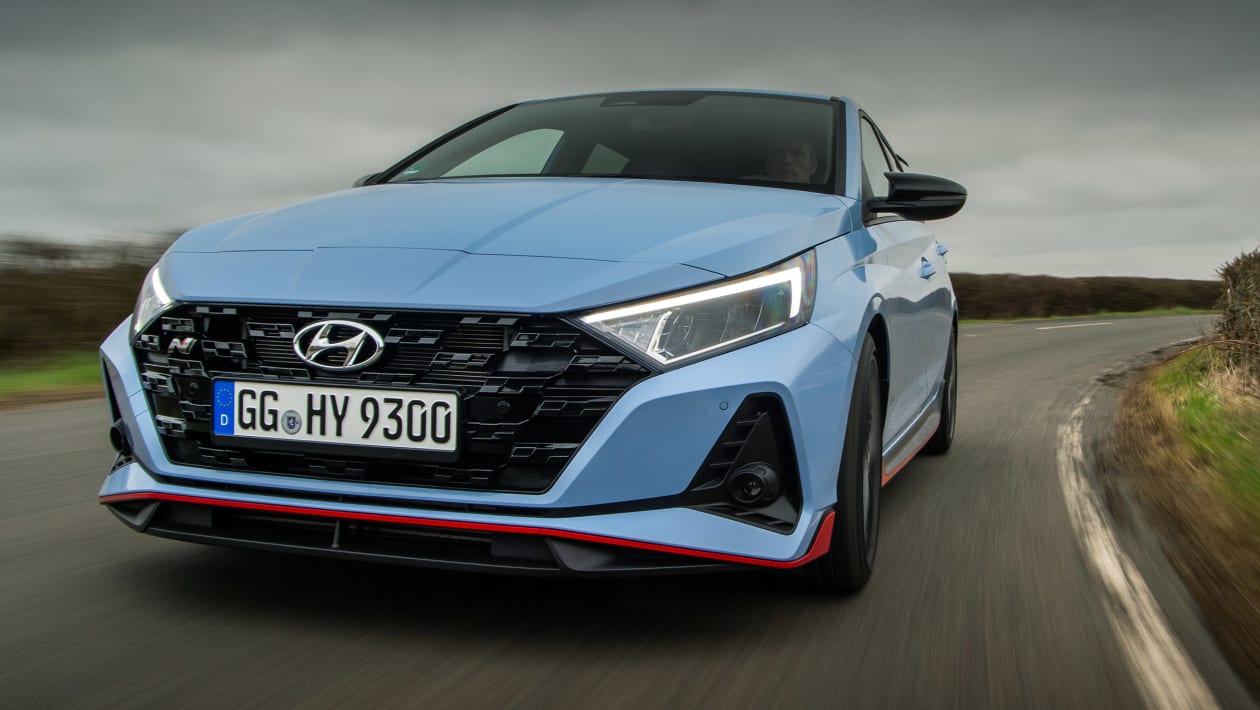
The i20 N's discontinuation marks the end of an era for Hyundai's performance division. Petrol-powered N cars ended sales in Europe as the department pivoted to performance EVs, led by the (admittedly excellent) Ioniq 5 N and, more recently, the Ioniq 6 N saloon. You can read a full review of the Hyundai Ioniq 5 N and its electrifying performance to see where the brand is heading next.
However, Hyundai has hinted that petrol-powered N cars are not entirely dead. The brand has signalled plans for hybrid N models, including a potential Tucson N that would use a 1.6-litre turbo hybrid powertrain. Details on the upcoming Hyundai Tucson N and its hybrid performance strategy suggest that the N division is pursuing a dual approach: electric vehicles at the top end and hybrid models for smaller, lighter performance cars.
The question of what comes next for small electric hot hatches is also relevant. Cars like the Kia EV2 GT electric compact crossover point toward a future where affordable performance EVs compete in the same space the i20 N once dominated. Whether they can replicate the analogue joy of a lightweight turbo hatch with a manual gearbox remains to be seen.
Reliability and Running Costs
General reliability of the i20 N is expected to be strong. The trade-off of having a relatively uninteresting base engine is that it has gone through extensive iterations and testing across Hyundai and Kia's broader range. As a supermini, consumables such as brake pads and discs should also last well, unless track days become a regular activity.
Insurance group ratings are competitive for the hot hatch class, and the i20 N's modest weight means tyre and brake wear should be reasonable. Fuel economy, as mentioned, sits in the mid-30s during normal driving and can approach 40mpg on a gentle run. That makes it one of the most economical performance cars you can buy.
Image Gallery
Hyundai i20 N Full Specifications
| Specification | Detail |
|---|---|
| Engine | In-line 4-cyl, 1591cc, turbocharged |
| Power | 201bhp @ 5500rpm |
| Torque | 203lb ft @ 1750-4500rpm |
| Transmission | 6-speed manual, front-wheel drive |
| Differential | Torsen-type mechanical LSD (standard UK) |
| Weight | 1190kg |
| Power-to-weight | 172bhp/ton |
| 0-62mph | 6.2sec |
| Top Speed | 143mph |
| Price New | 26,530 GBP |
| Price Today (2026) | From 16,000 GBP |
| Fuel Economy (combined) | 40.4mpg (WLTP) |
| CO2 Emissions | 158g/km (WLTP) |
Frequently Asked Questions
Is the Hyundai i20 N still a good buy in 2026?
Absolutely. The i20 N remains one of the best-value performance cars on the used market. With prices starting from around 16,000 GBP for clean examples, it offers a driving experience that rivals cars costing twice as much. Its mechanical simplicity and proven reliability make it a relatively safe used purchase. The main challenge is finding one, as supply is limited and demand remains strong among enthusiasts.
Why was the Hyundai i20 N discontinued?
Hyundai discontinued the i20 N in 2024 as part of a broader strategic shift. The N division pivoted its focus toward electric performance vehicles, led by the Ioniq 5 N and Ioniq 6 N. Tightening European emissions regulations also made it increasingly difficult to justify low-volume petrol performance models in the supermini segment.
How does the i20 N compare to the Ford Fiesta ST?
The two cars are remarkably closely matched. The Fiesta ST has a slightly more responsive engine and sharper steering feel, while the i20 N offers better mid-corner traction thanks to its standard-fit limited-slip differential, a more comfortable ride, and superior standard equipment. The i20 N is also 0.3 seconds faster to 62mph. Both are now discontinued, and both are highly regarded as some of the best affordable hot hatches ever built.
What is the fuel economy of the Hyundai i20 N?
The i20 N returns mid-30s mpg in mixed driving conditions and can approach 40mpg on a gentle motorway run. That is considerably better than the larger i30 N, which typically returns mid-20s during spirited driving. Using the more aggressive N driving modes and enjoying the exhaust pops and bangs will reduce economy noticeably.
Is the Hyundai i20 N reliable?
Reliability is expected to be strong. The 1.6-litre turbocharged engine has been used across multiple Hyundai and Kia models and has undergone extensive testing and refinement. As a supermini, consumables such as brake pads, discs, and tyres are affordable. The main consideration for used buyers is checking for signs of track use, which would accelerate wear on brakes and suspension components.
What are common problems with the Hyundai i20 N?
The i20 N has not been widely reported as having significant reliability issues. Some owners note the rev-hang characteristic of the engine, where revs are slow to drop between gear changes, though this is a characteristic rather than a fault. Later models with touch-sensitive buttons replacing physical controls have drawn criticism for reduced usability while driving. Always check service history and look for signs of hard track use when buying used.
Will Hyundai make a new i20 N?
Hyundai has not confirmed plans for a direct successor to the petrol-powered i20 N. The N division is currently focused on electric performance vehicles and, potentially, hybrid models. A future Tucson N with hybrid power has been hinted at, and there is speculation about hybrid N versions of smaller models, but nothing has been officially announced for the supermini segment.
How much horsepower does the Hyundai i20 N have?
The Hyundai i20 N produces 201bhp (204PS) at 5500rpm from its 1.6-litre turbocharged four-cylinder engine. Maximum torque of 203lb ft (275Nm) is available from just 1750rpm, giving the car strong in-gear acceleration and a responsive feel through the mid-range.
Final Verdict: A Modern Classic Gone Too Soon
The Hyundai i20 N is a car that resonated with every judge at evo, from seasoned professionals to weekend warriors. In evo Car of the Year 2021, competing against exotics worth ten times its price, the little Hyundai put up a remarkable fight. It was the car that would latch on to the tail of something bigger, faster, and more exotic and refuse to let go.
"It's just up for it all of the time. I'd still say it felt good rather than great, but it grew in stature until I really, really started to love it." Jethro Bovingdon, evo
What made the i20 N special was not any single attribute but the way everything worked together. The strong powertrain, the agile chassis, the mechanical limited-slip differential, the low weight, and the manual gearbox combined into a package that felt genuinely special. It got under your skin in a way that few modern cars manage.
Now that it is gone, the affordable hot hatch segment feels emptier than ever. The Fiesta ST has also departed, the Polo GTI was never truly a rival in terms of driver engagement, and the GR Yaris operates in a completely different price bracket. The i20 N occupied a sweet spot that may never be replicated in the electric age.
If you are considering buying one on the used market, do not hesitate. These cars are only going to become more desirable as the years pass. Find a well-maintained example, check the service history carefully, and prepare to discover why so many enthusiasts consider the i20 N one of the greatest hot hatches of its generation.
Considering a Hyundai i20 N?
The i20 N represents one of the last chances to own a genuinely engaging, manual-only hot hatch at an affordable price. With used examples starting from around 16,000 GBP, it offers performance and thrills that punch well above its weight class. Do not wait too long, as these cars are already becoming harder to find.


